
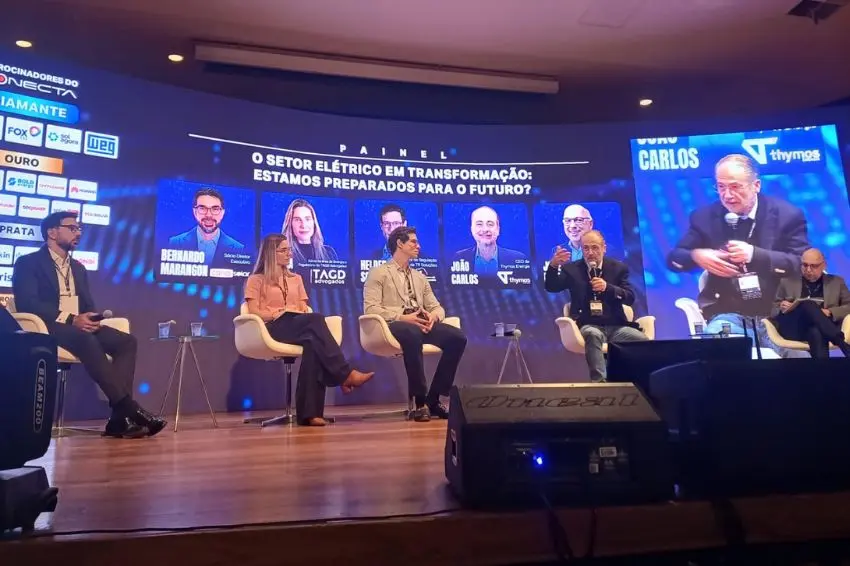
The future of the Brazilian electricity sector will be increasingly decentralized, but the current planning and regulation model still needs to keep pace with this transformation. This assessment comes from... José Vanderley Marangon, CEO of MC&E (Marangon Consultoria & Engenharia) and full professor at UNIFEI (Federal University of Itajubá).
The professor advocated for greater integration of distributed energy resources during the panel “The electricity sector in transformation: are we prepared for the future?”, held at Canal Conecta VI, event of Canal Solar, which is being held in São Paulo (SP) this Monday (19) and Tuesday (20).
“For me, the future is distributed, and we have to work quickly to make that happen,” said Marangon, highlighting that the expansion of solar power generation and the development of storage technologies are changing the way electricity is produced, distributed, and consumed in the country.
The debate also included João Carlos de Oliveira Mello, CEO of Tymos Energia; Bianca Wolf, partner in the Energy and Regulatory area at TAGD; and Helder Sousa, director of Regulation at TR Soluções, with the participation of... Bernardo Marangon.
According to the professor, the Brazilian electricity sector still maintains a traditionally centralized structure, built upon large generation projects and an energy flow directed towards the end consumer.
This model, however, has faced new challenges with the expansion of distributed generation, which has increased consumer autonomy and changed the operating dynamics of electrical grids. "They are providing centralized solutions to distributed problems," criticized Marangon.
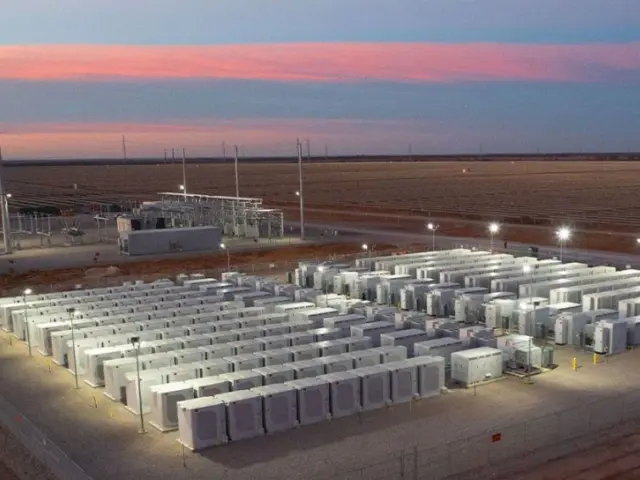
According to him, distributed storage can help address problems associated with the concentration of solar generation during the day and the need for greater flexibility in the electrical system.
The professor also highlighted the role that integrators and installers can play in this new scenario, especially with the advancement of batteries, electric mobility, and the management of distributed energy resources.
"You installers, you will be the future aggregators," he stated, pointing to opportunities for professionals who work directly with consumers and distributed generation systems.
Lack of governance hinders sector adaptation.
The need for changes in planning was also highlighted by João Carlos de Oliveira Mello, CEO of Tymos Energia, who attributed some of the current challenges to a lack of coordination between the agents responsible for the operation, regulation, and expansion of the electrical system.
According to the executive, the technologies needed to deal with decentralization are already available. The main obstacle, however, lies in the institutional capacity to implement solutions and anticipate the impacts of the ongoing transformations.
João Carlos also questioned the sector's delay in preparing for the growth of micro and mini-distributed generation, a segment that has gained scale in recent years and has begun to require greater coordination between the different levels of the system.
"If we lacked the technology to solve this problem, it would be a problem we would have to study. But it's not a technology problem, it's a problem of the will to do it," he stated.
Tariffs and investments in networks are putting pressure on the sector.
In addition to operational and regulatory changes, the panel addressed the economic impacts of the transformation of the electricity sector, especially on the tariffs paid by consumers.
Helder Sousa, Director of Regulation at TR Soluções, presented a projection of an average increase of 8,5% in electricity tariffs in 2026.
According to the professional, half of this projected variation is associated with the CDE (Energy Development Account), a charge used to fund different public policies and subsidies in the electricity sector.
Sousa also highlighted that costs related to distribution infrastructure are expected to have a greater impact on tariff composition in the coming years.
In the assessment presented, the portion associated with energy tends to show more moderate behavior, while the investments needed to modernize and strengthen the networks should exert greater pressure on distribution costs.
Among the factors mentioned are the need to improve supply quality indicators, meet concession-related requirements, and increase the resilience of networks in the face of extreme weather events.
Storage also faces regulatory challenges.
The expansion of battery capacity was another point addressed in the debate, especially regarding the rules for contracting storage systems through capacity reserve auctions.
Bianca Wolf, a partner in the Energy and Regulatory area at TAGD, highlighted the discussions surrounding the definition of who should bear the costs associated with contracting these systems.
According to her, the legislation established a different treatment for battery storage compared to other types of capacity reservation contracts.
While certain charges are shared among end users of the system, the legislative option for storage was to assign the cost to generation, which has provoked questions among different market agents.
The expert highlighted the importance of holding the auction, but acknowledged the existence of legal and regulatory debates surrounding the established model.
The discussions highlight one of the challenges pointed out throughout the panel: the need to build rules capable of keeping pace with the technological evolution of the sector, ensuring predictability for investments and greater integration of new resources into the electrical system.
The sector needs to keep up with decentralization.
The assessments presented during the Canal Conecta pointed to a common challenge: adapting the regulatory framework, planning, and investments of the electricity sector to a system with increasing consumer participation in energy generation and management.
In this scenario, the advancement of distributed generation ceases to be merely a change in the generation matrix and begins to demand a broader review of how the Brazilian electrical system is planned and operated.
all the content of Canal Solar is protected by copyright law, and partial or total reproduction of this site in any medium is expressly prohibited. If you are interested in collaborating or reusing part of our material, please contact us by email: redacao@canalsolar.com.br.

Comments
Comments are moderated before publication.Comments should be respectful and contribute to a healthy debate. Offensive comments may be removed. The opinions expressed here are those of the authors and do not necessarily reflect the views of the author. Canal Solar.