
The system is almost ready. The team has already spent hours on the installation, the client is waiting for delivery, and during commissioning, a question arises about the inverter configuration.
In another situation, a plant that was operating normally displays an alert, and the integrator needs to assess whether the problem can be resolved remotely or if it will be necessary to send a technician to the site.
These situations are part of the daily routine for professionals in the solar sector and highlight an aspect that doesn't always receive the same attention when choosing equipment: what happens when the integrator needs help?
Power, efficiency, features, warranty, and price remain important criteria when choosing an inverter. However, once the equipment arrives at the installation site, the support offered by the manufacturer can directly impact the integrator's routine.
Technical guidance can prevent hours of diagnostics, facilitate commissioning, or help determine if a follow-up visit to the facility is truly necessary.
More complex systems require more specialized support.
Integrators who previously worked primarily with on-grid systems may now encounter hybrid inverters, high-voltage (HV) batteries, different electrical architectures, monitoring systems, Grid Zero solutions, and C&I (commercial and industrial) equipment.
These technologies expand the range of solutions that installers can offer customers, but they also increase the number of variables involved in installation, configuration, and operation.
A problem in a hybrid system, for example, might involve the inverter, the battery, the BMS, communication, or configuration. In a C&I plant with multiple devices, the diagnosis might involve inverters, strings, and monitoring.
In this context, technical support ceases to be merely a channel for opening service requests. It becomes part of the specialized knowledge necessary to support increasingly sophisticated equipment and installations.
The cost of a technical problem goes beyond just the response time.
Imagine that an integrator has a facility located 150 or 200 kilometers from your company. If a problem arises, the first decision doesn't necessarily have to be to send a technician.
Is there an alarm? Is the equipment communicating? Can the problem be analyzed remotely? Is an on-site visit really necessary?
Without sufficient information, a technical incident can generate expenses for travel, fuel, tolls, technician's working hours, and time that could be dedicated to another installation. But the financial impact is not limited to the installer.
For system owners, equipment that is not operating correctly can mean lost solar generation and reduced savings on their energy bill.
This is especially relevant in commercial and industrial facilities, where solar systems often represent a significant investment to reduce operating costs. Each additional period of reduced or interrupted generation can affect the expected financial return.
Even when an on-site visit is necessary, arriving with a more targeted preliminary diagnosis can make the intervention more efficient and help restore normal operation more quickly.
Therefore, speed of response is important, but it's not the only factor. Efficient technical support also requires knowledge to understand the problem and guide the installer towards a solution.
The support team needs to understand the reality of the installers.
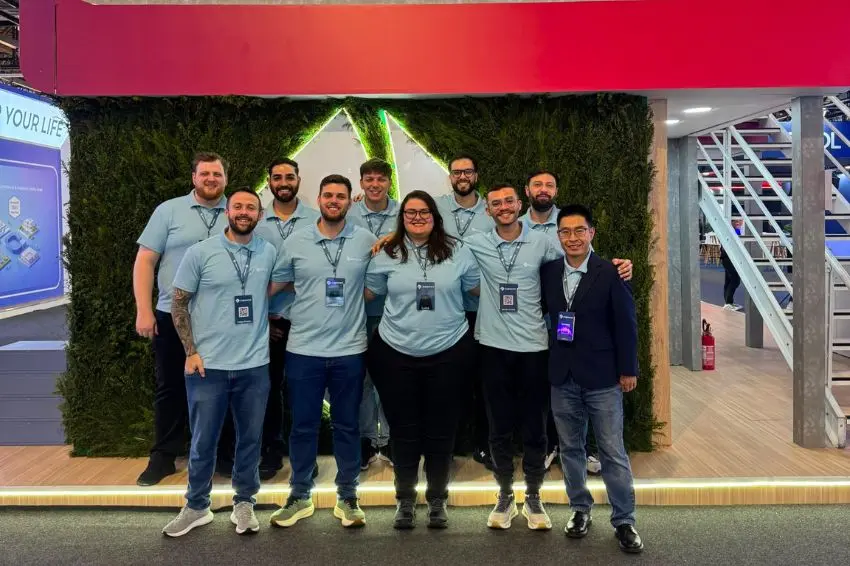
Solplanet structured part of its after-sales strategy in response to this need. The manufacturer has engineers and professionals specialized in its solutions and in the photovoltaic market. Part of the team also has practical field experience and has dealt with situations similar to those that integrators encounter in real installations.
When an integrator reports a difficulty related to the installation, configuration, monitoring, or behavior of a piece of equipment, the goal is to understand the technical context and guide the next steps.
This hands-on experience is important because not every question arrives with a clearly defined diagnosis. Often, the integrator is standing in front of the equipment, trying to explain what they are observing.
At this stage, knowing the product is fundamental, but understanding the language and routine of the professionals who work in the field can also make communication more efficient.
Support needs to keep pace with the integrator's routine.
Technical problems don't necessarily happen at convenient times. Installations and commissioning occur on different days, in different regions, and under different circumstances.
According to information from Solplanet's operations, its support structure offers service seven days a week, with communication available in Portuguese, Spanish, and English. This multilingual structure allows the manufacturer to serve professionals from different locations and with different profiles.
As hybrid inverters, batteries, and energy storage solutions increasingly complement traditional on-grid installations, after-sales teams also need to continue expanding their technical knowledge.
2026 Survey: 94% positive reviews for technical support
The experience with technical support can also be measured. In a satisfaction survey conducted in 2026, Solplanet gathered 3.993 responses from users of its support service, considering a history of approximately 72 service requests registered by the operation.
The results show that 94% of participants positively rated their satisfaction with technical support, assigning scores of 4 or 5 on a scale of 1 to 5. Another 1,1% gave a score of 3, while 3,9% assigned scores of 1 or 2.
The speed of service also received positive evaluations. A total of 93,2% of respondents gave a score of 4 or 5 to the speed of service, while 2,4% gave an intermediate score and 3,6% evaluated this aspect negatively.
Another indicator analyzed was problem resolution. According to the survey data, 85,4% of participants stated that their problem had been resolved, while 8,3% reported that the service was still in progress and 6,3% reported that the situation had not been resolved.
For the speed and satisfaction indicators, scores of 4 and 5 were grouped as positive evaluations, score 3 was classified as intermediate, and scores of 1 and 2 were considered negative. Blank responses were counted separately.
The results highlight both positive perceptions and opportunities for improvement. The quality of support depends not only on the speed of response, but also on the ability to guide the integrator and follow up on each service request until its resolution.
Technical support can also impact the end customer experience.
For the end consumer, the company that sold and installed the system usually remains their primary point of contact when questions arise.
If an alert appears, a monitoring difficulty occurs, or the system exhibits unexpected behavior, the client typically contacts the integrator. Therefore, the speed and quality of support received from the integrator can also influence its relationship with the client.
A manufacturer with an organized after-sales structure does not replace the integrator's technical responsibilities. However, it can offer an additional layer of expertise to help address equipment-related issues.
Therefore, good manufacturer support can contribute to the installer's operational efficiency and the quality of service delivered to their customers.
After-sales service begins before a problem even exists.
The time to evaluate a manufacturer's support shouldn't be limited to situations where something goes wrong. Before choosing equipment, integrators can also seek answers to questions such as: what support channels are available? Is the team familiar with the equipment I'm installing?
Is there support for setup and monitoring? How does warranty service work? What is the experience of other professionals?
These questions broaden the evaluation beyond the inverter's technical specifications. The 2026 survey also provides Solplanet with important information to identify where processes, communication, and follow-up can be improved. Listening to integrators is a fundamental part of maintaining service quality as products and customer needs evolve.
For Solplanet, technical support is part of a commitment that goes beyond supplying equipment: offering knowledge, guidance, and close collaboration to the professionals who work daily with its solutions.
Ultimately, choosing a manufacturer doesn't just mean choosing the equipment that will be installed today. It also means evaluating who will be available when a question arises tomorrow.
The opinions and information expressed are the sole responsibility of the author and do not necessarily represent the official position of the author. Canal Solar.
Comments
Comments are moderated before publication.Comments should be respectful and contribute to a healthy debate. Offensive comments may be removed. The opinions expressed here are those of the authors and do not necessarily reflect the views of the author. Canal Solar.