
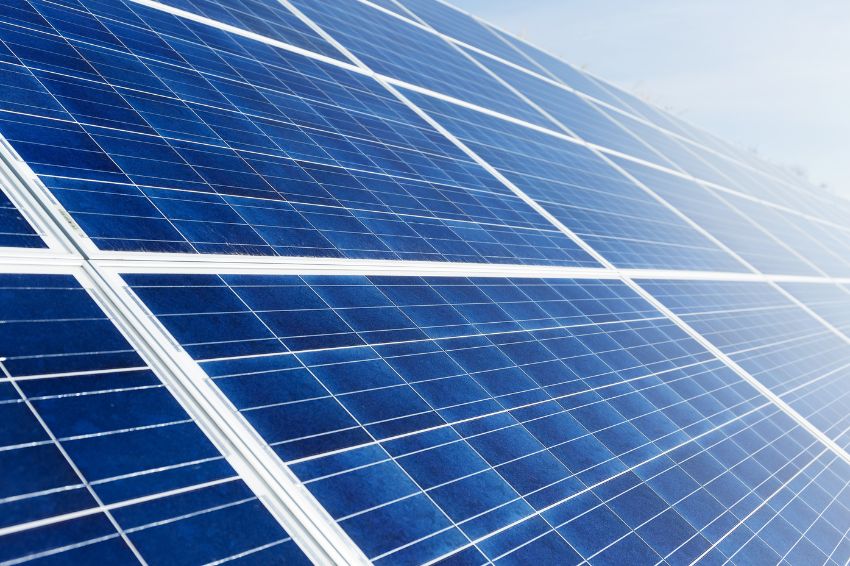
The MME (Ministry of Mines and Energy), through Ordinance no. 655 / 2022, opened, this Thursday (23), the Public Consultation No. 129/2022, which collects contributions, until July 3, 2022, on the guidelines for calculating the costs and benefits of own renewable energy generation in Brazil.
Given this scenario, the ABSOLAR (Brazilian Association of Photovoltaic Solar Energy) and the sector's production chain expressed concern about its opening, which was published in the DOU (Official Gazette of the Union).
In a note, the entity highlighted that it works to ensure that the photovoltaic solar energy be treated in a fair and balanced manner, as determined by Law 14.300.
Furthermore, they highlighted that the benefits must be correctly valued and included in the guidelines to be made official by the CNPE (National Energy Policy Council) through a resolution, from which the ANEEL (National Electric Energy Agency) will actually do the calculations.
In the view of ABSOLAR, the guidelines will dictate the future of renewables in Brazil, which is an essential element in the energy transition. Therefore, they said it is essential that the process of defining rules be thoroughly reflected upon and compatible with the complexity and importance of the issue for Brazilians.
“When dealing with something so critical for the future of the Brazilian electricity sector, this lack of space for agents to reflect and submit their proposals is, at the very least, worrying,” commented Bárbara Rubim, vice president of distributed generation at ABSOLAR.
“In addition to the fact that the topic requires a more holistic view, hence the role of the other ministries in discussions with the MME in the context of the CNPE”, added Rubim.
Pela 14.300 Law, the CNPE has until the beginning of July to publish the guidelines. According to Guilherme Susteras, coordinator of the distributed generation working group at ABSOLAR, the fact that the MME waited five months to open the public consultation and now only gives society ten days to give its opinion, reinforces the need to rethink the process.
“It is essential to guarantee a sufficient period of time so that civil society and entities, both in the electricity sector and in the productive sectors, can offer a robust contribution. Furthermore, the ministry itself will need time to absorb, reflect and dialogue with agents about the contributions,” he pointed out.
“Ultimately, it is better to build something more complete, even if it slightly exceeds the originally planned deadline, than to produce something of inferior quality within the deadline, which will cause serious damage to the future of the country”, concluded Susteras.
According to Rodrigo Sauaia, executive president of ABSOLAR, it is also worth highlighting that Brazilian society and the National Congress are closely following this work.
For him, this is precisely to ensure that the company's own generation of renewable energy receives adequate treatment consistent with Brazil's needs, in order to maximize the benefits for all citizens.
Guidelines
Concept of the guidelines for proposing a draft resolution of the National Energy Policy Council, referred to in § 2 of art. 17, of Law No. 14.300, of January 6, 2022:
a) Consider the effects related to the need to expand distribution; transmission; centralized generation in energy and power aspects; and, the ancillary services referred to in § 10 of article 1 of Law No. 10.848, of March 15, 2004;
b) Consider the effects related to the need to implement improvements, reinforcements and replacement of equipment in transmission facilities;
c) Consider the effects related to losses in electrical transmission and distribution networks;
d) Consider the effects relating to the locational value with regard to the connection point to the transmission or distribution network;
e) Consider the effects related to the value resulting from seasonality and variability in consumption and injection of electrical energy into the network throughout the day;
f) Consider the differences in effects between local and remote self-consumption modalities;
g) Consider the effects of involuntary contractual exposure resulting from possible overcontracting of electrical energy by concessionaires and distribution licensees as a result of their consumers opting for the MMGD regime;
h) Consider the effects on Sectoral Charges and tariffs attributed to other consumers;
i) Ensure that there is no duplication in the incorporation and valuation of costs and benefits;
j) Strive for efficiency, low complexity, economicity, reproducibility and objectivity of criteria and methodologies; It is
k) Ensure transparency, publicity and disclosure of the systemic costs and benefits of MMGD, including information regarding the effects on Sectoral Charges and tariffs attributed to other consumers.
Meeting on public consultation
A ABSOLAR will hold this Friday (23), at 14 pm, an open meeting to discuss, with professionals in the sector, the impact of Public Consultation No. 129/2022 on the photovoltaic segment. To participate, click here.

Comments
Comments are moderated before publication.Comments should be respectful and contribute to a healthy debate. Offensive comments may be removed. The opinions expressed here are those of the authors and do not necessarily reflect the views of the author. Canal Solar.