
Solutions that were previously niche applications, such as agrivoltaics or floating photovoltaic systems, are becoming increasingly important in the energy transition in Europe.
In Germany alone, the aim is to add new photovoltaic installations with a power of around 140 GW by 2030 and explore new space for deployment.
Furthermore, the construction of buildings with integrated solar energy – BIPV (Building Integrated Photovoltaics – Photovoltaic Integration in Civil Construction) – is also a bet on the European market.
In this scenario, Intersolar Europa is full of solutions for these applications. Check out the highlights of Canal Solar.
BIPV
BIVP is a key technology for achieving climate neutrality, as the construction sector is responsible for up to 40% of carbon emissions worldwide and around 30% in Germany.
Several manufacturers from the photovoltaic industry brought to Intersolar Europe solutions to be integrated into the construction of buildings and structures. Among them, LONG Solar, which displays its colorful BIPV panels at its stand.
-

Photos: Canal Solar
Agrivoltaics
Agrivoltaic systems is a method for the shared use of agricultural land for food production and photovoltaic energy generation. Experts point out that this type of application increases the efficiency of land use and allows the production of more solar energy, preserving arable land.
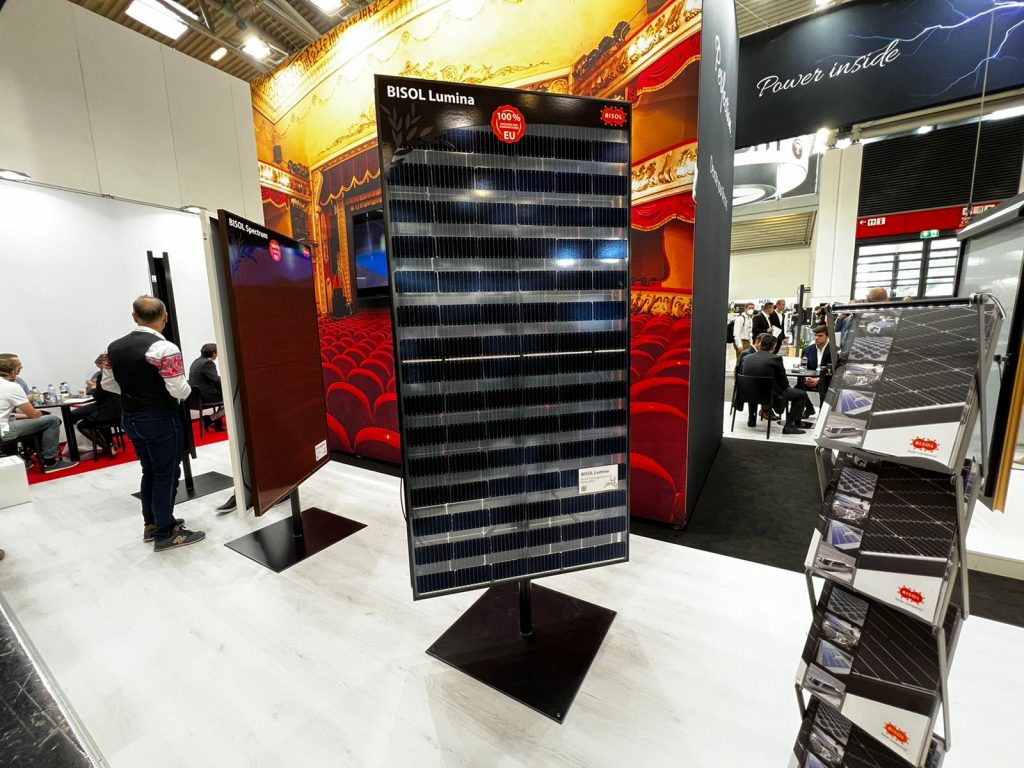
Agrivoltaic technology has seen a lot of progress and global dissemination in recent years, with the global installed production of agrivoltaics rising from 5 MW in 2012 to around 2,9 GW in 2020. Among the equipment exhibited at Intersolar Europe designed for this type of application is the bifacial panel from the manufacturer Bisol Ilumina. The module has spacing between cells, facilitating the passage of solar radiation for plants to receive sunlight.
-

Photos: Canal Solar

Floating systems
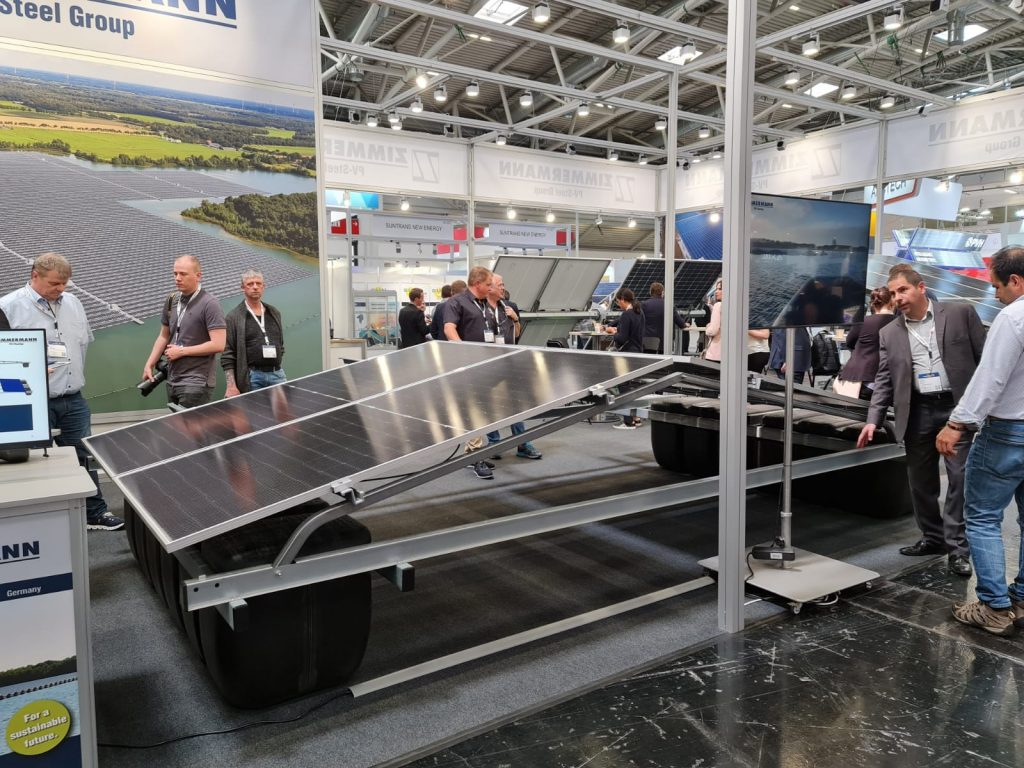
Experts predict that floating photovoltaic installations will grow at a global annual rate of more than 20% over the next four years. Furthermore, the ISE (Fraunhofer Institute for Solar Energy Systems) in Freiburg, Germany, has calculated that artificial lakes in former brown coal mines in Germany alone have the technical potential to generate up to 56 GW. Aiming for this exponential growth, manufacturers took their most varied products to the fair. See below.




Comments
Comments are moderated before publication.Comments should be respectful and contribute to a healthy debate. Offensive comments may be removed. The opinions expressed here are those of the authors and do not necessarily reflect the views of the author. Canal Solar.