
The next wave of renewables in Brazil will be driven by BESS. Whoever moves first to capture the opportunities will set the pace; whoever lags will lose ground. Where should efforts be focused? Kehua Tech—highlighted by CNESA as a leader in storage inverters in the Chinese market—points out key factors.
The rise of renewable sources (solar and wind) was one of the factors that helped drive the energy storage market to explode. According to studies by Greener, demand for BESS (Battery Energy Storage Systems) increased 89% from 2023 to 2024, and the behind-the-meter storage market will require investments of around R$22,5 billion by 2030.
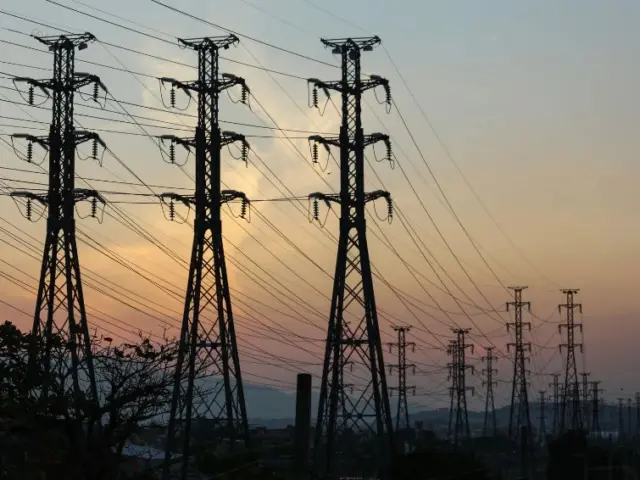
But why is this happening? The answer lies in the instability of Brazil's power grid, which is causing millions in losses to businesses and consumers.
What is driving and enabling BESS installations in Brazil?
According to the ONS (National Electric System Operator), the Brazilian grid faces growing challenges due to the intermittency of renewables. In 2024, intermittent renewable energy generation (solar and wind) already represented 36% of the electricity matrix, and data shows that this could exceed 46% by 2029.
The main factor that is driving the BESS market In Commercial & Industrial companies, reliability is key. In addition to reliability, which guarantees 'independence' from grid outages, factors such as financial savings through energy shift, reduced dependence on diesel (increasing sustainability), and services such as frequency and voltage regulation significantly increase the viability of projects.
After all, what are the main factors for the viability of a BESS project and how can we analyze them?
Energy backup: the main motivator to avoid losses
In Brazil, grid reliability and stability are a chronic problem. Equipment breaks down, products break down, and operations are disrupted. Here, BESS excels as a backup solution, providing instant power without relying on the grid, maintaining critical operations during outages and even avoiding grid investments.
Consider the dairy or juice industry: an interruption can cause undesirable coagulation or fermentation, resulting in thousands of dollars in losses. Another impactful scenario is in pharmaceutical clinics/laboratories. Temperature-sensitive vaccines can be destroyed in minutes without refrigeration, posing a public health risk.
In the plastics industry, the problem is even more acute. Processes like extrusion and injection molding rely on machines that can't tolerate sudden interruptions. A power outage lasting seconds can solidify the plastic in the molds, causing equipment damage and loss of raw materials. Some factories report losses of hundreds of thousands of dollars from shutdowns lasting only seconds. With a properly implemented and designed BESS, immediate backup keeps production flowing, avoiding these exorbitant costs.
This applies to a variety of scenarios, such as frozen food companies, mining, agriculture, hospitals, and data centers.
Energy Shift: The Valuable Financial Savings
While backup resolves emergencies, energy shift (consumption decoupling) brings continuous gains in everyday life, having a very significant economic impact.
An industry that operates 24/7 can store energy (off-peak) and use it during peak hours, avoiding tariff spikes and reducing bills by more than 30%—depending on the peak-off-peak delta—especially for companies connected to high and medium voltage (Group A). With a delta of R$1,20/kWh, a 241kWh BESS can generate annual savings of approximately R$100 for a Group A consumer.
Additionally, BESS offers ancillary services such as frequency/voltage regulation, which can generate extra revenue – especially with the ongoing discussions in ANEEL.
Choosing the right equipment
BESS is a highly complex piece of equipment, and the wrong choice can completely jeopardize the projected savings. To minimize this risk, it's essential to assess the manufacturer's technical capabilities and identify their portfolio of implemented projects.
Manufacturers like Kehua, for example, offer all-in-one solutions that integrate all the necessary components (batteries, PCS/inverters, EMS, BMS, cooling system, etc.), as well as utility-scale options.
These solutions are tailored to the Brazilian market, designed to meet demands such as reliable backup and efficient energy shift. A good example is the S3-Estore model: each unit delivers 100 kW of power and 241 kWh of storage capacity, with the flexibility to operate up to 10 units in parallel in a modular fashion, facilitating expansion as needed.
Furthermore, it's essential to assess the manufacturer's technical capabilities. The most effective way to do this is by examining their portfolio of completed projects, as this demonstrates their practical expertise and reliability in the industry.
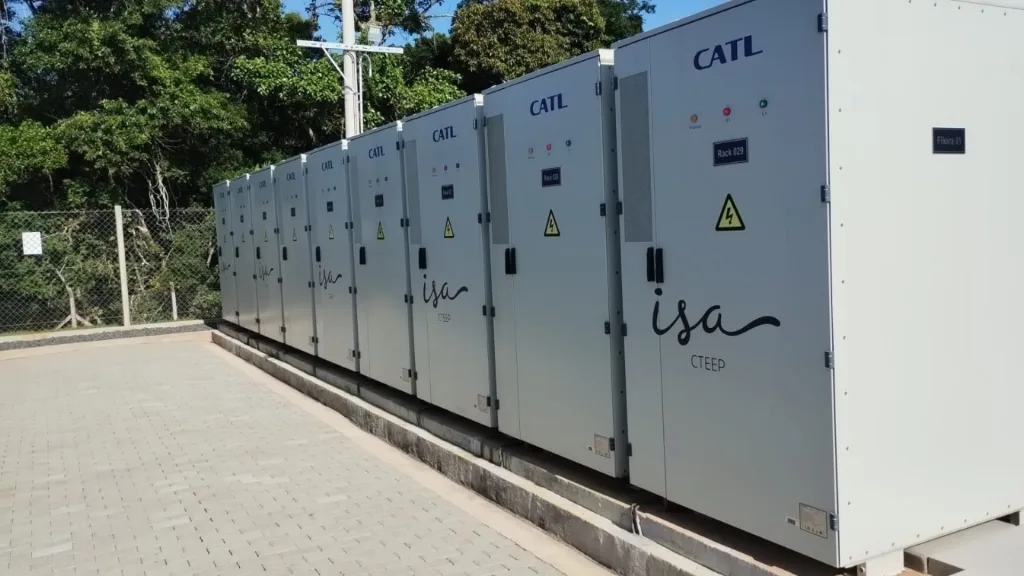
In the BESS universe, notable projects in Brazil and around the world help illustrate this potential. Here in Brazil, the largest project in operation since 2023, with 30 MW of power and 60 MWh of capacity, was implemented at ISA CTEEP.
Globally, the largest standalone grid-forming ESS system, at 300 MW/1.200 MWh, is in China. In both cases, Kehua Tech provided the complete ESS (Energy Storage System) solution, highlighting the robustness of integrated technologies in highly complex projects.
If you work in the energy sector or represent an industrial or commercial customer facing these challenges—such as grid outages or peak-to-off-peak tariff spikes—it's worth evaluating the pain points of your operation and considering storage solutions.
All-in-one BESS systems, like those from Kehua Tech, bring quality and versatility to C&I applications, helping to transform these problems into opportunities. For more information, visit our website or contact our team. The future of energy is stored—and it's within reach now.
About Kehua
A global reference in the manufacture of energy storage inverters, Kehua has 37 years of experience in the sector and offers all-in-one solutions for commercial and industrial (C&I) BESS systems, as well as for large-scale applications (Utility Scale), including Skids/PCS, battery banks and on-grid inverters.
Furthermore, Kehua is a global leader in PCS grid-forming technologies, cementing this position by supplying and supporting the world's largest independent grid-forming project in 2024. Currently, Kehua is ranked the No. 1 PCS manufacturer in China and among the top 3 global PCS suppliers, surpassing 30 GW/12 GWh supplied.

The opinions and information expressed are the sole responsibility of the author and do not necessarily represent the official position of the author. Canal Solar.

Comments
Comments are moderated before publication.Comments should be respectful and contribute to a healthy debate. Offensive comments may be removed. The opinions expressed here are those of the authors and do not necessarily reflect the views of the author. Canal Solar.