


In an interview with Canal SolarExecutives from Canadian Solar reported that the company has expanded its operations in the Brazilian battery energy storage market, structuring specific teams to serve applications ranging from commercial and industrial to large-scale projects linked to LRCAP, an auction considered strategic for the consolidation of BESS systems in the country.
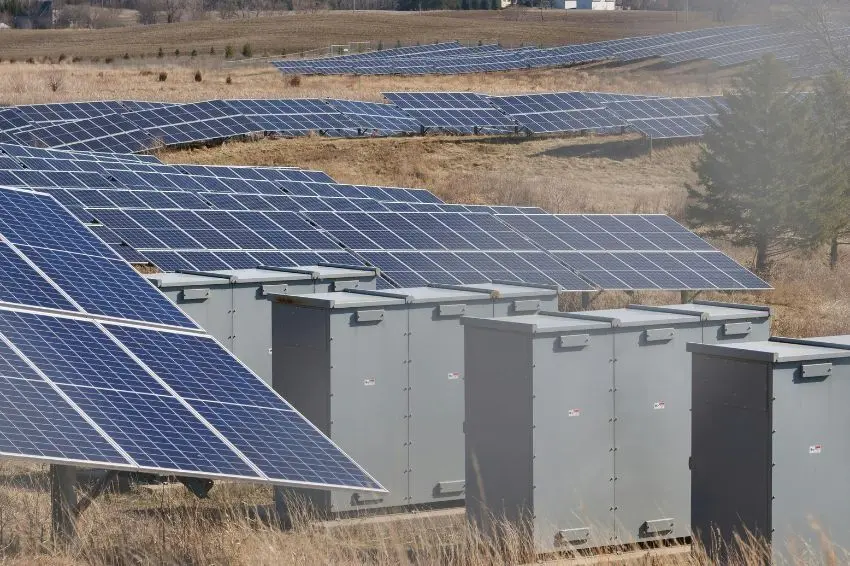
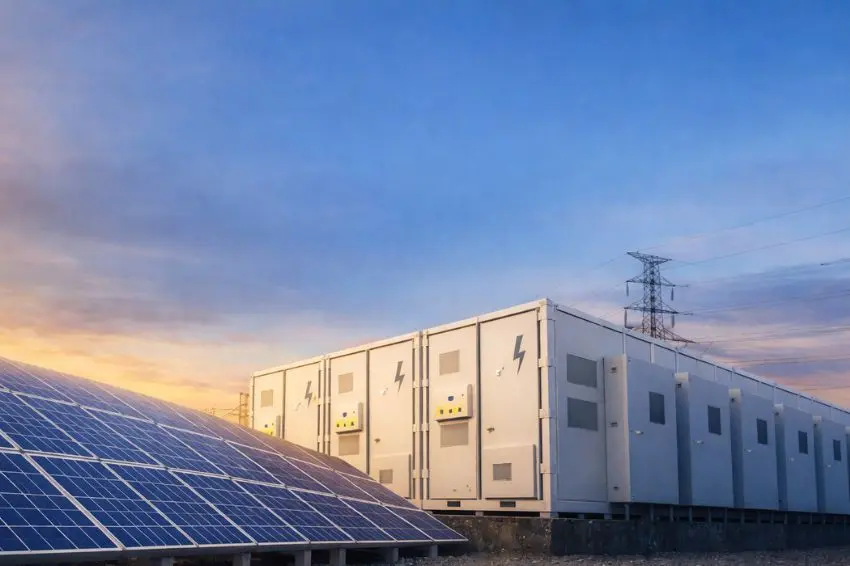
To serve this segment, the company has been promoting in the country the Kubank, a modular energy storage solution developed by Canadian Solar for commercial and industrial applications, which can be installed in a scalable way and integrated into different consumption profiles, driven by the company's already established structure in Brazil, and another front focused on utility-scale projects, under the responsibility of the subsidiary e-STORAGE.
Science & Technology applications and value creation.
Irene Sultanum, Head of Sales Storage at Canadian Solar, commented that her management's current focus is on expanding projects aimed at businesses and industries, especially time-shift solutions, which allow energy to be stored during periods of lower cost for use during more expensive times.
"We are prioritizing applications that increase the customer's economic efficiency, allowing them to reduce energy costs through strategic storage," he stated.
The executive highlighted that the company's strategy goes beyond simply supplying equipment. The company also acts as a technical partner, offering engineering support, proper sizing, and services throughout the entire lifespan of the systems.
Among the recent initiatives is the launch of an O&M (operation and maintenance) program, aimed at ensuring greater reliability and performance of the projects.
Another differentiating factor pointed out by Irene is the company's local structure. According to her, the company imports the equipment, maintains inventory in the country, and sells the systems with invoicing in reais, reducing exchange rate risks and simplifying the acquisition process.
“We believe this structure will be a key differentiator, as the client doesn't need to deal with importing or exposure to the dollar. Canadian itself handles all of that,” he said.
She further added that the company also acts as a partner to EPC contractors and engineering firms that do not have the capacity for their own financing.
“Many technical companies have good projects, but they can't make them financially viable. In these cases, Canadian comes in as a partner to make implementation feasible,” she explained. For Irene, the commercial and industrial segment represents a significant growth opportunity in Brazil.
The executive highlighted that the company has already sold more than 18 projects, with some installations scheduled to become operational in the first half of the year. This aligns with the company's strategy of including and serving projects ranging from smaller scale to larger systems, thus expanding access to technology.
“The market is still new and there is great potential for expansion. We are focused on concrete projects and effective conversion into sales. We want to provide solutions for different customer profiles, including those who only need one or a few battery cabinets. Not every project requires large scale,” he added.
In her analysis, she also states that she intends to replicate in the energy storage sector the experience gained in the distributed generation market, where the company already has a strong presence in Brazil in both utility scale and distributed generation, and to extend this reach to the battery market as well, especially in the segment... C&Iwhich has historically received less attention. The intermediate storage segment is still largely unexplored by suppliers, assesses Irene.
“Today, many companies prioritize only large-scale projects. Canadian Solar's strategy includes also serving this market, which has enormous potential,” he emphasized.
LRCAP seen as inevitable
For the energy storage sector, the auction is considered a regulatory milestone capable of unlocking investments and consolidating the role of batteries in the electricity matrix.
Rafael Moura, the executive responsible for e-STORAGE's operations in Brazil, believes that holding the auction is only a matter of time. In his assessment, the auction needs to happen as soon as possible to allow the electrical system to incorporate new tools for flexibility and stability. He emphasizes that the first contract will also serve as a benchmark for future prices and business models.
“The discussion is no longer whether storage will happen, but when. Brazil is lagging behind. While neighboring countries, such as Argentina, have advanced in contracting batteries, here we are dealing with increasing curtailment and a clear need for power. Even so, the country continues to lag behind in the adoption of this technology,” he stated. Moura also notes that international interest is already high and tends to increase competitiveness.
“The number of interested companies is very large. We have already seen processes with dozens of manufacturers participating in the bidding process. In projects of this size, financing, risk management, strategy, and track record make a big difference. Price is important, but it's not the only thing that wins the auction,” he said.
According to him, although competition may put pressure on prices, factors such as local infrastructure, bankability, guarantees, and global execution history gain weight in projects of this magnitude.
Commitment to delivery and long-term vision.
Both executives emphasize that meeting deadlines and ensuring support throughout the systems lifecycle is essential to reducing risks and ensuring business continuity.
Moura adds that the proposals presented already consider complete timelines, from contract signing to the start of commercial operation, which contributes to greater project predictability. "These are feasible proposals, with defined dates. It's a real commitment to the client," he stated.
The executive also highlights the volatility of the global battery market, influenced mainly by the price of lithium, which is traded internationally and whose value can vary daily.
"Lithium is a commodity and its prices fluctuate daily. Even so, when there is a pre-contract, we uphold the commitment made," he noted.
For large-scale projects, he compares contracting storage systems to a long-term commitment, due to the need for continuous technical support for decades, and says it's necessary to ensure the company is present to support the system.
In this context, executives believe that the evolution of the storage market in Brazil will depend not only on economic and regulatory conditions, but also on the ability of projects to rely on stable suppliers over time.
all the content of Canal Solar is protected by copyright law, and partial or total reproduction of this site in any medium is expressly prohibited. If you are interested in collaborating or reusing part of our material, please contact us by email: redacao@canalsolar.com.br.


Answers of 2
Hi Roger! How are you?
Thank you very much for your comment and for sharing this important perspective on the current state of the sector. Indeed, the Northeast has been a leader in the expansion of renewable energy in Brazil, and we understand the challenges that arise with this rapid growth.
Energy storage emerges as a strategic solution to overcome these bottlenecks, bringing greater flexibility, security, and efficiency to the electrical system. We remain committed to contributing to this advancement, supporting market development with reliable, long-term solutions.
Count on Canadian Solar on this journey!
Very accurate thoughts, I'm from the Northeast and we've seen the greatness of renewable energies arrive here with force, I'm talking about solar and wind, and suddenly bottlenecks are hindering this revolution, which is renewed through storage and auctions, great content, which helps a lot to keep hope alive!!!