
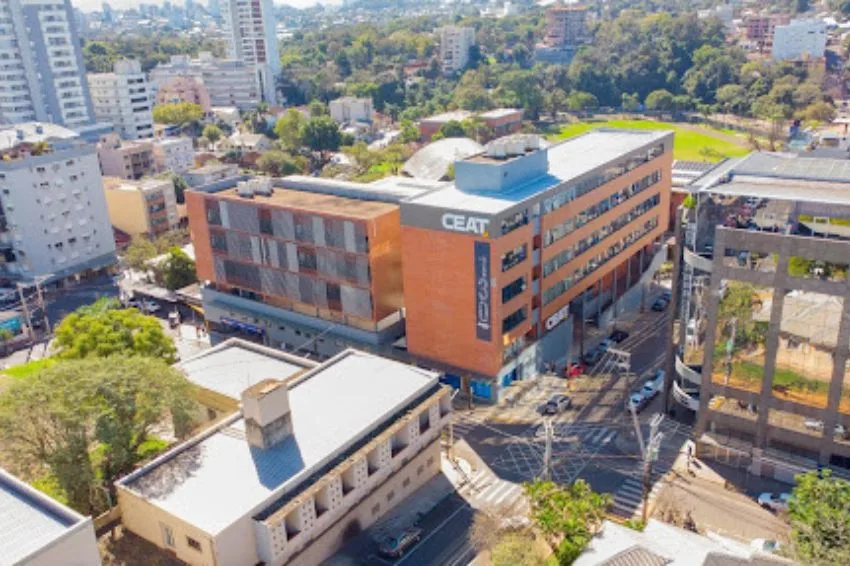
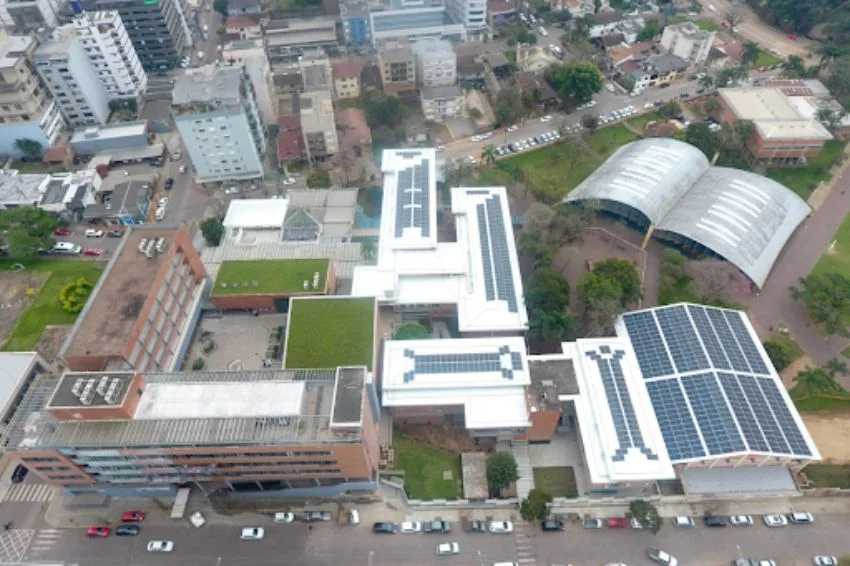
CEAT (Colégio Evangélico Alberto Torres), a reference in education and sustainability in Rio Grande do Sul, inaugurated the largest zero grid plant with Hoymiles technology ever installed in Brazil.
The project was executed by Sonnental Energia, with consultancy from Mercatto Energia and technical planning from GM2 Engenharia, which monitored everything from the initial energy diagnosis to the definition of the ideal self-production model, ensuring technical and strategic alignment between all involved.
The team monitored the project from the initial energy assessment to the definition of the ideal self-generation model, ensuring strategic and technical alignment among all stakeholders. The plant operates with 166 Hoymiles HMS-1800 microinverters, reinforcing the adoption of cutting-edge solutions in the solar sector.
"With a power output of 381,80 kWp, the project symbolizes the convergence of technological innovation, educational impact, and environmental commitment, at a time when educational institutions are seeking to position themselves as agents of sustainable transformation," commented Débora Garcez, Marketing Manager at Hoymiles.
Sustainability that is part of the school routine
A regional benchmark in socio-environmental practices, CEAT is the only school in the region that offers a course dedicated exclusively to sustainability and tree-lined green roofs as part of its pedagogical infrastructure. Now, with its own energy generation, the school expands its role as a showcase for innovation and a living laboratory for students.
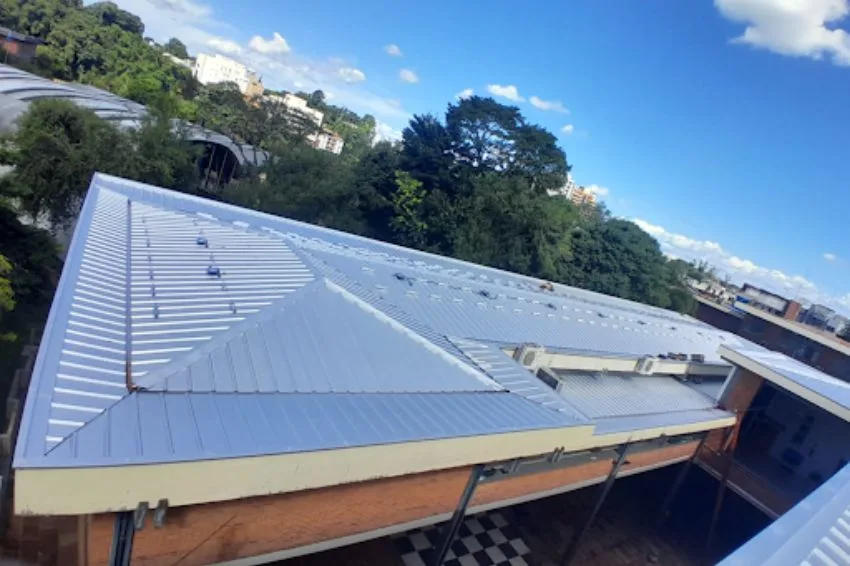
According to Mercatto Energia, the choice of Hoymiles microinverters was strategic for dealing with the institution's diverse roofs and partial shading, as it prevents energy losses and allows for individual monitoring of each module.
"Each module operates independently, ensuring maximum energy efficiency even in shaded conditions. Furthermore, individual monitoring allows you to closely monitor the performance of each panel."
"The choice of technology was strategic given the school's profile, which has varying roof areas and partial shade. Unlike conventional string inverters, microinverters allow individual monitoring of each module, avoiding energy losses and optimizing production," he added.
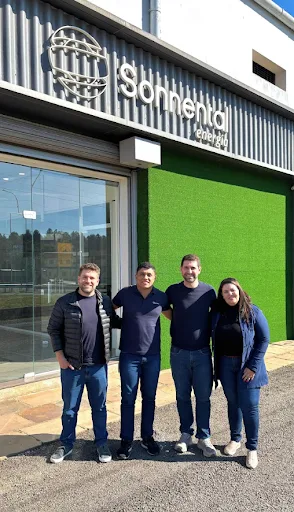
Located in Estrela, Rio Grande do Sul, Sonnental Energia was responsible for the construction. For engineer and co-founder Guilherme Eckert, the project was more than a technical challenge.
"It was a great honor to deliver this plant to such an important school in the region. We focused on quality, planning, and trust. It was more than just a facility; it was a commitment to an ideal. From the beginning, we focused on quality, planning, and mutual trust," he emphasized.

According to the professionals who worked on the project, the project required high-quality engineering solutions, such as hot-dip galvanized conduits, robust electrical panels, and organized distribution of microinverters, ensuring durability, safety, and aesthetics.
Among the main obstacles were the integration of Hoymiles microinverters into the school's electrical system and the import of specific components, which were overcome with technical support from the manufacturer.
Hoymiles Technology: efficiency even in challenging scenarios
Hoymiles supplied the microinverters, the central component of the photovoltaic system, and provided technical support to ensure the plant's optimal configuration. The choice of this technology proved strategic given the school's characteristics, which include multiple roof areas and partial shade.
The project's resilience was evident after the historic floods of May 2024 in Rio Grande do Sul. CEAT was completely flooded, with water reaching the roofs and submerging equipment for more than three days.
“Even after the extreme flooding scenario, the microinverters maintained their performance, proving their quality and adaptability to robust contexts,” highlighted the Sonnental Energia team.
"Once the cleaning was completed, the microinverters returned to normal operation without any loss of performance, a testament to the robustness and reliability of Hoymiles technology," added Saulo Oliveira, Hoymiles' lead engineer.
Inspiration for other institutions
For CEAT, the plant goes beyond saving on electricity bills. The system has become a model for students, who will be able to learn about renewable energy in practice. "This project combines sustainability, innovation, and education, and can inspire other institutions to follow the same path," says Rodrigo Ulrich, director of CEAT.
"Furthermore, the project symbolizes the resilience of the Rio Grande do Sul community and the joint commitment between the school, Sonnental, and Mercatto to complete the project, even after the impacts of the floods. It's a clear example of how technology can transform realities and create social, economic, and environmental value," concluded Débora.
all the content of Canal Solar is protected by copyright law, and partial or total reproduction of this site in any medium is expressly prohibited. If you are interested in collaborating or reusing part of our material, please contact us by email: redacao@canalsolar.com.br.