

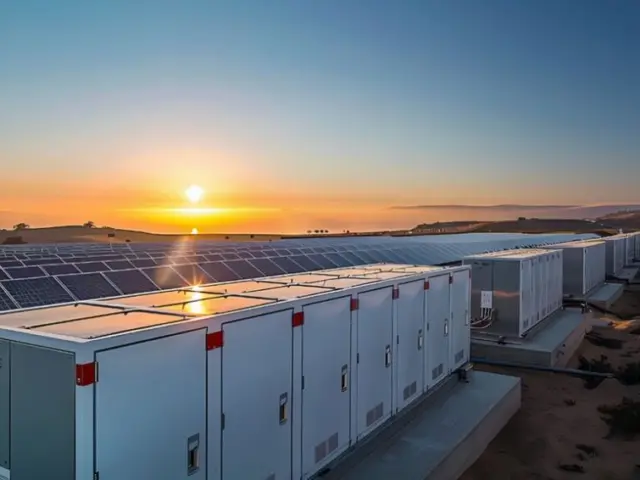
A HCC Solar Energy signed a PPP (Public-Private Partnership) with the government of Mato Grosso do Sul to supply with solar energy for more than a thousand state public buildings, such as schools, police battalions and Detran-MS (State Traffic Department) units, among others.
The expectation is that the first plants will be built in municipalities in the south of the state, explained João Alberto Machiavelli, the company's project manager.
“The idea is that we start work in two areas between March and April. The two municipalities that have a great chance of being the first to enter this first block of projects are Angélica and Glória de Dourados”, he said.
The complete list of cities where the systems will be installed will be finalized by the company by the end of April. For Secretary Hélio Peluffo, from Seilog (State Secretariat for Infrastructure and Logistics of Mato Grosso do Sul), the government is advancing in the generation of clean and renewable energy.
“We will have a green seal throughout the state. We are moving forward to serve 1.434 government units with this energy, under the responsibility of Seilog,” she highlighted.
The service points will cover 96% of Detran-MS buildings; 95% of Military Police units; 95% of the Civil Police; 97% of the Fire Department and 79% of state schools.
According to the Ministry, the investments foreseen in the PPP to supply clean energy to state administrative units total R$134 million.
R$80 million will be invested in implementing the infrastructure of solar plants and R$54 million in operation and maintenance. At the end of the contract, the assets comprising the systems to be implemented will return to the state.

Comments (1)
Comments are moderated before publication.Comments should be respectful and contribute to a healthy debate. Offensive comments may be removed. The opinions expressed here are those of the authors and do not necessarily reflect the views of the author. Canal Solar.
That's excellent news! The installation of photovoltaic systems to supply more than a thousand state public buildings is a big step towards sustainability and reducing the carbon footprint. In addition to saving energy and financial resources in the long term, this initiative significantly contributes to preserving the environment by using a clean and renewable energy source. I hope this example inspires other regions and sectors to adopt similar measures towards a more sustainable future.