
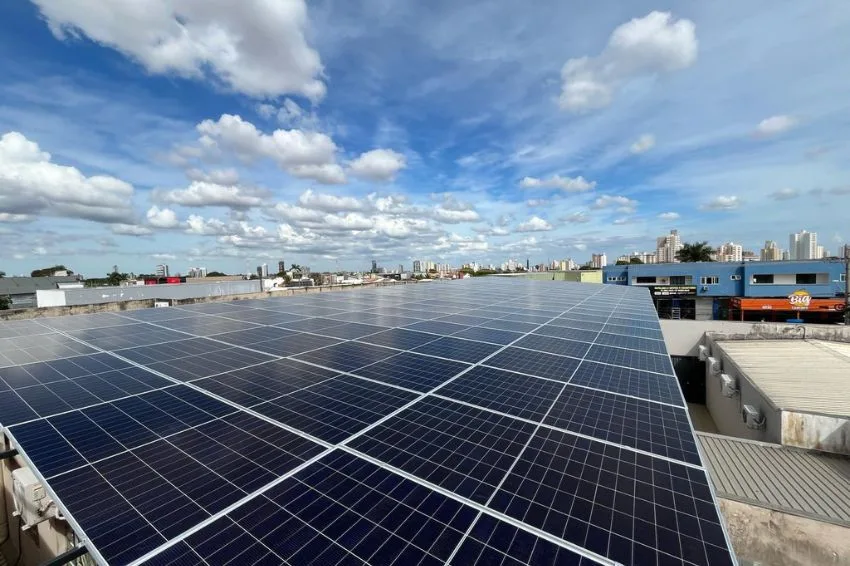
The expansion of distributed generation (DG) is a pillar of the energy transition in Brazil. Entrepreneurs and investors are directing significant capital into solar energy projects, betting on the economic and environmental benefits.
However, a critical obstacle frequently arises, jeopardizing the viability of projects whose economic logic depends on rapid returns and regulatory predictability: unjustified delays by energy distributors in connecting new projects to the grid. This paralysis not only postpones the expected financial return but can also create a cascade of contractual and operational problems.
Fortunately, there is a robust legal and regulatory framework to protect entrepreneurs. By understanding their rights and strategically using legal tools, they can overcome these challenges, meet deadlines, and seek compensation for losses and damages.
This article, based on practical cases and consolidated legal arguments, outlines the path to resolving these critical disputes.
The regulatory basis
Navigating a dispute with an energy distributor begins with understanding the hierarchy of regulations governing this relationship. Far from being a purely technical issue, connecting a DG plant is protected by multiple layers of legal and regulatory protection.
Firstly, the relationship between the entrepreneur (the “consumer-generator”) and the energy distributor is governed by the Consumer Protection Code (CDC), as recognized by several courts, including in cases of distributed generation, where the STJ has already extended this protection to the consumer in relationships with public service concessionaires (e.g.: REsp 1.634.851/RS).
This is expressly reinforced by Law No. 14.300/2022, the legal framework for micro and mini distributed generation, which defines the project owner as a “consumer-generator”.
This framework is crucial because it recognizes the entrepreneur's technical and informational vulnerability vis-à-vis the distributor, which holds a monopoly on the service and exclusive access to critical network information. This often justifies the reversal of the burden of proof in a legal dispute, requiring the distributor to prove that it did not fail in its service.
On this basis, specific regulations of the ANEEL (National Electric Energy Agency), especially REN 1.000/2021, establish clear and mandatory deadlines for each stage of the connection process. Key deadlines frequently violated include:
- Network Extension Works: Violation of deadlines for completing connection works, established by ANEEL in article 88 of REN 1.000/2021 (60, 120 or 365 days) and contractually established in the CUSD or Works Term, without the distributor presenting any plausible justification;
- Provision of Technical Data: Maximum period of 30 days for the distributor to provide essential information, such as short-circuit data, necessary for the entrepreneur to design and build their own infrastructure;
- Inspection and Connection: After the developer completes the construction and requests the completion of the process, the distributor has a maximum of 10 business days to inspect the medium-voltage connections. Once the inspection is approved, the connection should occur automatically.
Common delay scenarios in practice
Distribution company failures often follow predictable patterns. Analysis of real-life cases reveals common tactics used to justify delays, which are often illegitimate.
A recurring problem involves the distributor failing to meet its own deadline for network construction while blaming the developer for an alleged pending issue. It's common for the distributor to unduly suspend the project, claiming the developer hasn't completed their part, such as installing the Delivery Point (PDE).
However, entrepreneurs often rely on technical data that the distributor itself should provide (and often delays) to fulfill their obligations. Even after the customer's compliance is resolved, the distributor remains inactive, violating its contractual and regulatory obligations.
In another common scenario, the developer fulfills all of their obligations, completes construction of the plant, and successfully passes all inspections, only to be left waiting for the final connection.
Given the lack of outstanding issues, the distributor refuses to energize the plant, offering only vague and generic excuses such as "the need for internal project approval." This type of justification is unacceptable, as internal administrative processes cannot be used to justify failure to meet regulatory deadlines.
No less common, the distributor invokes “suspensive conditions” (environmental license, authorizations, measures to obtain easements or expropriations, etc.) to justify the delay in completing the works for which it is responsible.
However, according to REN 1.000/2021, these conditions only suspend the deadline if they meet strict requirements and are supported by robust evidence:
- (i) it is a strictly necessary license/consent/authorization;
- (ii) it is up to the distributor to obtain it (art. 87);
- (iii) there has been swift and proven diligence in obtaining (protocols, requirements met, official documents) — requirement expressed in §1 of art. 89; and
- (iv) prior written communication to the consumer, with justifications and supporting documents (art. 89, §2).
In these cases, the deadlines for starting/completing works are suspended, and the countdown resumes when the pending issue ceases — there is no “automatic increase” to the CUSD: the time “freezes” and then continues.
At this point, it is instructive to draw a parallel with the right of suspension granted to the consumer themselves. Just as Section II of §4 of Article 157 of REN 1.000/2021 limits the extension of the deadline for the consumer to proof that the reason for the request persists (such as the evolution of the licensing of their plant), a similar principle of causality and temporality governs the suspension of the deadline by the distributor.
The concessionaire's permission to "freeze" the schedule, as per Article 89, is not an absolute or indefinite right. Suspension is strictly linked to the existence of the condition that motivated it.
Therefore, the distributor must not only prove the existence of the impediment (such as a pending license), but also demonstrate its continued diligence in resolving it. Once the obstacle is removed, the deadline must be immediately resumed.
Therefore, the logic of regulation is symmetrical: neither party can benefit from an indefinite suspension. The right to halt the schedule lasts only as long as the duly proven underlying cause exists, ensuring a balance of responsibilities and preventing the suspension from being used as a subterfuge to justify inefficiency or lack of planning.
If the suspension is undue (e.g., lack of proof of diligence), the entire suspended period will count as a delay for the purposes of compensation under art. 440 (art. 89, §3) or even for the quantification of lost profits in the period.
This predictability is a principle that governs the entire process from its inception. Regulations stipulate that the Connection Budget must clearly outline the list of works, costs, schedule, and situations that may, exceptionally, suspend deadlines.
Once the entrepreneur accepts this budget and formalizes it by signing the Distribution System Usage Agreement (CUSD), the agreement is consolidated. Decisions of the ANEEL are emphatic in classifying this commitment as a “perfect legal act”, protected by §5 of article 83 of REN No. 1.000/2021, which establishes that the approved budget can only be changed by agreement between the parties.
Therefore, all planning, including obtaining licenses and easements, must be contained in this initial agreement, protecting the entrepreneur against unilateral changes and surprises that compromise the viability of the project.
The insufficiency of the administrative route: compensation of Art. 440 of REN 1000
A ANEEL provides an administrative remedy for failure to comply with deadlines by distributors. Article 440 of REN 1.000/2021 establishes that the distributor must provide financial compensation to the consumer, credited directly to the energy bill, if it violates the commercial and service deadlines defined in the regulation.
Although it is an automatic and low-complexity mechanism, this compensation has symbolic value and is merely punitive in nature, and rarely reflects the real extent of the loss suffered by the entrepreneur.
The amounts are generally paltry compared to the revenue lost due to the plant's shutdown. The most important point, however, is that receiving this administrative compensation does not prevent consumers from seeking full compensation for their damages in court, including lost profits and consequential damages.
The mechanism of Art. 440 functions as a minimum regulatory sanction, but not as a definitive solution or a limitation to the principle of full civil reparation (restitutio in integrum).
In administrative decisions, the ANEEL has limited this compensation to the regulatory scope, leaving out typical claims for civil damages — which, consequently, preserves the judicial route.
The path to resolution: judicial protection
Given the ineffectiveness of administrative channels and the magnitude of the losses, legal action becomes the most effective avenue. Court precedent has consolidated in favor of entrepreneurs, recognizing the distributors' failures and guaranteeing compensation for damages.
1. Urgent court order for connection (Urgent Protection)
To prevent the damage from continuing throughout the entire process, it is possible to request an injunction (urgent relief) to compel the distributor to act immediately. Courts have granted these orders to order the completion of construction and the connection of power plants, especially when the failure to meet deadlines is evident and unjustified.
2. Compensation for losses and damages
The recovery of losses accumulated by the consumer due to the delay in connecting their energy generation system occurs, in a legal action, through a claim for compensation.
Brazilian case law is unanimous in recognizing that an unjustified delay in connection constitutes a failure to provide the service, giving rise to the obligation to compensate. The distributor's liability is objective, meaning it does not require proof of fault.
Compensation primarily covers lost profits, which correspond to what the consumer "reasonably failed to profit." In cases of delay, this translates to the value of the energy that the plant failed to generate and compensate for during the entire period of the distributor's delay.
To prove these values, it is essential to present a technical report with an estimate of monthly generation and revenue projection, using recognized tools such as PVSyst, in addition to estimates of applicable rates for the period.
The courts have accepted that the final value of lost profits be determined at the judgment settlement stage, ensuring that the entire period of delay is compensated – although it is always recommended to indicate a concrete estimate of accumulated losses with the compensation request.
In addition to lost revenue (lost profits), full compensation for losses includes consequential damages, which are the direct and actual costs that the entrepreneur was forced to bear solely due to the distributor's delay. The legal basis for this claim is found in the Civil Code, which provides for compensation for what the party "effectively lost" (Articles 402 and 403 of the Civil Code).
In practice, these costs may include a range of direct expenses, such as: GD costs include:
- (i) costs of storage and insurance of equipment, such as modules and inverters, that remain idle;
- (ii) expenses for mobilization, demobilization and prolonged stay of construction teams on site;
- (iii) rental of temporary equipment or generators to meet energy needs during the delay;
- (iv) payment of fines or rebalancing costs in contracts with third parties (EPC, O&M, land lease);
- (v) additional financial charges, such as interest and IOF, on financing that could not be repaid with project revenue;
- (vi) costs to revalidate reports, licenses and ARTs that have expired due to delays in connection.
For these amounts to be reimbursed, it is essential that each expense is rigorously documented (through invoices, contracts and cost reports) and that the direct causal link between the cost incurred and the distributor's delay is proven.
Conclusion
Although connection delays in DG projects pose a severe challenge, developers are not powerless. The legal framework, from the Consumer Protection Code to specific regulations, ANEEL, offers a solid basis for defending your rights.
By meticulously documenting the distributor's failures, proactively managing your own obligations, and adopting a well-founded legal strategy, it is possible to break the impasse.
Seeking judicial protection, supported by increasingly favorable case law, has proven to be a powerful tool not only to force the long-awaited connection, but also to ensure full compensation for the economic damages suffered during the period of forced inactivity.
The opinions and information expressed are the sole responsibility of the author and do not necessarily represent the official position of the author. Canal Solar.

Comments
Comments are moderated before publication.Comments should be respectful and contribute to a healthy debate. Offensive comments may be removed. The opinions expressed here are those of the authors and do not necessarily reflect the views of the author. Canal Solar.