
Regarding the acquisition of a string box, the disconnect switch and circuit breaker are similar equipment that can bring great confusion regarding their operational advantages and differences. To learn more about the functionality of these two devices, follow the text below.
Disconnect switch
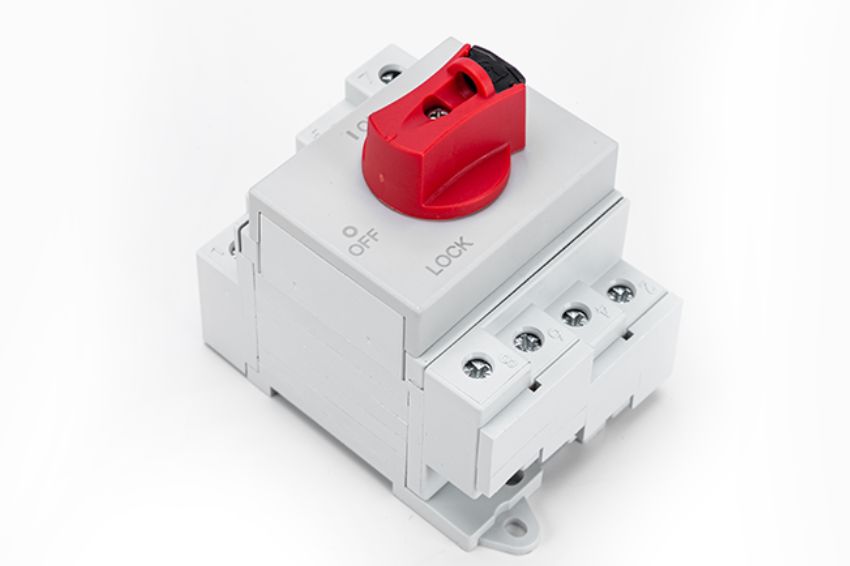
As its name suggests, the main function of disconnect switch is to section and isolate the circuit.
The disconnector function serves to de-energize the sections of a circuit, keeping the load at a reasonable level so that there can be handling the equipment without putting it at risk operator safety.
Additionally, the disconnector switch is used to interrupt the flow of power, closing the circuit. This way, the system is turned off to ensure safe maintenance.
Disconnector
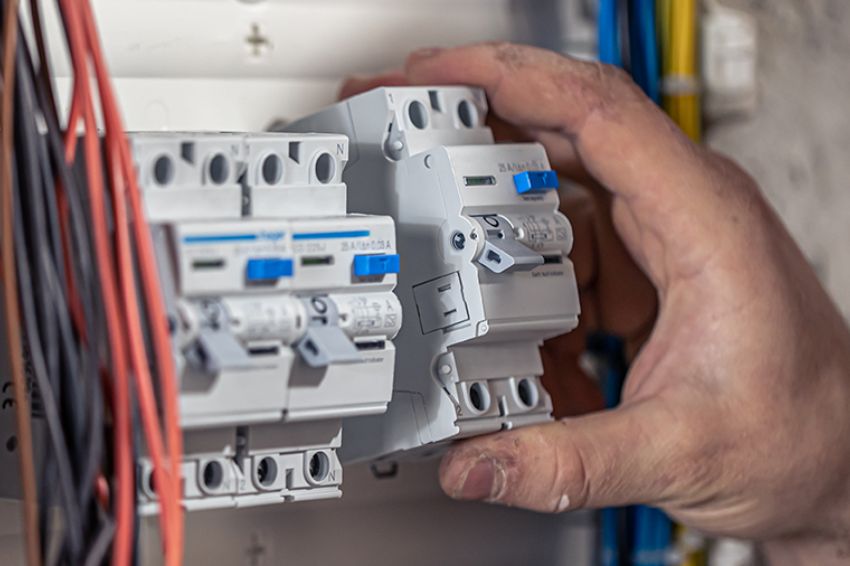
Circuit breakers, despite having isolating functions, are the system's thermomagnetic protectors.
They work by connecting a bimetallic plate with an electrical coil. A current charges this coil which, in turn, heats the sheet and deforms it.
This deformation, however, has a limit. If the current exceeds this limit in a surge, the force will deform the bimetallic sheet in such a way that the system will definitely be stopped, preventing damage and allowing maintenance to be carried out.
The disadvantage of the circuit breaker is that its main objective, which is protection, ends up becoming obsolete due to the low change in nominal current (In) and short circuit current (Icc) in the system.
This low change is not detected by the circuit breaker — consequently, it does not trip in the event of a short circuit.
Therefore, it ends up being used only for interruption of the system.
What is the difference?
The first difference between the two devices is the level of autonomy that they allow.
The disconnector switch allows for a manual load sectioning safely and with a longer useful life, while the circuit breaker works as a interrupt device, but with a shorter useful life and components that are more susceptible to failure.
The biggest difference, however, is the cost-benefit, in addition to the breadth of usability in the global PV market of manufacturers of inverters, string boxes and protection solutions.
The disconnector switch benefits from a greater benefit in reliability and technical safety compared to DC circuit breakers.
Disconnector Switch and Circuit Breaker: Where can I find it?
The subdivision Solar da Proauto Electric is available to resolve any queries that remain unresolved after reading this article.
If the products described in the text are interesting to you or your company, feel free to contact our professionals. We are open to discussing budgets and assembly plans.
Click here and contact us!




Comments (2)
Comments are moderated before publication.Comments should be respectful and contribute to a healthy debate. Offensive comments may be removed. The opinions expressed here are those of the authors and do not necessarily reflect the views of the author. Canal Solar.
Congratulations! The solar channel, always covering good articles related to Techniques.
always great approaches. But what does borma require or recommend? Is it clear that you can or cannot use one or the other? Or is it not clear?