

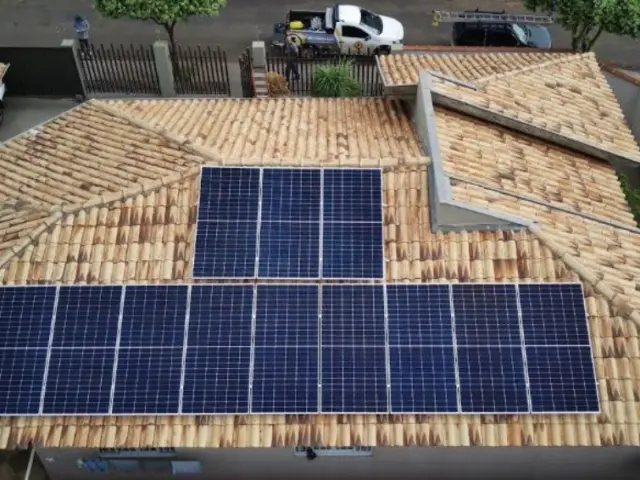
In recent years, the distributed solar generation sector in Brazil has gone from a niche market to a leading player in the energy transition, reflecting regulatory advances, greater environmental awareness, and easier access to technology.
Contrary to a pessimistic view that points to technical and bureaucratic challenges as insurmountable obstacles, it is possible to design a path of sustainable growth that preserves the environmental, social, and economic gains already achieved.
Law 14.300/2022: advances and gaps in regulation
Law 14.300/2022 represents an important milestone. Although it introduces a tiered system for charging for the use of the electricity grid, it also offers a fair and predictable transition until 2045. However, it is crucial to highlight that... ANEEL The National Electric Energy Agency (Agência Nacional de Energia Elétrica) is more than two years behind schedule in complying with Article 29 of the aforementioned law, which mandates that the regulatory agency present technical studies that quantify the benefits of distributed generation for the electricity grid.
The lack of such delivery hinders the qualified debate on the impacts and limits the formulation of more effective policies for the sector. Even so, the transition model provided for in the law allows consumers and integrators to adapt progressively, protecting investments already made and encouraging new projects based on clear rules.
Furthermore, recent measures by the ANEEL to simplify the connection process in smaller systems are positive steps. With additional technical adjustments and greater standardization among distributors, it would be possible to accelerate the integration of systems safely, without burdening the sector or compromising the stability of the network.
Constructive criticism from sector entities, such as ABSOLAR (Brazilian Association of Photovoltaic Solar Energy), MSL (Free Solar Movement), ABGD (Brazilian Association of Distributed Generation) and INEL (National Institute of Clean Energy), is valuable for improving these mechanisms.
Brazil's competitive advantages in the solar sector.
Brazil has unique conditions to become a global leader in distributed solar generation. Favorable solar irradiation, competitive costs per kWp and high electricity tariffs mean that the average payback period for residential systems is between 4 and 5 years, well below the North American average. With affordable financing and support for projects in low-income communities, such as the Clean Energy program, the sector can further democratize access to clean energy.
To ensure balanced growth, it is recommended that public authorities and regulators:
- Maintain regulatory stability, with periodic reviews based on real and predictable impact data;
- Improve licensing and connection processes, with digitalization, deadline targets and greater transparency on the part of distributors;
- Promote mandatory certifications of facilities and professionals, with incentives for the training of qualified workers;
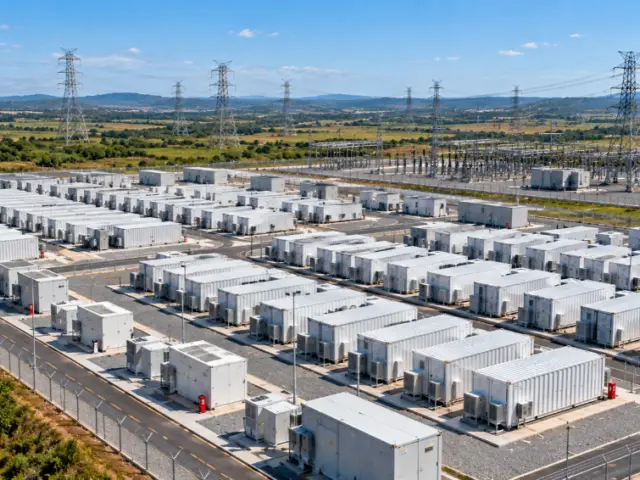
- Encourage research and development in smart grids and storage, which expand the grid's capacity to absorb distributed solar generation;
- Encourage accessible green credit lines for end consumers, condominiums and small businesses.
Such measures can ensure that distributed solar generation grows steadily, generating jobs, attracting investment and contributing to national energy security. The focus should be on consolidating a safe, transparent and stable environment that rewards efficiency and innovation.
Recommendations for public authorities and regulators
A quick and effective way to prepare the Brazilian electricity sector for the consolidation of distributed generation would be to direct part of the available funds from the regulated R&D (Research and Development) and Energy Efficiency programs of the ANEEL for projects aimed at including energy storage.
These projects should encompass both solutions behind the meter (in consumer installations) as well as coupled to the distributors' infrastructure, creating the basis for intermittent sources such as solar and wind to become dispatchable sources. This transformation would allow for significant gains in energy quality, security of supply, and grid stability, bringing Brazil in line with international best practices.
It is also important to dispel inaccurate comparisons frequently made by entities such as ABRADEE (Brazilian Association of Electricity Distributors) and even by the company itself. ANEEL, who claim that measures such as charging for Fio B, limitation by flow inversion (or as affectionately named by the sector, “Flow Invention”) and restrictions on access to the network already occur in mature markets such as the United States.
Yes, they do occur — but in a radically different context. Take California as an example: even with more than 1,8 million installed photovoltaic systems and more than 12% solar penetration in the state's energy matrix, recent changes in tariff compensation (NEM 3.0) have already resulted in the dismissal of more than 17 workers in the solar sector in 2023 alone, according to data from [source missing]. CALSSA (California Solar & Storage Association).
Companies have closed or resized their operations, which shows that, even in mature and technologically advanced environments, the adoption of these restrictive measures — such as Wire B collectionHowever, limitations caused by flow reversal and technical barriers to connection—if poorly calibrated—can have significant side effects.
Importing these measures to Brazil — which is still in the early stages of distributed solar generation penetration — without due care is a recipe for deterring investments, generating mass unemployment, limiting access to clean energy generation, and hindering the advancement of a sector that has the potential for social inclusion, sustainability, and significant regional development across the entire continental territory of Brazil.
Adopting isonomic restrictive measures, disregarding the reality of each region, is like killing a child in the cradle, before he or she even learns to speak.
The opinions and information expressed are the sole responsibility of the author and do not necessarily represent the official position of the author. Canal Solar.

Comments (3)
Comments are moderated before publication.Comments should be respectful and contribute to a healthy debate. Offensive comments may be removed. The opinions expressed here are those of the authors and do not necessarily reflect the views of the author. Canal Solar.
Excellent analysis, Eduardo! The article provides a clear and realistic overview of distributed solar generation in Brazil, highlighting key points such as the importance of Law 14.300/2022 and the role of ANEEL to ensure a just transition by 2045. I particularly appreciated the attention given to the technical and bureaucratic challenges, which are often underestimated – the proposed balance between connection simplification and network stability is precisely the discussion we need right now.
The comparison with the Californian market, mentioning the impacts of NEM 3.0 on jobs, reinforces the need for well-calibrated regulatory adaptations here. Approving stable and transparent rules, strengthening certifications, and investing in storage are key measures to accelerate the democratization of solar energy without sacrificing system security.
It's also great to see mention of inclusive models like energy sharing and green credit lines—formats with great potential for community engagement and reducing inequalities.
Congratulations on the in-depth approach and the constructive call to action! We've also been discussing strategies to accelerate the adoption of distributed generation, especially in rural areas and low-income communities. It would be a pleasure to exchange ideas and further contribute to this vital debate for the country's energy future.
Excellent analysis, Eduardo! The article provides a clear and realistic overview of distributed solar generation in Brazil, highlighting key points such as the importance of Law 14.300/2022 and the role of ANEEL to ensure a just transition by 2045. I particularly appreciated the attention given to the technical and bureaucratic challenges, which are often underestimated – the proposed balance between connection simplification and network stability is precisely the discussion we need right now.
The comparison with the Californian market, mentioning the impacts of NEM 3.0 on jobs, reinforces the need for well-calibrated regulatory adaptations here. Approving stable and transparent rules, strengthening certifications, and investing in storage are key measures to accelerate the democratization of solar energy without sacrificing system security.
It's also great to see mention of inclusive models like energy sharing and green credit lines—formats with great potential for community engagement and reducing inequalities.
Congratulations on the in-depth approach and the constructive call to action! Here on our website [YOUR_SITE], we've also been discussing strategies to accelerate the adoption of distributed generation, especially in rural areas and low-income communities. It would be a pleasure to exchange ideas and further contribute to this vital debate for the country's energy future.
Congratulations on the report and let's go. Waiting for the opening for Group B. In the meantime... We recently launched a shared energy project in Mato Grosso do Sul and 10 other states in Brazil. The customer receives savings on their energy bill without having to install solar panels or any other equipment. We are looking for entrepreneurial partners. Speak directly on watts 51984863327