
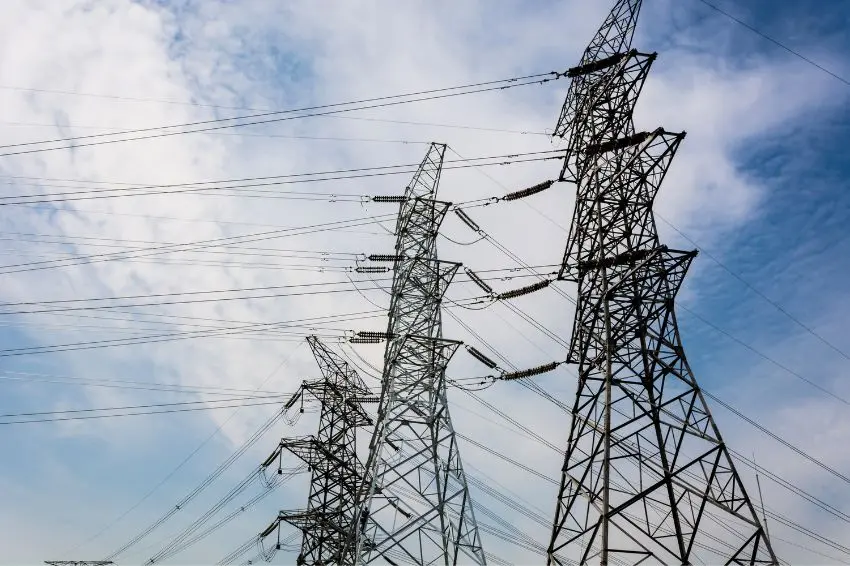
In recent years, recurring episodes of high prices in the free energy market have brought back into focus an old tension in the Brazilian electricity sector: to what extent should the price actually reflect the scarcity of the system?
Wouldn't it be more logical for the price to reflect the supply and demand signals? If demand exceeds supply, the price goes up. If supply exceeds demand, the price goes down. This equilibrium seeks a fair price.
In theory, the answer seems trivial. In any market, price is the main mechanism for coordinating supply and demand. In the electricity sector, this function takes on additional importance, as consumption, contracting, and investment decisions depend directly on the quality of this economic signal.
In practice, however, the Brazilian regulatory framework has always treated pricing with caution. Ceilings, floors, and other safeguards have been built over time to preserve financial stability and institutional predictability, but the system has changed. We are stuck in outdated mathematical models that may not capture the entire transition that has taken place in the country's energy matrix.
The current debate arises precisely at this point of tension. The question is no longer whether the price should reflect costs and scarcity—since this is a consolidated consensus—but to what extent the Brazilian regulatory framework is willing to allow the price to fully perform this function.
The economic transformation of the system and the regulatory gap.
From an economic standpoint, the Brazilian electricity sector has undergone a profound structural transformation in the last decade:
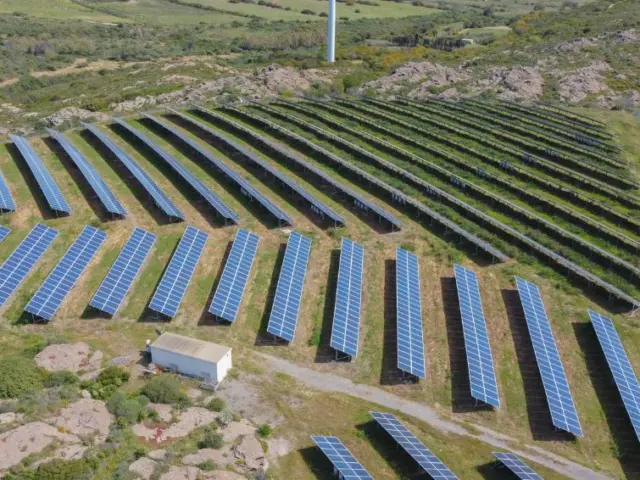
- significant increase in the share of intermittent renewable sources;
- greater intraday variability in the balance between supply and demand;
- growing need for dispatching flexible sources during peak hours;
- Adoption of more conservative operational policies for mitigating hydrological risk.
These changes are directly reflected in the Marginal Operating Cost (MOC), which has begun to show significant hourly peaks, especially in the early evening. The system, therefore, now operates under a logic of temporal scarcity, and not just seasonal scarcity.
From a legal and institutional standpoint, however, the pricing structure has evolved incrementally and cautiously. The introduction of PLD (Difference Settlement Price) The schedule corrected a significant asymmetry between physical operation and financial settlement, but did not redefine the role of price as a full instrument of economic coordination.
PLD as a regulated price and its legal limits.
It is important to recognize that the PLD (Price of Energy in the Spot Market) is not a market price in the strict sense. It is a regulated price, calculated according to a methodology defined by the regulatory authority and limited by previously established ceilings and floors.
These limits fulfill important legal functions, such as mitigating systemic risk, preserving the solvency of agents, containing abrupt distributive effects, and indirectly protecting the stability of the sector.
From an economic standpoint, however, such limits produce a known side effect: they reduce the price's ability to adequately signal the system's actual scarcity, especially during intraday stress events.
The recent recurrence of situations in which the PLD (Price of Energy in the Spot Market) reaches its ceiling, while the projected CMO (Marginal Cost of Operation) significantly exceeds this value, highlights this disconnect.
The price ceases to reflect the marginal cost precisely at the moments when the signaling would be most relevant for contractual, operational, and investment decisions.
Economic efficiency versus regulatory risk containment.
The traditional argument against greater liberalization of price signals is the risk of financial instability. This point, however, deserves closer analysis.
Recent data indicates that financial stress already exists in the ACL (Accounting and Credit Management) sector, even with ceilings and floors in place. We can also observe reduced liquidity, increased credit risk, and greater vulnerability among less capitalized agents, in addition to uncovered consumers or those with inadequate risk management suffering significant impacts.
From an economic standpoint, this suggests that price containment does not eliminate price adjustment, but merely shifts it to other mechanisms, such as default, litigation, contract renegotiation, or ex post regulatory intervention.
From this perspective, the current model can be seen as an arrangement that prioritizes formal stability, but at the cost of lower allocative efficiency and less risk transparency.
The institutional mismatch between ACR and ACL
Another relevant legal and economic element is the growing misalignment between the signals emitted in different contracting environments.
The coexistence of high or ceiling PLD (Price of Energy in the Spot Market) levels in the ACL (Free Contracting Environment) and favorable tariff flags in the ACR (Regulated Contracting Environment) generates significant institutional noise.
From a regulatory law perspective, this mismatch weakens the system's coherence and hinders communication with consumers and economic agents. Consumers, regardless of size, need to be part of the energy sector ecosystem, a fact compromised by the complexity of understanding current pricing models.
Therefore, the price, which should serve an informative and educational function, ends up transmitting contradictory signals about scarcity, cost, and risk.
The regulator's position: acknowledging the problem, cautious approach to the solution.
The inclusion of a review of the methodologies associated with AML (Anti-Money Laundering) in the recent regulatory agenda indicates that the regulator recognizes the growing pressure on the current model. But we need to look at what is not being proposed. To date, there is no formal initiative to eliminate price ceilings and floors.
This data is revealing. It indicates that the limit of the price signal in Brazil is not technical, but institutional and legal. The sector consciously chooses to preserve governance, predictability, and legal certainty, even in the face of economic losses due to inefficiency.
The urgency of the debate: gradual erosion, not immediate collapse.
There is no indication of immediate operational unfeasibility of the current model, as the system continues to function. The urgency of the debate, then, stems from another factor: the increasing cost of maintaining an arrangement that restricts the economic role of price.
What price is the sector paying?
- Widening the gap between cost and price;
- Reduced effectiveness of the economic signal;
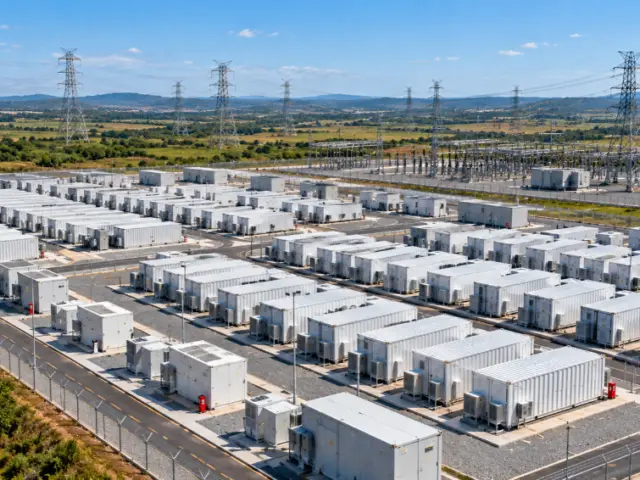
- Difficulties in developing tools such as demand response, storage, and flexibility products;
- High dependence on corrective regulatory solutions.
From a legal and economic standpoint, this represents a process of gradual erosion of the efficiency and credibility of price as a central coordination mechanism.
Price as an institutional choice.
The discussion about the appropriate price signaling in the Brazilian electricity sector is neither ideological nor merely technical, but rather reflects an institutional choice: to what extent is the system willing to accept the distributive and financial effects of a price that fully signals scarcity?
The sector is still able to coexist with the current model. This model is only truly questioned when we have supply interruption events (blackouts), which end up attracting the attention of the mainstream media.
I worked for years in Energy Distribution at Elektro. Attention only arises when the power is shut off – during the rest of the day we don't even imagine the complexity of maintaining a system operating 24 hours a day. This coexistence, however, is not neutral. It imposes increasing economic, regulatory, and institutional costs.
Ultimately, the discussion goes far beyond maintaining or removing ceilings and floors: it is necessary to define what role price should play in an increasingly complex, intermittent, and risk-prone sector.
The opinions and information expressed are the sole responsibility of the author and do not necessarily represent the official position of the author. Canal Solar.


Comments
Comments are moderated before publication.Comments should be respectful and contribute to a healthy debate. Offensive comments may be removed. The opinions expressed here are those of the authors and do not necessarily reflect the views of the author. Canal Solar.