

With the collaboration of Manoel Guimarães
The two regulatory agencies in the energy sector are operating in 2025 with the smallest budget in the last ten years – a direct reflection of the cuts promoted by the Federal Government in May, motivated by revenue frustration and increased expenses of the National Treasury.
Given this scenario, both adopted containment measures, which include suspending programs, restricting customer service and dismissing outsourced professionals.
Na ANEEL (National Electric Energy Agency), the budget has shrunk 34% since 2015 – from R$177 million to R$117 million. Over the period, there were two growth peaks: R$219 million in 2018 and R$196 million in 2023. However, compared to 2023, the first year of the current Government, the drop reaches 40%.
The impacts include the suspension of services at the Ombudsman's Office, reduction of in-person inspections, reduced opening hours at the headquarters (from 8 am to 14 pm), cancellation of public hearings and in-person events, in addition to prioritizing remote monitoring and cuts in operational contracts, technical trips and non-emergency maintenance.
The measures were made official in a letter sent to the Ministry of Planning and Budget, in which the ANEEL requests a review of the contingency and details the impacts on its operation.
If in ANEEL the situation is already worrying, at the ANP (National Agency of Petroleum, Natural Gas and Biofuels) the situation is even more severe: the budget has plummeted more than 80% in the last decade, falling from R$564 million in 2015 to R$106 million in 2025, with successive cuts year after year.
With fewer resources, the ANP began to reduce costs in the most expensive programs, such as partnerships with universities to monitor fuel quality.
The agency also suffers from a lack of civil servants and deficiencies in infrastructure and materials, factors that contributed, for example, to its systems being subject to a hacker attack in August 2022.
ANEEL reduces the time of public meetings
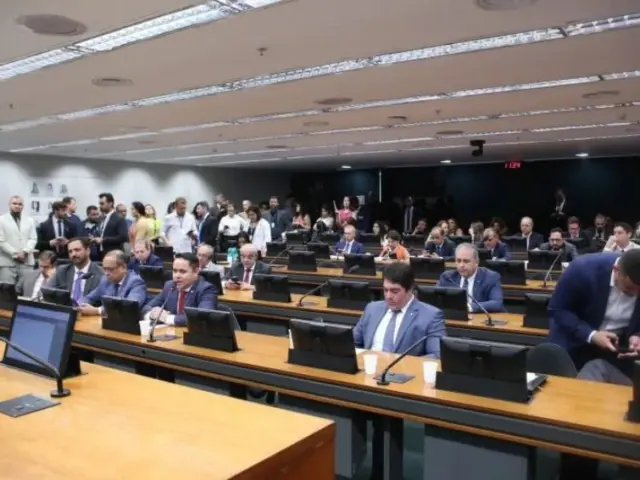
This Monday (30), the ANEEL reported another measure to contain spending in light of the budget cuts determined by the Federal Government. In a statement on its website, the Agency announced that, starting this Tuesday (1st), public meetings will take place from 8:30 am to 13:30 pm.
Previously, they started at 9 am, with no time limit for closing, which depended on the agenda and circumstances. In addition, oral arguments during the analysis of processes at summit meetings will also be reduced from ten to five minutes, which tends to speed up voting.
How many regulatory agencies are there in Brazil?
According to the Ministry of Economy, Brazil currently has ten federal regulatory agencies, responsible for supervising, regulating and monitoring different sectors of the economy and public services.
In the energy sector, there are only two: ANEEL, which regulates the electric energy segment, and the ANP, responsible for the oil, natural gas and biofuels sector.
The other agencies operate in other sectors of the economy. They are:
- ANA – National Water and Basic Sanitation Agency;
- ANATEL – National Telecommunications Agency;
- ANM - National Mining Agency
- ANTAQ – National Waterway Transport Agency;
- ANTT – National Land Transport Agency;
- ANVISA – National Health Surveillance Agency;
- ANS – National Supplementary Health Agency;
- ANCINE – National Cinema Agency;
Although they also exercise regulatory functions, bodies such as Bacen (Central Bank of Brazil), CVM (Securities and Exchange Commission) and Cade (Administrative Council for Economic Defense), are not formally classified as regulatory agencies, since they have a different legal nature, and are not autonomous bodies under a special regime.

all the content of Canal Solar is protected by copyright law, and partial or total reproduction of this site in any medium is expressly prohibited. If you are interested in collaborating or reusing part of our material, please contact us by email: redacao@canalsolar.com.br.

Comments
Comments are moderated before publication.Comments should be respectful and contribute to a healthy debate. Offensive comments may be removed. The opinions expressed here are those of the authors and do not necessarily reflect the views of the author. Canal Solar.