• Sat, December 6, 2025
Facebook X-twitter Instagram Youtube LinkedIn Spotify
  • GC Solar: 17,95 GW
  • GD Solar: 41,3 GW
  • TOPCon Modules: $0,088/W
  • P-Type Cells: $0,034/W
  • N-Type Cells: $0,032/W
  • HJT Modules: $0,10/W
  • N-Type Wafer: US$0,128/pc
  • Polysilicon: US$ 19,00/kg
  • GC Solar: 17,95 GW
  • GD Solar: 41,3 GW
  • TOPCon Modules: $0,088/W
  • P-Type Cells: $0,034/W
  • N-Type Cells: $0,032/W
  • HJT Modules: $0,10/W
  • N-Type Wafer: US$0,128/pc
  • Polysilicon: US$ 19,00/kg
  • advertise here
  • About us
  • Expedient
logo site solar channel
  • News
    • energy storage
    • Market and Prices
    • Investments & Business
    • Policy and Regulation
  • Articles
    • Batteries
    • Photovoltaic structures
    • Photovoltaic inverters
    • Opinion
  • Renewable
  • Latam
  • Blog
  • Solar Energy Companies
  • Integrators
  • Magazine
    • Magazine Canal Solar
    • Conecta Magazine
  • Events
  • Videos
  • Electric Vehicles
  • Consultancy
  • Recent
  • News
    • energy storage
    • Market and Prices
    • Investments & Business
    • Policy and Regulation
  • Articles
    • Batteries
    • Photovoltaic structures
    • Photovoltaic inverters
    • Opinion
  • Renewable
  • Latam
  • Blog
  • Solar Energy Companies
  • Integrators
  • Magazine
    • Magazine Canal Solar
    • Conecta Magazine
  • Events
  • Videos
  • Electric Vehicles
  • Consultancy
  • Recent
  • News
    • Brazil
    • World
    • Technology and inovation
  • Articles
    • technicians
    • Opinion
  • Blog
  • Solar Energy Companies
  • Integrators
  • Magazine
    • Conecta Magazine
  • Events
  • Videos
  • About Us
  • Advertise Here
  • CS Consulting
  • Canal VE
  • Recent
  • News
    • Brazil
    • World
    • Technology and inovation
  • Articles
    • technicians
    • Opinion
  • Blog
  • Solar Energy Companies
  • Integrators
  • Magazine
    • Conecta Magazine
  • Events
  • Videos
  • About Us
  • Advertise Here
  • CS Consulting
  • Canal VE
  • Recent
logo site solar channel
Home / News / Energy sector released 135 million tons of methane in 2022

Energy sector released 135 million tons of methane in 2022

Methane is responsible for around 30% of the rise in global temperatures since the Industrial Revolution, says IEA
Follow on Whatsapp
  • Photo by Mateus Badra Mateus Badra
  • February 21, 2023, at 14:43 PM
4 min 50 sec read
21-02-23-canal-solar-Energy sector released 135 million tons of methane in 2022
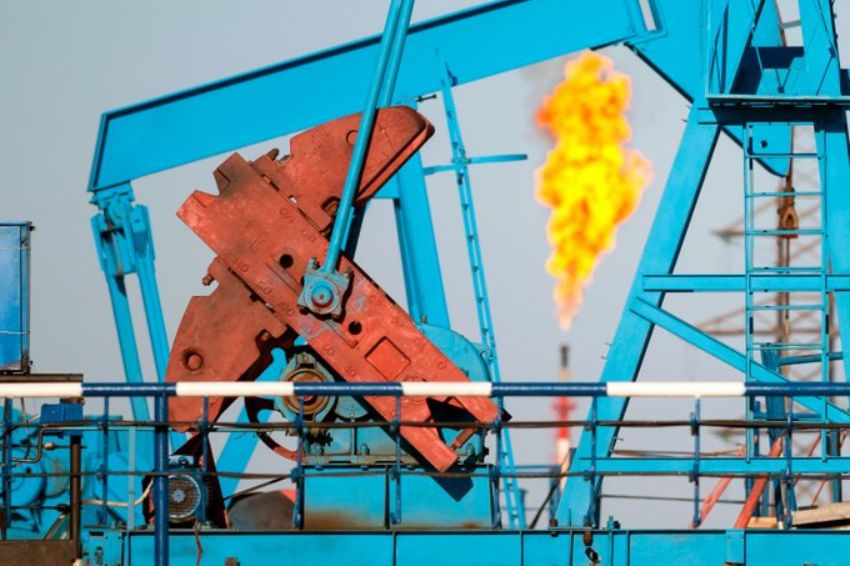
Methane emissions remained stubbornly high in 2022, says IEA executive director. Photo: Reproduction

A combination of high energy prices, concerns about security of supply and economic uncertainty were not enough to reduce methane emissions last year, according to a new analysis of IEA (International Energy Agency).

O Global Methane Tracker found that the global energy industry was responsible for 135 million tons of methane released in the atmosphere in 2022, just slightly below the records recorded in 2019.

Currently, the energy sector – including oil, natural gas, coal and bioenergy – accounts for around 40% of total methane emissions attributable to human activity, second only to agriculture.

According to the study, methane is responsible for around 30% of the increase in global temperatures since the Industrial Revolution. It dissipates faster than carbon dioxide, but is a much more powerful greenhouse gas during its short lifetime.

In the Agency's view, cutting methane emissions is one of the most effective ways to limit global warming and improve air quality in the short term.

“Methane emissions from oil and gas alone could be reduced by 75% with existing technologies, highlighting the lack of industry action on an issue that is often very cheap to resolve,” the research said.

In total, less than 3% of the revenue accumulated by oil and gas companies worldwide last year would be needed to make the $100 billion investment in technologies needed to achieve this reduction.

“Our new Global Methane Tracker shows that some progress is being made, but that emissions are still too high and not falling fast enough – especially since methane cuts are among the cheapest options for limiting global warming in the short term. There is simply no excuse”, commented Fatih Birol, executive director of the IEA.

“The Nord Stream pipeline explosion last year released a huge amount of methane into the atmosphere. But normal oil and gas operations around the world release the same amount of methane as the Nord Stream explosion every day,” he pointed out.

Alternatives to control emissions

For the IEA, stopping all non-emergency flaring and discharges of methane is the most impactful measure that countries can take to control emissions. Currently, around 260 billion cubic meters of methane are lost to the atmosphere each year from oil and gas operations.

“Three-quarters of this could be retained and brought to market using tried and tested policies and technologies. The captured methane would represent more than the European Union’s total annual gas imports from Russia before the invasion of Ukraine,” he highlighted.

Satellites are providing an increasingly clear picture of methane emissions and greatly increasing the world's knowledge of emission sources.

The report incorporates the latest readings along with data from other science-based measurement campaigns. In 2022 alone, more than 500 super-emitting events have been detected by oil and gas operations satellites and another 100 have been spotted in coal mines.

“The untamed release of methane in the production of fossil fuel It is a problem that sometimes goes unnoticed in the public debate. Unfortunately, it is not a new problem and emissions remain stubbornly high,” reported Birol.

“Many companies made big profits last year after a turbulent period for international oil and gas markets amid the global energy crisis. Fossil fuel producers need to step up and policymakers need to step in – and both must do so quickly,” he emphasized.

The study highlights the most effective ways to limit methane emissions from coal mines while also reducing coal consumption. According to the IEA, implementing mitigation measures should be a priority, especially given the risk that demand for coal will remain high in the coming years.

The International Energy Agency has developed a new regulatory roadmap and toolkit to guide the actions of policymakers and companies seeking to reduce methane emissions from coal mines.

This comes alongside similar oil and gas publications released in previous years that have become the go-to source for policymakers and regulators looking to develop new and impactful methane regulations.

Global Methane Commitment

The Global Methane Commitment, launched in November 2021 at the COP-26 Climate Change Conference in Glasgow, marked an important step forward in bringing governments together on this issue.

The pledge now has around 150 participants who have collectively committed to reducing methane emissions from human activities by 30% by 2030. This includes emissions from agriculture, the energy sector and other sources.

Countries that have signed up to the pledge currently account for 55% of total methane emissions from human activities and around 45% of methane from fossil fuel operations.

“It will be essential for participants to formulate pragmatic strategies and measures to reduce their own emissions and engage with countries that have not yet adhered to the commitment”, he concluded.


IEA methane energy sector
Photo by Mateus Badra
Mateus Badra
Journalist graduated from PUC-Campinas. He worked as a producer, reporter and presenter on TV Bandeirantes and Metro Jornal. He has been following the Brazilian electricity sector since 2020.
PreviousPrevious
NextNext

Leave a comment Cancel reply

Your email address will not be published. Required fields are marked with *

Comments should be respectful and contribute to a healthy debate. Offensive comments may be removed. The opinions expressed here are those of the authors and do not necessarily reflect the views of the author. Canal Solar.

News from Canal Solar in your Email

Posts

Automation in buildings can save the equivalent of an Itaipu hydroelectric dam annually, study shows.

Automation in buildings can save the equivalent of an Itaipu hydroelectric dam annually, study shows.

Can FGTS (Brazilian employee severance fund) be used in Caixa's new program?

Can FGTS (Brazilian employee severance fund) be used to finance solar energy under Caixa's new program?

More news

Read More
New opportunities in the energy sector and the importance of anticipating trends
  • October 20, 2025
Photo by Henrique Hein
Henrique Hein

Opportunities in the energy sector and the importance of anticipating trends

Brazil-Spain cooperation advances with a focus on the energy sector
  • October 8, 2025
Photo by Antonio Carlos Sil
Antonio Carlos Sil

Brazil-Spain cooperation advances with a focus on the energy sector

IBDE promotes legal conference on energy challenges in Brazil
  • September 17, 2025
Photo by Ericka Araújo
Ericka Araújo

IBDE promotes legal conference on energy challenges in Brazil

It is a news and information channel about the photovoltaic solar energy sector. Channel content is protected by copyright law. Partial or total reproduction of this website in any medium is prohibited.

Facebook X-twitter Instagram Youtube LinkedIn Spotify

Site Map

Categories

  • News
  • Articles
  • Interviews
  • Consumer Guide
  • Authors
  • Projects
  • Brazil
  • World
  • Technical Articles
  • Opinion Articles
  • Manufacturer Items
  • Electrical Sector
  • Biddings
  • Products

Channels

  • About Us
  • Contact
  • We’re hiring!
  • Privacy
  • Expedient
  • advertise here

Membership and certifications

Copyright © 2025 Canal Solar, all rights reserved. CNPJ: 29.768.006/0001-95 Address: José Maurício Building – Mackenzie Avenue, 1835 – Floor 3, – Vila Brandina, Campinas – SP, 13092-523

We use cookies to make your experience on this site better Find out more about the cookies we use or turn them off in your .

Receive the latest news

Subscribe to our weekly newsletter

Canal Solar
Powered by  GDPR Cookie Compliance
Privacy

This website uses cookies so that we can provide you with the best user experience possible. Cookie information is stored in your browser and performs functions such as recognizing you when you return to our website and helping our team to understand which sections of the website you find most interesting and useful.

Cookies strictly required

Strictly Necessary Cookie should be at all times so that we can save your preferences for cookie settings.

Cookies for third parties

This website uses Google Analytics to collect anonymous information such as the number of visitors to the site, and the most popular pages.

Keeping this cookie enabled helps us to improve our website.