

Electricity rates, which make up the electricity bill, are expected to decrease by an average of approximately 2% in Brazil by 2027, according to projections by Thymos Energia, a consulting firm specializing in the electricity sector.
The decrease, however, will not be uniform. While the South and Southeast are expected to see a reduction in rates, the North and Northeast are projected to see increases. In the Central-West, the trend is towards stability.
It is important to note that the projection considers the variation in rates charged by distributors, and not necessarily the final amount paid by consumers. The electricity bill also depends on the consumption of each unit, taxes, and other charges.
According to the consultancy, the reduction in the national average is mainly related to the decrease in sector charges, such as those associated with PROINFA (Program for Incentives for Alternative Sources of Electrical Energy), in addition to changes in the energy costs of Itaipu and the Angra nuclear power plants.
In some regions, however, the reduction in these expenses will be offset by an increase in other costs, especially those related to the purchase and distribution of energy. This is the case in the Northeast, where projections indicate upward pressure on tariffs.
“Electricity bills can vary from region to region because the costs of purchasing and delivering energy are different in each locality of the country. Furthermore, adjustments may include amounts that were carried over from previous years or remove temporary charges. Therefore, one region may see a decrease in the tariff while another may see an increase,” explains Ana Paula Ferme, Manager of Utilities and Economic Regulation at Thymos Energia.
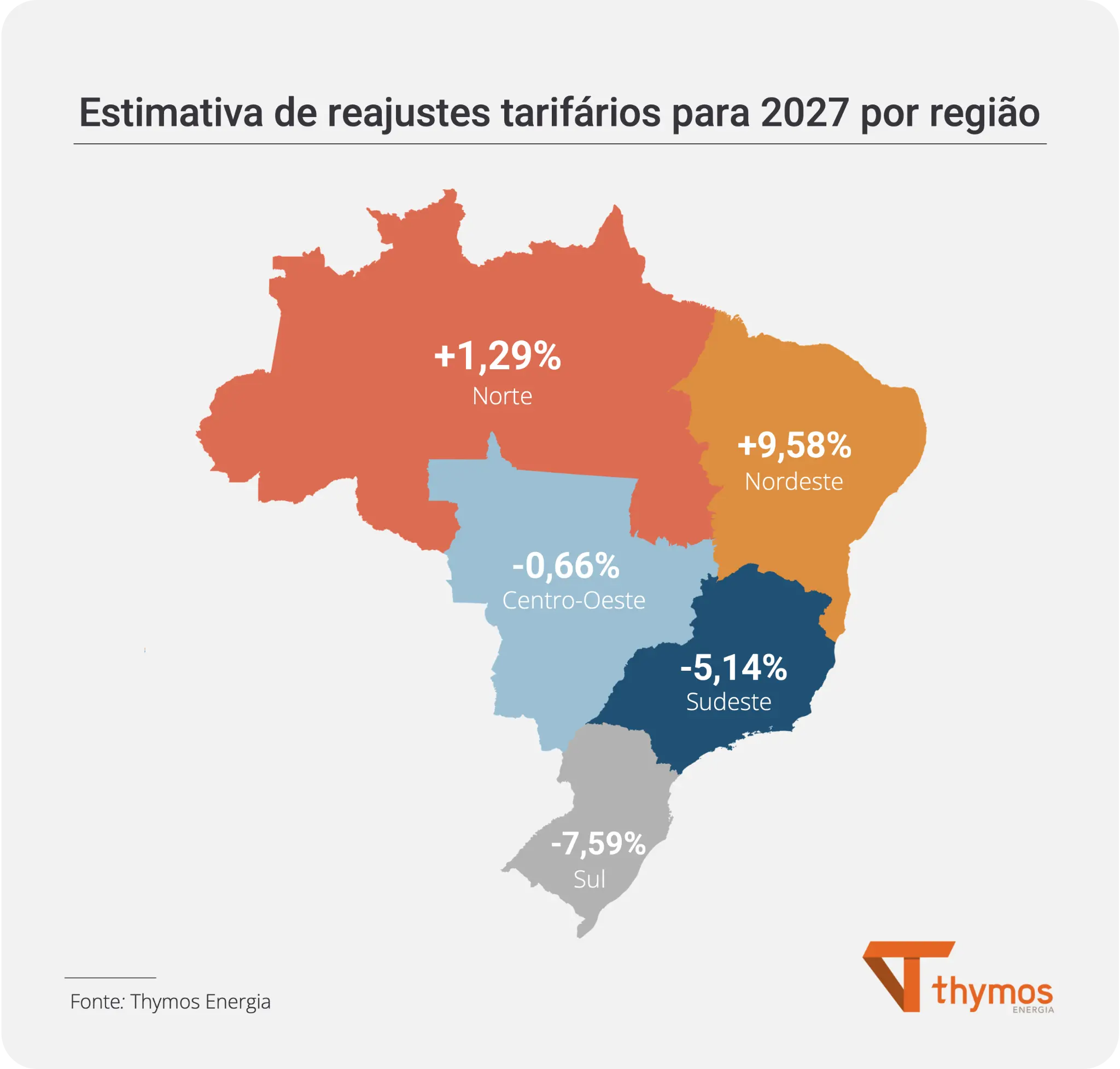
Northeast Brazil is expected to register the largest increase.
The Northeast is expected to experience the largest tariff increase among the five Brazilian regions, with a projected rise of 9,58% in 2027. One of the main factors is the increase of R$ 3,2 billion in energy purchase costs, accompanied by an increase of R$ 1,1 billion in distribution expenses.
Part of this pressure is related to the end of temporary measures that helped contain the readjustments in 2026, such as the anticipation of resources from the UBP (Use of Public Assets) of certain hydroelectric plants.
These resources are associated with the right to exploit the generating potential of the rivers. In the case of the measures adopted previously, the funds from the renegotiation were allocated to alleviate tariffs in eligible areas.
Another factor contributing to the tariff pressure is the estimated 3,6% reduction in the volume of energy traded by distributors in the regulated northeastern market, where consumers buy electricity directly from the local utility.
“This reduction may reflect, among other factors, the migration to the free market and the expansion of distributed generation. With less volume traded, certain values are divided among a smaller share of consumption, which puts pressure on tariffs,” explains Thymos Energia.
The North will also see an increase in rates.
In the Northern region, a 1,29% increase in tariffs is projected for 2027. Energy purchases are expected to represent an increase of R$ 950 million in costs, accompanied by higher distribution expenses. Part of this pressure, however, will be offset by reductions in other expenses and by a relief of approximately R$ 600 million in the financial components incorporated into the tariffs.
The Central-West region should show stability.
In the Central-West region, projections indicate a slight reduction of 0,66%, a scenario that represents tariff stability. Although energy purchase and distribution costs are expected to increase, these effects will be largely offset by a relief of approximately R$ 750 million in financial components from previous periods.
Southeast will see a reduction of 5,14%.
In the Southeast region, the estimated drop is 5,14%, significantly driven by the removal or reduction of temporary charges that increased tariffs in 2026, resulting in a relief of nearly R$ 8,5 billion compared to the previous year. This amount exceeds the increase of approximately R$ 2 billion in the costs of energy purchase, transmission, and distribution. Part of the previous charges compensated for amounts that distributors should have collected but did not receive.
The South will have the biggest reduction among the regions.
The South is expected to register the largest tariff reduction in the country in 2027, with a projected drop of 7,59%. This result is mainly associated with a relief of R$ 3,5 billion in financial components between 2026 and 2027. Meanwhile, the region's regular costs are expected to remain practically stable.
Another factor is the estimated 1% growth in the consumption base considered for distributing certain distribution expenses. With a larger volume of energy consumed, these costs are diluted among more energy units, helping to reduce the impact on tariffs.
all the content of Canal Solar is protected by copyright law, and partial or total reproduction of this site in any medium is expressly prohibited. If you are interested in collaborating or reusing part of our material, please contact us by email: redacao@canalsolar.com.br.


Comments
Comments are moderated before publication.Comments should be respectful and contribute to a healthy debate. Offensive comments may be removed. The opinions expressed here are those of the authors and do not necessarily reflect the views of the author. Canal Solar.