

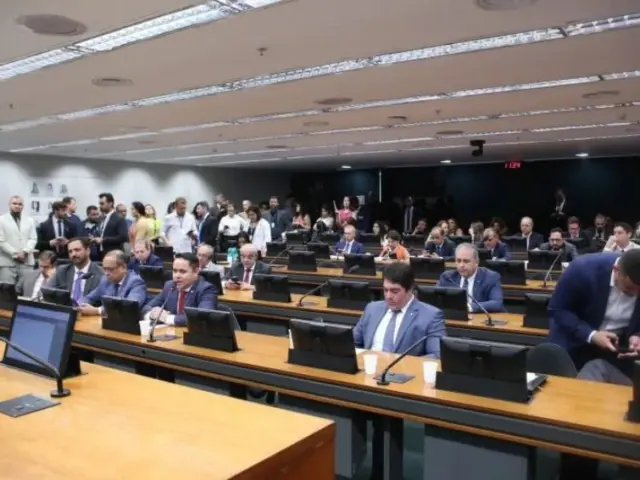
The Chamber of Deputies approved, this Thursday (17), the bill that establishes a new legal framework for environmental licensing in Brazil. The text now goes to the president for sanction.
The project, identified as PL 2159/21, was approved with the incorporation of 29 amendments proposed by the Senate.
Among the main points of the text is the creation of the LAE (Special Environmental License), which may be granted to projects considered strategic by the Government Council, even if they imply significant environmental degradation.
This license must be reviewed in a single phase, with a maximum period of 12 months and a validity of up to 10 years. Agencies that also issue related authorizations must prioritize this type of review.
Another implementation is the LAC (License by Adhesion and Commitment), aimed at small or medium-sized enterprises with low to medium polluting potential. This modality can be requested in a simplified manner, without the need for studies. environmental impact, provided that technical and legal requirements are met.
Participation of bodies
The approved text changes the role of federal agencies such as Funai, ICMBio, Iphan, and the Ministry of Racial Equality in the licensing process. The licensing authority will also no longer be required to comment on the justifications of other agencies involved.
In the case of Indigenous lands, the bill limits Funai's intervention to those whose demarcation has already been approved. For activities requiring an Environmental Impact Assessment (EIA) and Environmental Impact Report (RIMA), the bill establishes minimum distances for mandatory consultation with agencies in cases of interventions in areas near conservation units.
Rules for mining, highways and transmission lines
The proposal excludes the application of Conama (National Environmental Council) regulations in the licensing of large-scale or high-risk mining activities, until specific legislation is approved on the subject.
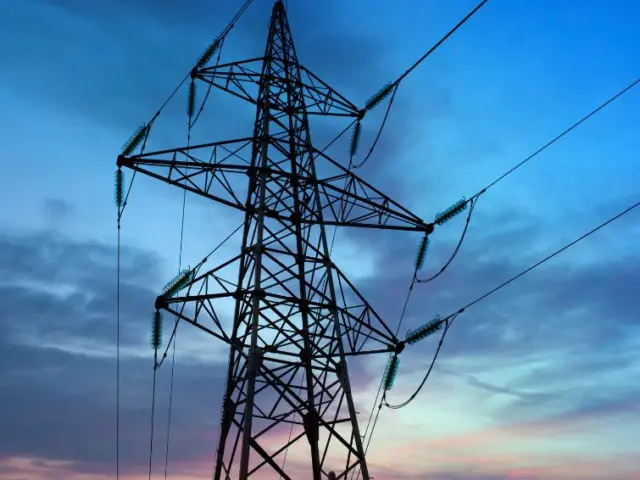
The project foresees the use of LAC for works, duplication of highways, paving of existing roads and expansion of transmission lines in already occupied lanes.
One of the amendments included in the text also exempts maintenance and improvement services for these infrastructures from environmental licensing once they are already installed.
Automatic license renewal
Another approved change is the possibility of automatic renewal of environmental licenses for small and medium-sized enterprises with low or medium polluting potential.
Renewal will occur through an online declaration from the entrepreneur attesting to compliance with environmental legislation and conditions. A technical report must be signed by a qualified professional.
If the renewal request is submitted at least 120 days before the expiration of the original license, the validity will be automatically extended until a final decision is made by the licensing authority.
Competence of federative entities
The text establishes that, in the event of inspections by agencies that did not grant the license, such as Ibama, the measures adopted must be communicated to the granting agency, which will have the final say on the validity of the action. The licensing authority may decide to cancel fines imposed by other agencies.
The obligation for licensing bodies to prepare reports on the need for human resources to comply with the new legislation was also removed from the text, as was the requirement for a response from the Executive regarding the fulfillment of these needs.
Divergence between benches
During the session that approved the new legal framework for PL 2159 / 21, deputies were divided on the proposal. Members of the Parliamentary Agricultural Front supported the proposal, while members of the Environmental Parliamentary Front and opposition parties criticized the project's potential impacts on the environment and public health.
Pedro Lupion, coordinator of the Agricultural Front and deputy (PP-PR), stated that the new text represents a way to unblock several stalled projects, especially in the infrastructure sector.
Nilto Tatto, coordinator of the Environmental Front and deputy (PT-SP), questioned the effectiveness of the project in solving the real problems in the area and that the text does not resolve the “bottlenecks of environmental licensing”.
Gilberto Abramo, a congressman and Republican leader from Minas Gerais, also supported the bill. He said the text clearly demonstrates a concern for development without neglecting the importance of the environment.
Opposition lawmakers warned of the potential risks the new licensing model could pose to safety and the prevention of socio-environmental disasters. Sâmia Bomfim, a representative of the PSOL-SP party, linked the proposal to the possibility of new tragedies like those in Brumadinho and Mariana, Minas Gerais.
We are talking about tearing up any technical analysis of the study and impact on the environment, on people's health and on the possibility of life and the future," he stated.
Along the same lines, Duda Salabert, deputy (PDT-MG), classified the vote as disrespectful to the victims of the Vale dam collapse in Brumadinho, which killed 272 people in 2019.
all the content of Canal Solar is protected by copyright law, and partial or total reproduction of this site in any medium is expressly prohibited. If you are interested in collaborating or reusing part of our material, please contact us by email: redacao@canalsolar.com.br.


Comments
Comments are moderated before publication.Comments should be respectful and contribute to a healthy debate. Offensive comments may be removed. The opinions expressed here are those of the authors and do not necessarily reflect the views of the author. Canal Solar.