
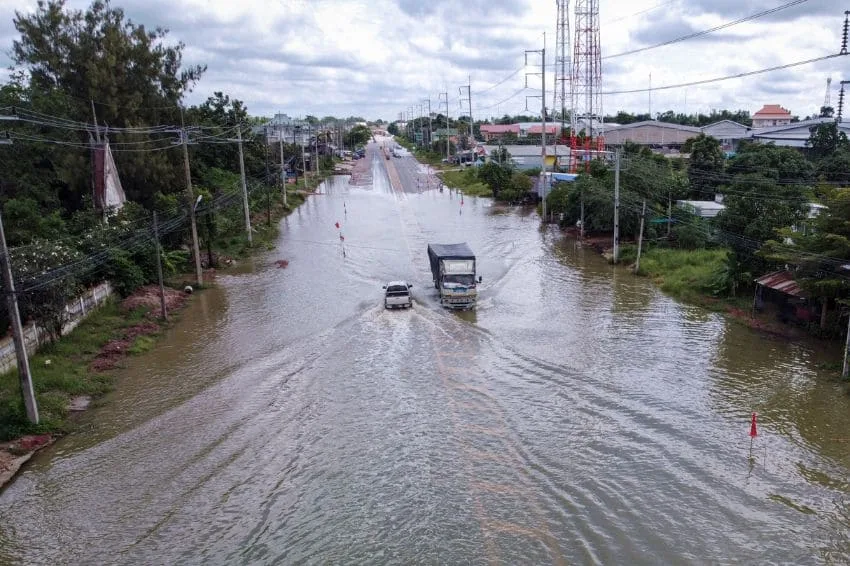
In addition to going down in history as the hottest year and exceeding the 1,5°C limit for the first time, 2024 marked the intensification of extreme weather events in Brazil.
The episodes of cold and heat waves, intense rains that triggered landslides and floods/downpours, droughts and new records of maximum temperatures were synthesized from data from different institutions and compiled by Cemaden (National Center for Monitoring and Alerts of Natural Disasters), a research unit linked to MCTI (Ministry of Science, Technology and Innovation), in a technical note entitled 'State of the climate, climate extremes and disasters in Brazil in 2024'.
For Regina Alvalá, acting director of Cemaden, the data set summarized in the Note allows us to know the regions and municipalities that were impacted by extreme events in 2024 and contributes to supporting different actions and mitigation strategies. “This information is relevant in the context of different strategic sectors of the country,” she said.
While the world recorded temperatures 0,72°C higher, in Latin America and the Caribbean it was 0,95°C above normal, compared to the period 1991-2020, according to data from Copernicus. In Brazil, the warming was 0,79°C, according to data from Inmet (National Institute of Meteorology). Most of Brazil recorded temperature anomalies above 2°C.
“The year 2024, the hottest in history, has seen the greatest climate disasters. The major drought in the Amazon-Pantanal and the floods in Rio Grande do Sul indicate that the era of extremes has already arrived in Brazil,” assessed José Marengo, a researcher at Cemaden and one of the authors.
For him, the impacts are greater, since along with the increase in extremes there is also an increase in people's exposure and vulnerability. “The risk of disasters is increasing,” he explained.
Extreme events, such as more severe droughts and floods, as well as a global average temperature exceeding 1,5°C between 2040 and 2050, were predicted in long-term projections. However, they occurred much earlier.
“We are in a new climate normal, and we are going against the Paris Agreement. So there is no time to wait, and the Paris Agreement needs to be implemented in all countries in the world. No one is free from a disaster associated with an extreme climate,” said the researcher, who highlights examples of landslides as a result of rain in peripheral regions, and fires, fueled by drought and dry, hot winds, which devastated neighborhoods in upscale regions in California.
Part of this scenario is attributed to the El Niño phenomenon, which warms the surface of the waters in the equatorial region of the Pacific Ocean and alters rainfall and temperature patterns. However, climate change resulting from the increase in the concentration of greenhouse gases in the atmosphere has played a significant role in fueling extreme events, as indicated by studies by the World Weather Attribution (WWA).
Given this scenario, predicted and warned about by scientists about 30 years ago, Marengo highlights the need to advance prevention and not just act after disasters. “It is necessary for the population and governments to have an understanding of disasters. If someone lives in a vulnerable area with a high risk of disasters, when there is heavy rain they should be careful to leave their homes. This can save lives,” he explained.
See the main phenomena recorded throughout 2024 in Brazil:
Heat waves and maximum temperatures – Data released by Inmet confirmed 2024 as the hottest year since 1961. All months of last year had temperatures above the historical average, compared to the period 1991-2020. On October 06, the cities of Goiás (GO) and Cuiabá (MT) recorded the highest maximum temperatures, respectively, 44,5°C and 44,1°C.
According to the Note, between 9 and 10 episodes of heat waves affected Brazil in 2024. Between the end of August and the beginning of September, temperatures were 7°C above normal for the period in Belo Horizonte (MG) and Brasília (DF), and up to 6°C above normal in Manaus (AM).
Cold waves – The country also experienced cold waves between May and August, especially in the first half of August in the South, which set new records for low temperatures. In the city of Urupema, snow was recorded at a temperature of -4,6°C. Soon after, the heat returned with intensity. The winter was the second warmest since 1961, behind only 2023.
Rains and impacts – While rainfall deficits between -200 to -400 mm were observed in the Amazon, central-west and southwest of the Amazon-Pantanal, in eastern Brazil and in the state of Rio Grande do Sul the positive precipitation anomalies were +400 mm during the first half of 2024. The contrast between the regions observed is typical of the El Niño phenomenon pattern.
The city of Mimoso do Sul (ES) recorded between 300 mm and 600 mm of rain in 48 hours (March 22 and 23), which culminated in floods and downpours that caused the death of 20 people.
According to data from Nota, the impact of the floods that affected 478 of the 497 municipalities in Rio Grande do Sul in May, affecting almost 2,4 million people and causing 183 deaths and 27 missing people, has an estimated cost of cleaning up 3,7 billion dollars, while the economic impact was around 16 billion dollars (1,8% of the state's GDP in 2024).
In October, the city of São Paulo (SP) and the metropolitan region recorded a series of storms accompanied by strong winds. The most impactful occurred on October 12, when the storm and winds above 107 km/h forced the closure of the country's two busiest airports.
A blackout left 2,1 million people without power in the metropolitan region. The weather event was a consequence of an extratropical cyclone that developed off the coast of the southern states of the country.
Seca – Drought conditions became more frequent and severe in Brazil from 1990 onwards. However, in 2024 the country recorded its most intense drought. The lack of rainfall in the previous year contributed to the situation.
Between July and September, the number of municipalities experiencing severe and extreme drought conditions jumped from 239 to 1,4, meaning approximately 25% of Brazilian municipalities were affected. Exceptional drought conditions were observed in some municipalities in the states of Acre, Amazonas, Pará, Rondônia, Mato Grosso, Mato Grosso do Sul, São Paulo and Paraná. The situation was reversed in November.
The federal capital experienced 155 consecutive dry days, the second longest period in history, behind 1963 when 163 days were recorded.
In the Amazon basin, very low levels have affected the ability of neighboring communities to fish and transport goods for local supply and the flow of local production for sale.
The Rio Negro in Manaus recorded 12,11 m on October 10, the lowest level ever observed since measurements began in 1902; the Madeira River in Porto Velho (RO) recorded 0,41 m on September 14, the lowest level since 1967. The Solimões River in Tabatinga (AM) and the Amazon River in Óbidos (PA) also reduced significantly.
The Paraguay River reached just 0,62 m on October 8, the lowest level in history since monitoring began in 1900. Minimum records were broken at the Ladário and Porto Murtinho measuring stations.
Fires – In 2024, around 1 million active fires were detected in Latin America, with more than 47,7% of them in Brazil. Low air humidity and higher temperatures favored the spread of fires. The risk was high in the Amazon and Pantanal regions.
Disasters and impacts – According to information from the National Secretariat of Civil Defense, 578 Brazilian municipalities reported significant damage and losses. For material damage, which includes damaged or destroyed housing units, facilities and public infrastructure works, the estimated cost reached approximately R$11 billion. Economic losses, which include public and private impacts, totaled approximately R$9,6 billion.
In terms of human damage, approximately 1 million people were directly affected by the events, with the floods of May 2024 in Rio Grande do Sul accounting for 83% of this number. The impacts on the state were severe, accounting for 183 fatalities, 27 missing, 18.864 injured and sick, 121.878 homeless and 834.645 displaced.
The Note expresses concern about the vulnerability of education to disasters, with special emphasis on children and young people. “Education needs to be understood by public authorities and other actors responsible for disaster risk management as one of the social pillars most sensitive to the effects of socio-environmental threats and as a fundamental link in climate change adaptation programs,” reads an excerpt from the text.
all the content of Canal Solar is protected by copyright law, and partial or total reproduction of this site in any medium is expressly prohibited. If you are interested in collaborating or reusing part of our material, please contact us by email: redacao@canalsolar.com.br.


Comments
Comments are moderated before publication.Comments should be respectful and contribute to a healthy debate. Offensive comments may be removed. The opinions expressed here are those of the authors and do not necessarily reflect the views of the author. Canal Solar.