
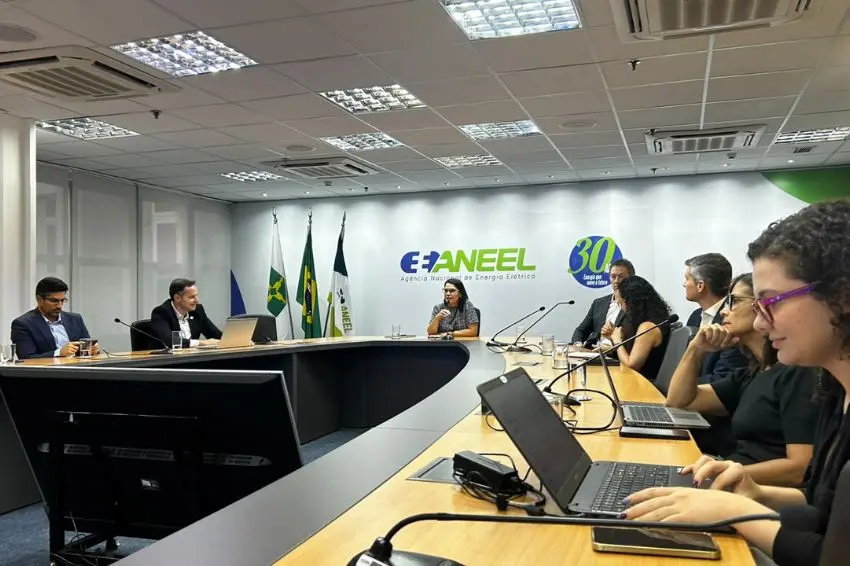
The new Time-Specific Tariff, proposed by the technical areas of ANEEL (National Electric Energy Agency), it should also reach consumers who have their own energy generation systems and commercial electric vehicle charging facilities. The change is one of the most impactful points for the solar energy market and for electric mobility.
In other words, units that already have distributed micro or mini-generation (DMM) will be automatically included when they present average consumption or injection into the grid of 500 kWh per month or more, considering the same 12-month window used to assess consumption.
The proposal, however, establishes a difference between those who already have their own generation and those who are yet to install a system. Units that join the SCEE (Electric Energy Compensation System), with a connection request submitted 90 days after the publication of the new regulation, will enter the Fixed-Time Tariff without the possibility of opting out, regardless of the volume of energy consumed or injected.
The same rule will be applied to new commercial electric vehicle charging stations. The justification presented by the Agency is that new investors will have prior knowledge of the rules and will be able to size their projects considering energy prices at each time of day.
For systems already connected, the option to opt out during the transition will serve as protection for those who did not originally choose an hourly billing method. The proposal was presented to the press this Monday, the 9th, and incorporates the contributions received in Public Consultation 46/2025.
According to the proposal, starting in 2033, with the termination of the Temporary Flat Tariff, the Time-of-Use Tariff will also be mandatory for existing distributed generation units, including systems classified as GD1, provided they meet the consumption or injection criteria established by the regulations. Therefore, the possibility of remaining in a time-of-use tariff will be limited to the transition period.
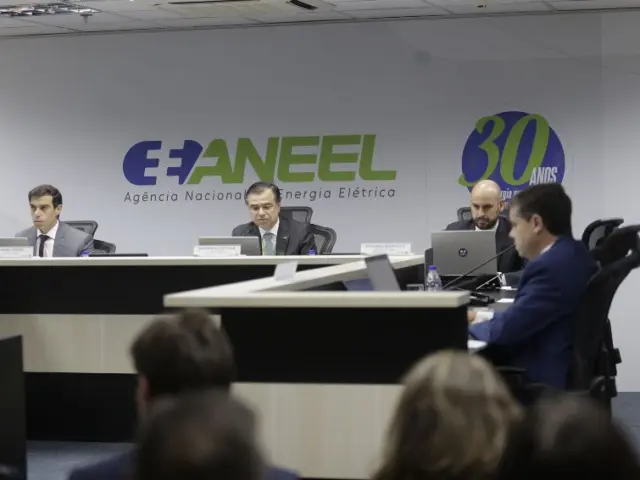
The document was prepared jointly by the technical areas of ANEELHowever, it still needs to be reviewed by the board of directors. The Agency expects to complete the process and bring the matter to a vote by December.
Why change the tariff structure?
The creation of the "Tarifa Hora Certa" (Specific Time Tariff) stems from a transformation in the generation and consumption profile of the Brazilian electricity system. In recent years, the expansion of solar and wind power generation has increased the availability of renewable energy during the day, especially during periods of higher solar incidence.
At the same time, demand usually increases in the early evening, when photovoltaic generation weakens and the system needs to resort to more expensive sources, including thermoelectric plants, to meet consumption. The conventional tariff structure, however, charges the same price per kWh regardless of the time of use.
In evaluating the ANEELThis model does not adequately reflect the cost difference for meeting demand throughout the day. In practice, consumers who use energy outside of peak hours end up contributing to covering part of the costs of those who concentrate their consumption during the most expensive periods.
The time-of-use pricing system aims to make this difference visible on the electricity bill. The model provides for three periods: peak, with the highest price and a duration of three consecutive hours, usually in the early evening; intermediate, normally formed by the hour before and the hour after the peak; and off-peak, with a lower rate during the remaining hours. On Saturdays, Sundays, and national holidays, only the off-peak rate will be applied.
Schedules and prices will not necessarily be the same throughout the country, as they will depend on the characteristics of each concession area. ANEEL It intends to open a new discussion with the distributors in 2027 to recalibrate the tariff values and periods.
Among the possibilities is the creation of an even cheaper energy tier during peak solar generation hours, provided that cost studies for each concession justify this differentiation.
Self-generation and charging stations
For micro and mini-distributed generation systems that are already connected, the automatic classification will consider the monthly average of energy consumed or injected into the grid, starting from 500 kWh, calculated over a 12-month period.
These units will have the option to opt out during the transition period, just like other consumers covered by the gradual rollout. The situation changes for new projects.
Starting 90 days after the publication of the regulation, connection requests from units that join the SCEE will be subject to the Fixed-Time Tariff, with no possibility of reverting to the temporary flat tariff.
The classification will be independent of consumption or the amount of energy injected. For commercial charging stations, the rule will also apply to new installations after the 90-day period.
A ANEEL It considers that charging electric vehicles is a flexible charging method that can be shifted to less expensive times. The tariff signal, therefore, should encourage operators to avoid concentrating charging in the early evening.
The Agency's presentation included simulations to illustrate the effect of the change. In an example of a mid-sized electric vehicle, the estimated cost per kilometer driven would be R$ 0,11 when recharging occurs outside peak hours, compared to R$ 0,14 at the conventional rate and R$ 0,27 if done during peak hours.
The simulation also indicated monthly savings of between R$32,00 and R$211,00 for those who schedule their recharge outside of peak hours. These are illustrative results, subject to the rates and conditions considered in the study.
Framework in three stages until 2031
The proposal aims to reach approximately 5,7 million low-voltage consumer units in subgroups B1 (residential), B2 (rural), and B3 (commercial, industrial, and other activities), with average monthly consumption starting at 500 kWh. Implementation will proceed from the largest to the smallest consumers.
- April 2028: First phase, for units with an average consumption of 1.800 kWh/month or more. Approximately 1 million consumers will be included.
- April 2029: The second phase, covering units starting from 1.000 kWh/month, represents approximately 1,1 million consumers.
- April 2031: Third phase, for units starting at 500 kWh/month, with approximately 3,6 million consumers.
The choice of this order takes into account the weight of each group in the energy market. According to the presentation, consumers in the first phase represent less than 1% of low-voltage units, but account for approximately 20% of consumption in this segment.
In the second stage, the group represents about 1% of the units and adds approximately 6% to the market. The final phase covers about 3,4% of consumers and represents another 11% of the energy consumed. In the end, more than a third of the low-voltage market will be subject to time-of-use pricing.
The agency estimates that there are close to 100 million low-voltage consumer units in the country. Thus, although the potential audience for the proposal corresponds to approximately 5,7 million units, the change will reach a significant portion of total consumption.
The phased rollout will also allow distributors more time to adapt their metering systems, especially in the final stage, which includes the largest number of consumers.
Meters, informative bills and flat rate
For time-of-use billing to be possible, it will be necessary to install meters capable of recording consumption during different tariff periods. Most equipment currently used in low-voltage units does not have this functionality.
According to the proposal, distributors will have to adapt their metering systems without directly charging consumers for the replacement. The cost will be incorporated into the concessionaires' investments and considered in tariff processes.
In the first group, the meters must be installed by the end of 2027. January, February, and March of 2028 will be dedicated to informational billing.
During this period, consumers will continue to pay the conventional rate, but will receive statements showing the breakdown of consumption between peak, intermediate, and off-peak periods, as well as a simulation of how much they would pay under the new system. The same procedure will be repeated before billing begins for subsequent phases.
The proposal ensures at least three informative invoices and prior individual notification regarding the rules, deadlines, and available alternatives. The consumer may request to opt out of the "Tarifa Hora Certa" (Special Time Tariff) during this period, without having to wait for the first actual charge.
Those who choose to leave will be directed to the so-called temporary flat fare, which will have a single price throughout the day. In the simulations presented by ANEELThis value could be between 3% and 5% higher than the conventional rate, as it will reflect the cost of serving consumers who concentrate the largest share of their consumption during peak hours.
The option will function as protection for two years, starting from the beginning of each phase, and will end in 2033. After that period, the covered units will be billed using the Fixed-Time Rate.
The proposal also stipulates that consumers can return to the hourly tariff during the transition period. The flat tariff, therefore, will not be a permanent alternative, but a temporary option to adapt consumption habits.
Low income is left out.
Units in the low-income residential and social discount subclasses will not be included in the "Tarifa Hora Certa" (Specific Hourly Rate) program, regardless of consumption, and will also not be able to voluntarily opt in. The exclusion also extends to public lighting and units subject to the prepayment system.
Consumers using less than 500 kWh/month will not be automatically enrolled, but may request voluntary enrollment, provided they have a suitable meter. ANEEL It also provides for a national awareness campaign, coordinated by the agency and executed by the distributors, lasting at least two years and beginning before the first billing cycle.
The initiative aims to standardize communication regarding schedules, prices, and adaptation possibilities. The proposal results from the analysis of 85 contributions received in Public Consultation 46, which led to the inclusion of protection mechanisms, gradual implementation, and revision of tariff signals.
The agency states that the intention is not to create new costs for the system, but to make the existing difference in expenses between schedules more transparent and to encourage the shifting of some demand to periods of greater renewable supply. The final decision, however, will depend on the deliberation of the board of directors.
all the content of Canal Solar is protected by copyright law, and partial or total reproduction of this site in any medium is expressly prohibited. If you are interested in collaborating or reusing part of our material, please contact us by email: redacao@canalsolar.com.br.

Comments
Comments are moderated before publication.Comments should be respectful and contribute to a healthy debate. Offensive comments may be removed. The opinions expressed here are those of the authors and do not necessarily reflect the views of the author. Canal Solar.