
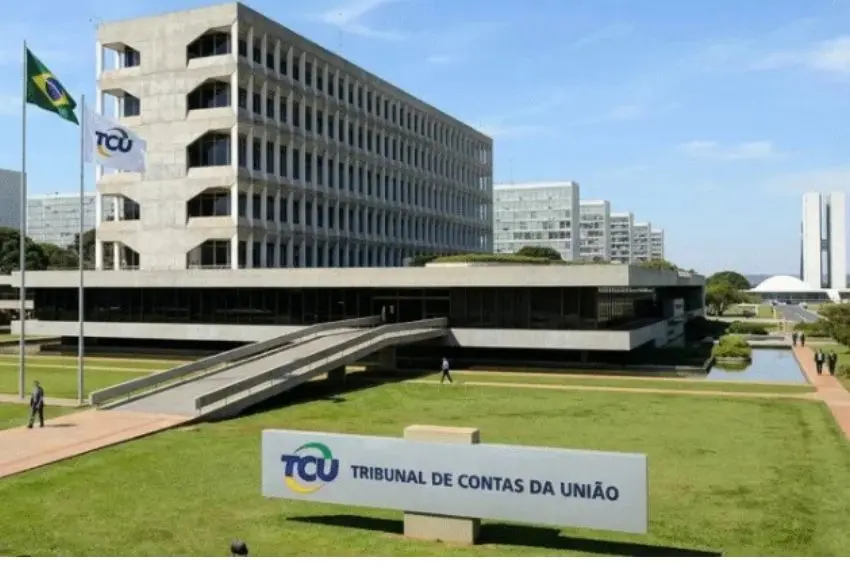
The TCU (Federal Court of Accounts) identified coordination failures between the MME (Ministry of Mines and Energy) and the ANEEL (National Electric Energy Agency) in guiding the gradual opening of the free energy market in Brazil.
According to the agency, the expansion of the free contracting environment has not been accompanied by the same pace of planning and regulation, which may increase risks for consumers and businesses.
The alert is part of the second phase of monitoring carried out by the Court, which verifies compliance with the determinations of Judgment 1.878/2024-Plenary and assesses the challenges to expanding access to the free market for low-voltage consumers.
The oversight aims to assess whether the opening of the market is being conducted with planning, institutional coordination, and sufficient mechanisms to protect consumers, guarantee competition, and avoid imbalances in the distribution of costs in the electricity sector.
Mercado Libre more than doubles in size.
According to the TCU (Brazilian Federal Court of Accounts), the expansion of the free energy market has accelerated in recent years, with more than 90% of migrations carried out by smaller consumers in the last two years.
Despite the growth, the agency identified that initiatives related to market opening, digitalization, and regulation continue to advance in parallel, without integrated planning among the responsible bodies.
Among the challenges identified are defining rules for serving consumers who may be left without an energy supplier and installing smart meters, which are necessary to enable new contracting and billing methods.
According to the TCU's assessment, the lack of alignment between the MME and the ANEEL This increases uncertainty for industry players and makes it more difficult to prepare for the entry of low-voltage consumers.
Consumer protection still has outstanding issues.
Another point of concern involves protecting consumers in the face of increased competition in the energy market.
The audit identified that comprehensive rules are still lacking to guarantee clear information, adequate conditions for comparing suppliers, and mechanisms to prevent abusive practices by large economic groups.
An index developed by the oversight body itself indicated that 61% of the measures evaluated to reduce information asymmetry had been implemented.
Among the instruments that still depend on regulation or practical application are the sharing and portability of energy data, as well as the simplification of procedures for migrating between suppliers.
These outstanding issues can hinder access to the free market, especially for consumers less familiar with how the electricity sector works.
The concern is that the ability to choose a supplier may not automatically translate into benefits for all consumers if there is insufficient information to compare offers and assess contractual conditions.
Costs can be passed on to consumers.
The audit also identified weaknesses in the assessment of the economic impacts of market liberalization, especially regarding the distribution of costs between consumers who migrate to the free market and those who remain in the regulated market.
One of the risks identified is that distributors may maintain energy purchase contracts exceeding their needs after some consumers leave the market.
This scenario could generate additional costs that, depending on the allocation rules, would end up being passed on to consumers who continue to be served by the utility companies.
The Court also highlights the need to establish balanced criteria for dividing the costs related to the security and reliability of the electrical system. Another problem identified is that the economic studies used as a reference to guide the opening of the market were prepared in 2022.
According to the TCU (Brazilian Federal Court of Accounts), these figures do not reflect the most recent pace of migrations nor the changes introduced by Law 15.269/2025. The lack of updated analyses and integrated projections makes it difficult to anticipate the effects of the expansion of the free market on energy prices and tariffs.
Opening requires planning.
The TCU's monitoring indicates that expanding the freedom to choose suppliers can bring benefits to the electricity sector, but depends on progress in institutional coordination, regulation, and consumer protection.
The audit also verified compliance with the determinations previously established by the Court, identifying points already addressed and others that still need to be finalized. The process is being overseen by Minister Antonio Anastasia.
all the content of Canal Solar is protected by copyright law, and partial or total reproduction of this site in any medium is expressly prohibited. If you are interested in collaborating or reusing part of our material, please contact us by email: redacao@canalsolar.com.br.

Comments
Comments are moderated before publication.Comments should be respectful and contribute to a healthy debate. Offensive comments may be removed. The opinions expressed here are those of the authors and do not necessarily reflect the views of the author. Canal Solar.