
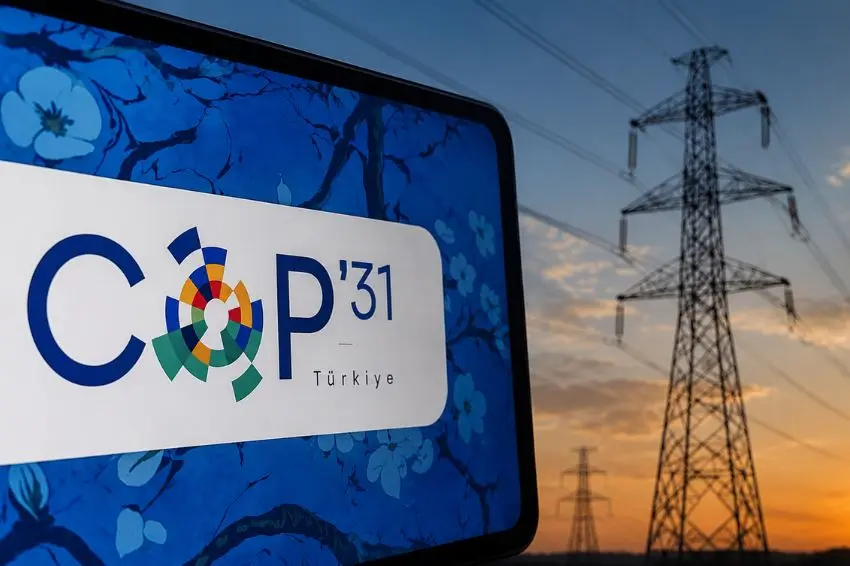
Turkey is leading an international initiative to ensure that, by 2035, more than a third of all energy consumed on the planet will be met by electricity, instead of the direct burning of fossil fuels such as oil, coal, and natural gas.
Currently, electricity accounts for about 20% of global energy demand. Under the proposal advocated by the Turkish government, this percentage would rise to 35% in just over a decade, accelerating the replacement of fossil fuels with electrified technologies in sectors such as transportation, industry, and heating.
This initiative is part of the preparations for COP31, which will be held in November of this year in Antalya, Turkey. The goal will be voluntary and will not be part of a formal United Nations agreement, but the expectation is to mobilize support from governments, businesses, and international institutions.
The conference's format will be unusual. Although Turkey is hosting the event, Australia will be formally responsible for conducting the UN climate negotiations, after both countries submitted bids to host the conference.
According to the Turkish government, electrification is one of the main tools for reducing greenhouse gas emissions and increasing energy security, especially in a scenario marked by the volatility of global oil and gas markets.
What does this mean?
Although electricity is already present in homes, businesses, and industries, a large part of the energy consumed in the world still comes from the direct burning of fossil fuels. In transportation, for example, gasoline and diesel-powered vehicles predominate.
In industry, several processes still depend on coal, natural gas, or petroleum derivatives. However, in residential heating (especially in countries with cold climates), gas remains one of the main energy sources.
Turkey's proposal seeks to accelerate the replacement of fossil fuels with low-carbon alternatives, a move already being adopted by countries such as France and Sweden, whose electricity grids are largely supplied by nuclear and renewable sources.
In other regions of the world, however, electrification still faces challenges related to dependence on fossil fuels for electricity generation.
What is COP31?
COP31 is the 31st Conference of the Parties to the United Nations Framework Convention on Climate Change (UNFCCC), the main global forum for climate negotiations.
The event will bring together heads of state, ministers, business representatives, civil society organizations, and experts from various countries to discuss measures to combat climate change and accelerate the global energy transition.
The 2026 edition will be held between November 9 and 20 in Antalya, Turkey. The conference succeeds COP30, hosted in Belém (PA), Brazil, in 2025, which focused on expanding international commitments related to reducing greenhouse gas emissions and climate finance.
Among the main topics expected for COP31 are the expansion of renewable energies, the electrification of the economy, investments in energy infrastructure, and financing mechanisms to support decarbonization, especially in developing countries.
COP30: History, challenges, and Brazil's role in the Climate Conference
all the content of Canal Solar is protected by copyright law, and partial or total reproduction of this site in any medium is expressly prohibited. If you are interested in collaborating or reusing part of our material, please contact us by email: redacao@canalsolar.com.br.



Comments
Comments are moderated before publication.Comments should be respectful and contribute to a healthy debate. Offensive comments may be removed. The opinions expressed here are those of the authors and do not necessarily reflect the views of the author. Canal Solar.