

Over the past two years, the Brazilian solar sector has accelerated — and not just in numbers. We have seen the arrival of new consumer profiles, the evolution of technical discourse and a growing pressure for differentiation.
But along with the progress came tight margins, intense competition and the clear challenge of adding real value. The new frontier is not just about selling more, but selling better. And that requires innovation.
In this scenario, a technology that previously seemed distant has become viable for the first time: the HJT module (heterojunction technology), which combines monocrystalline silicon with thin layers of amorphous silicon, achieving superior efficiencies (often above 22%), very low degradation over time and thermal losses of just -0,24% per degree — ideal for hot regions such as Brazil.
It is a premium product, with a high perceived value — and, for this reason, historically off the radar of most Brazilian integrators. But that has changed.
In addition to superior efficiency, HJT modules offer high bifaciality, excellent low-irradiance performance, and thermal performance that allows more energy to be generated in less space — a strategic advantage in urban rooftops, logistics warehouses, and projects with limited area.
Esfera Solar 2025: innovation and training to transform the market
When a barrier falls, a window opens
In 2024, we witnessed the repeal of several former tariffs that favored the import of solar equipment without a similar domestic product. This change caused many conventional modules to become up to 25% more expensive, increasing the final price of solar systems for Brazilian consumers by up to 15%.
On the other hand, some more advanced products — such as HJT modules — maintained their former tariff, which opened up an unprecedented gap: a premium product, with a competitive price.
This is the definition of a window of opportunity.
While this exemption lasts, Brazilian integrators have the chance to offer a technically superior solution, with real room for differentiation — before the market readjusts prices again based on new tax policies.
Transition requires vision. And constant updating.
This movement is not happening in isolation. It is part of a global shift. In the United States, tariffs of up to 3521% were applied to solar panels from Southeast Asia, redirecting flows and putting pressure on more open markets, such as Brazil. (Source: InfoMoney)
Meanwhile, China dominates clean-tech manufacturing investment, while tariffs and trade barriers are beginning to reshape the global solar trade. (Source: BloombergNEF)
Internally, Brazil is experiencing high interest rates, restricted credit and a more discerning consumer. This changes everything: from the commercial discourse to the type of solution that stands out.
The market is changing and it's not just HJT
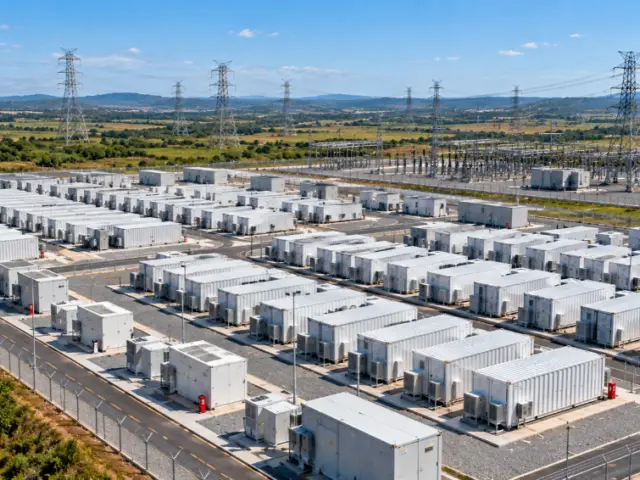
The transformation is broader. BESS batteries emerge as a solution to ensure stability even in the face of variability in solar generation. Vehicle chargers grow along with electric mobility.
Flexible modules open up new fronts, enabling projects in structures previously incompatible with photovoltaics — such as motorhomes, boats, curved roofs and low-resistance warehouses.
The solar sector is moving towards becoming more sophisticated, technical and oriented towards real solutions. And HJT is a clear example of how innovation and opportunity can go hand in hand in this process.
HJT: a choice that positions
In mature markets, high-performance products are no exception. They are a tool for differentiation. The HJT module, now affordable thanks to the maintenance of the former tariff, represents this possibility. It is a choice that communicates positioning. It shows the customer that you are up to date, prepared to deliver greater efficiency, greater durability and greater reliability.
Na Esfera Solar Distributor, we believe that content qualifies and that strategy differentiates. Therefore, we promote this debate responsibly and invite the sector to reflect with us: should we continue selling only equipment or have we started delivering solutions with a vision for the future?
The opinions and information expressed are the sole responsibility of the author and do not necessarily represent the official position of the author. Canal Solar.



Comments
Comments are moderated before publication.Comments should be respectful and contribute to a healthy debate. Offensive comments may be removed. The opinions expressed here are those of the authors and do not necessarily reflect the views of the author. Canal Solar.