
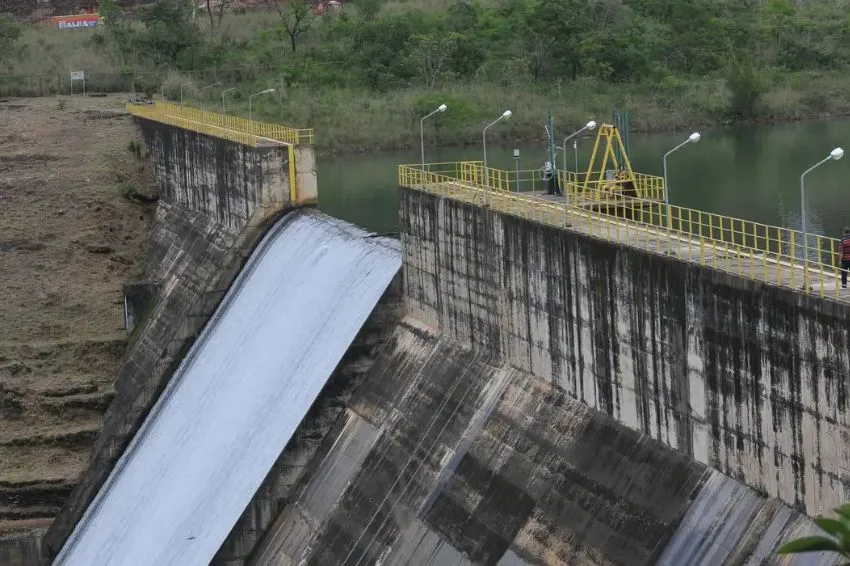
Brazil is expected to increase its electricity generation from more polluting sources in the coming years, as the share of hydroelectric power in the electricity mix decreases. This is the conclusion of a study by the consulting firm Aurora Energy Research.
According to the survey, the share of hydroelectric power plants is expected to fall from 42% in 2026 to 36% in 2030 and reach 28% in 2040, reflecting the diversification of energy sources in the country. Conversely, the share of thermal power plants fueled by natural gas, fuel oil, and coal is expected to rise from the current 10% to 16% in 2030 and 18% in 2040.
This trend aligns with the projections of EPE (Energy Research Company) presented in the PDE 2034 (Ten-Year Energy Expansion Plan), according to which thermoelectric generation using fossil fuels in Brazil should practically double in less than ten years.
According to the plan, emissions from the Brazilian electricity grid could reach approximately 24 million tons of CO₂ equivalent in 2034. For comparison, the estimated total in 2024 was 14 million tons.
Most recent projections of PDE 2035The report, released a few days ago, also reinforces this scenario by indicating the need to expand installed capacity and flexible sources to ensure the security of the electrical system in the face of the advancement of renewables.
Aurora Energy Research projects that, due to the growth of intermittent sources such as solar and wind, and the limitations on the expansion of hydroelectric plants with reservoirs, Brazil will need to add approximately 47 GW of flexible capacity by 2045.
Profile switching with batteries
According to the study, the growth of thermal power plants is mainly related to the absence of new large hydroelectric projects with reservoirs, which historically have always served as the main source of flexibility for the Brazilian electrical system during times of energy scarcity.
Even though solar and wind power generation has grown rapidly, thermal power plants are still seen by the Federal Government as essential to ensure that demand is met during periods without sun or wind – something that, according to the study, can be reduced with policies that incorporate technologies such as batteries.
According to the consultancy, expanding storage systems can reduce the increase in emissions without compromising energy security, provided that these solutions are deployed on a large scale in the coming years.
Government is considering contracting battery suppliers, but the model still raises doubts.
The Federal Government and the Ministry of Mines and Energy (MME) have been signaling, since 2023, their intention to make viable the contracting battery storage systems to reinforce the operation of the SIN (National Interconnected System).
An auction specifically for this technology is scheduled for April, but there are still uncertainties regarding the final model and the possibility of postponement, as already happened in 2025.
all the content of Canal Solar is protected by copyright law, and partial or total reproduction of this site in any medium is expressly prohibited. If you are interested in collaborating or reusing part of our material, please contact us by email: redacao@canalsolar.com.br.

Comments
Comments are moderated before publication.Comments should be respectful and contribute to a healthy debate. Offensive comments may be removed. The opinions expressed here are those of the authors and do not necessarily reflect the views of the author. Canal Solar.