
O Inmetro (National Institute of Metrology, Quality and Technology) published, this Wednesday (30), in the DOU (Official Gazette of the Union), the 140 / 2022 Ordinance new regulation for photovoltaic equipment sold in Brazil.
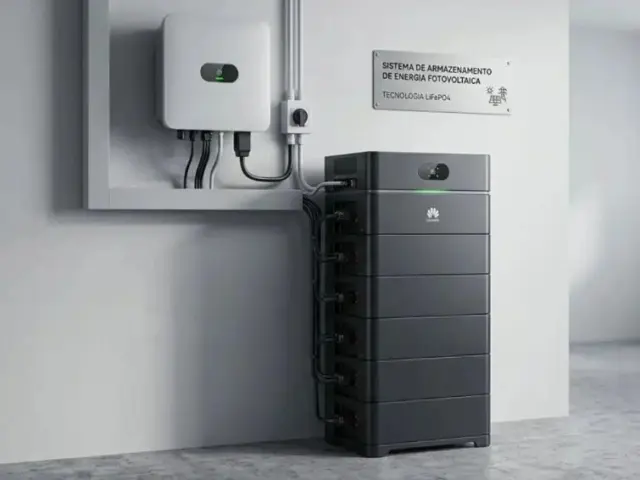
This is an update to the Ordinance no. 004 / 2011 and which brings as its main novelties the inclusion of on-grid inverters with batteries (hybrids) and lithium batteries.
The document also highlights that all products, at the point of sale, must bear the ENCE (National Energy Conservation Label), in a way that is visible to the consumer, without its view being obstructed by any other information attached by suppliers.
Before the publication of the document, there was no regulation by Inmetro for the use of grid-connected hybrid inverters. For this reason, andAmong professionals, the resolution is being considered a victory for the solar energy sector.
To André Gellers, country manager of SMA, the fact is very significant and extremely relevant for energy decarbonization. “Legislation is always chasing technological developments and the arrival of this resolution was especially slow, but it is very welcome, as it makes it possible to store energy generated by renewable sources, which can be used at the most appropriate time, solving the problem. aspect of intermittency. With the arrival of hybrid systems in Brazil, the foundations for the flourishing of electric mobility are also being formed,” he commented.
Emanuel Rholden, sales director at GE Brazil, in turn, said that the solar market has never had as much visibility as it does today. “The measure represents a significant advance for the regulated sector, valuing the quality and safety of the national electrical system and further opening the doors to a global trend of decentralization, decarbonization and digitalization,” he said.
The engineer Matthew Vinturini highlighted that an important topic to be observed involves batteries, which must now be regulated in light of the standard NBR 16.767. “It is a standard for battery specifications for use in PV systems, which were previously not mentioned by Inmetro”, he highlighted.
He also highlighted that hybrid inverters will now have to “follow the normal on-grid inverter tests, and, depending on their functions, they will also have to meet some off-grid inverter tests. Furthermore, there are specific requirements for it.”
On your social networks, Nelson Stanisci, solutions manager at Huawei, for example, celebrated the fact that all manufacturers must declare whether or not inverters have the arc flash detection (AFCI). “If they declare yes, it must be tested, and will be identified in the technical specifications sheet. Now the consumer will have information whether the inverter has a higher level of safety or not”, he wrote.
Joao Souza, engineer responsible for Ecori Solar Energy, also drew attention to the fact that all inverters will also have to control the active power injected. “When the electrical grid experiences overfrequency, the photovoltaic systems, instead of shutting down, as happened before, will now have to help stabilize the grid frequency before shutting down,” he said.
The new ordinance also establishes the following deadlines for manufacturers, importers and distributors to comply with the measures imposed by the new ordinance:
- From 24 (twenty-four) months, counting from the effective date of this Ordinance, national manufacturers and importers must manufacture or import, for the national market, only equipment for generating, conditioning and storing electrical energy in photovoltaic systems in compliance with the provisions contained in this Ordinance (Article 13);
- From 36 (thirty-six) months, counting from the date of publication of this Ordinance, establishments that carry out distribution or commercial activities must sell, on the national market, only equipment for generating, conditioning and storing electrical energy in photovoltaic systems in accordance with the provisions contained in this Ordinance (Art 14);
- Exceptionally, manufacturers and importers of inverters with power above 10 and up to 75 kW will have 36 (thirty-six) months, counting from the effective date of this Ordinance, to adapt to the Ordinance now approved (Article 15).




Comments (12)
Comments are moderated before publication.Comments should be respectful and contribute to a healthy debate. Offensive comments may be removed. The opinions expressed here are those of the authors and do not necessarily reflect the views of the author. Canal Solar.
Good afternoon, do you know if all Dealers are already approving the hybrid system and how much is the increase, financially speaking, in relation to the on grid system?
Dear all Canal Solar. Since Inmetro has approved hybrid inverters with lithium batteries, are energy distributors/concessionaires already approving PV systems connected to their grid? If so, has there been any change in the process for each of them? I haven't noticed any changes in the forms, at least for ENEL and Light.
Thank you
Some distributors included the battery option on their form, such as Cemig, for example. If the distributor has not included it, you can contact them to check how to leave your hybrid system registered in their system, even if you are not going to export energy to the grid (zero-grid), you must inform the distributor about the installation.
Can the hybrid system now be approved?
Some distributors included the battery option on their form, such as Cemig, for example. If the distributor has not included it, you can contact them to check how to leave your hybrid system registered in their system, even if you are not going to export energy to the grid (zero-grid), you must inform the distributor about the installation.
Does this ordinance affect anything in relation to the taxation of all-in-one hybrid inverters? Thanks
The regulations approve the Technical Quality Regulation and Conformity Assessment Requirements for Generation Equipment and batteries for Photovoltaic Systems.
Will customers who have hybrid inverters with only on-grid installations be able to convert their installations to hybrid? Or can hybrid inverters purchased previously not be used in hybrid form?
Good afternoon, how are you? Yes, you can convert!
It's good that we've come to an agreement on this issue, we've been in a position for a long time.
Will battery prices drop now so that customers are more interested in this solution?
Battery prices have dropped considerably in recent years, as can be seen in the news Canal Solar at the following link: https://canalsolar.com.br/preco-das-baterias-de-ion-litio-cai-14-em-2023-diz-bloombergnef/