

The legal definition regarding generation cuts in distributed micro and mini-generation has opened a new stage in the regulatory debate.
The opinion of the Federal Prosecutor's Office before ANEEL It ruled out the possibility of "accounting cuts" – that is, the ex-post redistribution of credits in the SCEE (Electric Energy Compensation System) – due to a lack of support in Law No. 14.300/2022, but acknowledged that physical cuts may be legally permitted under certain operational circumstances.
The statement, requested within the scope of Public Consultation 45/2019, was anticipated by the market, especially given the increase in curtailment incidents and the judicialization of the issue.
The document also suggests that any economic restructuring would depend on specific legislative authorization and classifies any discussion about reimbursement via ESS (System Service Charges) as premature.
In a formal statement, ABGD (Brazilian Association of Distributed Generation) highlighted that the opinion ruled out the characterization of so-called "accounting curtailment" and indicated the need for a specific public consultation to address ordinary physical disconnections.
The entity differentiates between emergency outages – already regulated by legislation and linked to the operational safety of the system – and ordinary physical outages, which would result from structural conditions of balance between generation and load.
According to ABGD, distributed generation (DMG) has its own legal regime, established by Law No. 14.300/2022, in which the consumer invests primarily to meet their own consumption, unlike centralized generation agents governed by Law No. 10.848/2004.
In this context, the entity argues that ordinary disconnections would not apply to consumer units with MMGD (Multi-Generation Distribution), respecting the legislator's intention when drafting the legal framework for the segment.
ABGD also considers any accounting adjustment that transfers risks inherent to the market activity of centralized generation to distributed generation to be unfounded.
The challenge is physical.
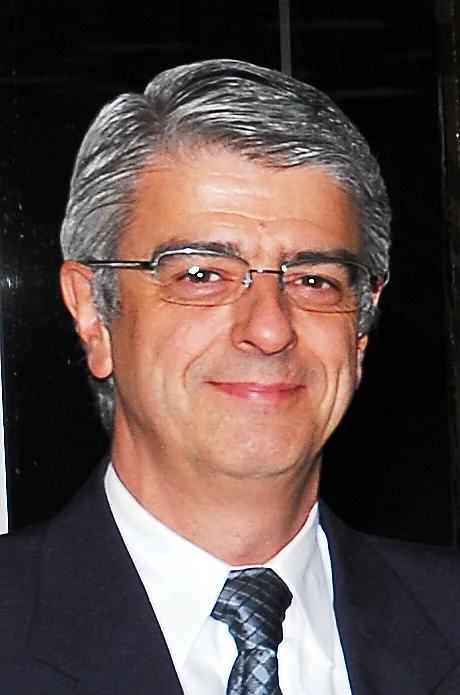
To José Wanderley MarangonAccording to the MC&E consulting firm, the opinion adequately addressed the legal challenge by acknowledging the impossibility of the accounting cut in light of Law No. 14.300, but without disregarding the physical reality of the electrical system.
According to him, the discussion about power cuts gained relevance with the increase in energy curtailment — when generation exceeds demand — in addition to restrictions related to transmission and system reliability.
Marangon notes that, in certain situations, there may not be enough centralized generation to be reduced, especially in the face of inflexible thermal power plants and hydraulic constraints, which may lead to the need for physical cuts in mini and microgeneration as well.
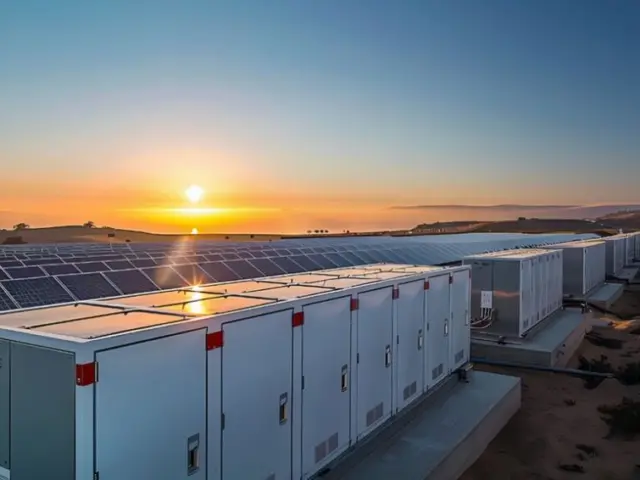
The consultant believes that, under certain physical conditions, power cuts are inevitable to avoid frequency collapse. To mitigate the problem, he suggests investing in energy storage, especially batteries integrated into distribution networks, capable of absorbing surplus energy during peak solar generation times, as a structural alternative.
Regulatory balance
Energy lawyer Urias Martiniano Neto believes the opinion raises important points, but also highlights regulatory gaps that still need to be addressed.
For him, the central challenge is to guarantee legal certainty and balance between the agents. Urias argues that the solution cannot consist of transferring risks from one segment to another, nor in creating privileges that disorganize the sector. According to his analysis, both distributed and centralized generators made investments under certain regulatory expectations, which cannot be improperly altered.
The expert emphasizes that one of the pillars of regulatory action is precisely the pursuit of balance and the proper allocation of risks, without compromising the security of supply.
According to him, regulatory evolution must respect acquired rights and avoid solutions that unilaterally penalize any category of generators.
With the AGU's statement, the issue moves into a new phase. While the opinion establishes clear legal limits to accounting cuts, it keeps open the debate on how to treat ordinary physical cuts in an increasingly decentralized system, a discussion that will have to be addressed by... ANEEL in the next regulatory steps.
all the content of Canal Solar is protected by copyright law, and partial or total reproduction of this site in any medium is expressly prohibited. If you are interested in collaborating or reusing part of our material, please contact us by email: redacao@canalsolar.com.br.

Comments
Comments are moderated before publication.Comments should be respectful and contribute to a healthy debate. Offensive comments may be removed. The opinions expressed here are those of the authors and do not necessarily reflect the views of the author. Canal Solar.