
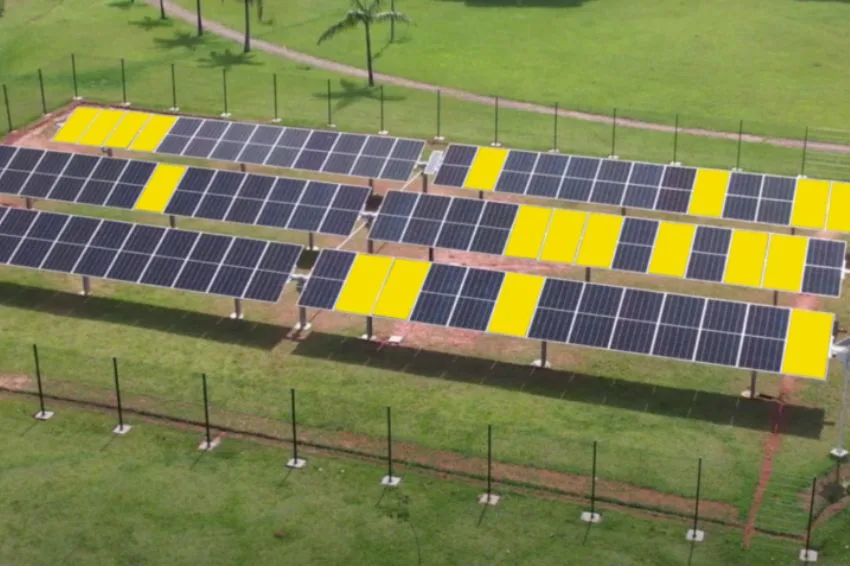
In 2022, the team at the Photovoltaic Laboratory at UFSC (Federal University of Santa Catarina) put a solar power plant into operation with the aim of evaluating the performance of bifacial modules in Brazilian climate conditions and investigating the energy gains provided by different types of soil.
The project used state-of-the-art solar panels, with individual power exceeding 600 Wp. However, one year after the start of operations, researchers began to encounter a series of flaws in the equipment's glass.
Cracks were identified that compromised the safety and performance of the solar energy system, with insulation failures on rainy days and the appearance of hot spots. The plant modules were replaced, but the crack problem reappeared.
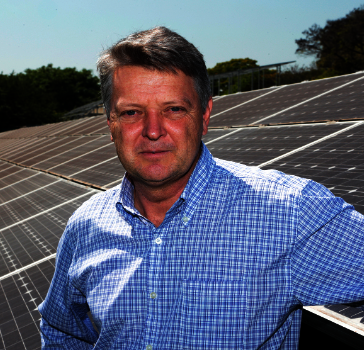
As with USFC, another similar case was also identified at the pilot solar power plant of USP (University of São Paulo). Built at the end of 2023, the plant had more than a quarter of its modules with some type of break in the glass.
In an interview with Canal Solar, Roberto Zilles, full professor at the Institute of Energy and Environment at USP, spoke about several aspects observed on the subject. Among them, the consequences of the phenomenon known as "fake power", factors that contribute to the accelerated degradation of photovoltaic modules and how laboratory tests help to identify the efficiency level of solar energy panels.
Professor, what characterizes the phenomenon known as “fake power” in photovoltaic modules and what are the most common causes of this problem?
The so-called “fake power”, the marketing of modules with a lower power than declared, can occur for two reasons: dishonesty or lack of knowledge. This phenomenon, marketing of products with characteristics lower than declared, is not exclusive to photovoltaic modules.
The sale of photovoltaic modules with power lower than that declared is more likely to occur in markets where there is no Production and Sales Monitoring control, as is the case in Brazil.
Among the main causes is fierce and somewhat predatory competition, which may be affecting the micro and mini distributed generation market more intensely.
In your opinion, what are the main factors contributing to the accelerated degradation of photovoltaic modules? Do the quality of materials and the place of manufacture play significant roles?
Currently, it can be inferred that the main factor associated with the sharp degradation is related to the aggressive cutting of costs and prices. This situation may have led, in some manufacturing units, to the interruption of quality inspections to ensure cheaper cells.
There is also the possible relaxation in quality control of the other components of a photovoltaic module, for example, EVA, polymers and glass.
How do laboratory tests help identify the level of degradation of solar energy modules? Is there a methodology that you consider most effective for assessing durability?
The identification of degradation can be detected by carrying out power determination tests under standard conditions, MQT 06, after the initial stabilization MQT 19.1, of IEC 61215/2021. However, for this it is necessary to have previously established a measurement protocol for some photovoltaic modules.
In addition to the modules that will be installed, it is recommended to keep two witness modules that will not be installed. With this initial record, annual monitoring can be carried out, or at shorter intervals in case of suspected poor performance.
In general, manufacturers guarantee degradation of less than 2% in the first year, a value that is below the uncertainty of the best conformity assessment laboratories currently operating in the country and abroad. Therefore, observed degradations of up to 2% do not find technical support for initiating a dispute with the manufacturer/supplier.
However, the suggested protocol provides the first information to initiate warranty collection due to degradation above 2%, observing the degradation curve guaranteed by the manufacturer. Depending on the contract and the number of modules affected, the manufacturer may require the evaluation of a sample in accordance with NBR 5746 – Sampling plans and procedures in inspection by attributes.
It is important to highlight that measurements will only have technical/legal value in a dispute when performed by a laboratory accredited by a signatory body of the International Laboratory Accreditation Cooperation, ILAC. In our country, INMETRO is the signatory.
The issue of microcracks in modules is widely discussed. Could you explain how these cracks form and what are the direct impacts on the long-term efficiency of the modules?
Cracks observed in the back glass of some bifacial glass-glass modules are the subject of discussion and analysis in research centers abroad and in Brazil. Of particular note is the research conducted by the Photovoltaic Laboratory/UFSC. This research group made the first record of cracks in 2022 and since then there has been a researcher from this group, Marília Braga, dedicating attention to this phenomenon.
In glass-glass modules, a lamination pinching effect can occur at the ends of the top and bottom glass sheets, which causes the sandwich layers to become thinner at the edge of the module, forcing the front and back layers towards each other, creating very high local stress at the edge of the module.
This stress can lead to the formation of cracks that propagate and lead to easily observable fractures. Visible crack on the back of the module. This effect is being recorded in 2mm glass-glass modules, 2mm glass cannot be subjected to the thermal tempering method.
2mm glass plates cannot withstand the high temperatures and cooling of the thermal tempering method. Thin glass plates are subjected to “chemical tempering”, which occurs at a lower temperature through ion exchange.
In this process, the increased resistance of the glass does not give it the same robustness as thermally tempered glass. The occurrence of cracks in the glass, as soon as they appear, does not impact the electrical performance of the module. However, it represents an important additional concern due to the possibility of moisture entering the cells.
Situation that can accelerate degradation and cause the DC/AC conversion unit (inverter) to shut down due to insulation failure detection. Therefore, it can compromise the safety and energy production of the photovoltaic generation unit.
Regarding the transportation and installation of modules, what precautions are necessary to minimize damage and maintain expected performance?
The modules must be transported in a vertical position, i.e., not stacked horizontally. As the size of the modules increases, greater care must also be taken when fixing and moving the modules at the installation site. This care can reduce the formation of microcracks.
You mentioned that a well-protected module should maintain 80% of its capacity after 25 years. What quality indicators can guarantee this durability at the time of purchase?
In addition to the care associated with transportation and installation, which may be responsible for the appearance of microcracks, modules should be sought from manufacturers/suppliers that have rigorous quality controls on the input of raw materials and inspections of electrical parameters during cell classification.
How can inverter problems or installation faults be confused with module defects? What measures could be implemented to accurately analyze the origin of the problem?
This is a recurring problem, that is, how to distribute responsibilities? Fortunately, we have NBR 16274/2014 – Grid-connected photovoltaic systems -. Minimum requirements for documentation, commissioning tests.
This standard, currently under review, provides instructions for conducting commissioning tests and performance evaluation. Its execution is the tool with which we can identify and distribute responsibilities.
In your view, how can the market protect itself from manufacturers offering inferior modules? Are there regulations or standards that could be strengthened?
Protection for quality products can be increased through Production and Marketing Monitoring.
We have recently seen cases of degradation above 40% in modules that have only been in operation for four years. What immediate actions would you recommend to deal with problems of this type in the field?
As a first step, the replacement of the modules and compensation for lost profits must be requested.
Finally, what is the role of technological innovation and R&D investments in improving the quality of PV modules? Are there emerging technologies that can help mitigate these issues?
Investments in R&D are very important for the scientific and technological development of photovoltaic cells. In the recent past, efficiency and cell development records came from research laboratories at universities or research institutes.
Currently, they start from the companies that produce the photovoltaic cells themselves. In 2016, the change from BSF (Back Surface Field) solar cells to p-type PERC began, and in 2022, the growth of n-type TOPCon technology was observed.
It is estimated that n-type TOPCon technology, together with heterojunction solar cells, will reach 60% of the market by 2032. Regardless of the technology that dominates the market in the coming years, degradation can be mitigated with the adoption of laser-welded, hermetic, polymer-free glass-to-glass modules (technology under development at NREL).
all the content of Canal Solar is protected by copyright law, and partial or total reproduction of this site in any medium is expressly prohibited. If you are interested in collaborating or reusing part of our material, please contact us by email: redacao@canalsolar.com.br.



Comments
Comments are moderated before publication.Comments should be respectful and contribute to a healthy debate. Offensive comments may be removed. The opinions expressed here are those of the authors and do not necessarily reflect the views of the author. Canal Solar.