

According to information published on the MPF website – Federal Public Ministry, the agency delivered to the National Electric Energy Agency (ANEEL) last Tuesday (26/11/2019) a recommendation that defends that any change in the regulatory framework for distributed generation (GD) of energy be implemented gradually and in a participatory manner, guaranteeing legal security to producers and consumers in this market.
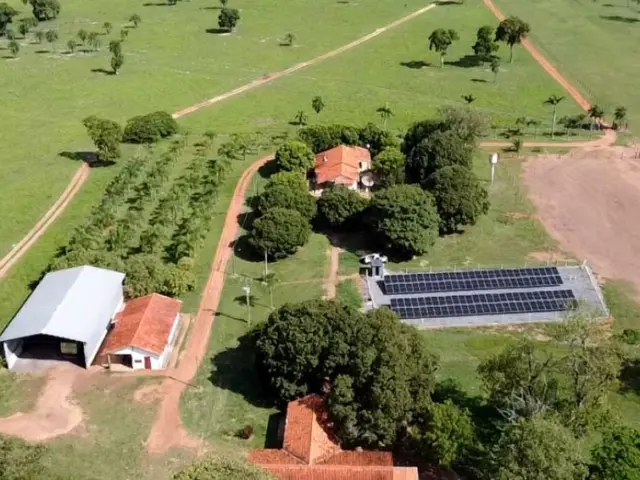
Regulated in 2012, DG is present in 70% of Brazilian municipalities and allows consumers to generate their own electricity. Most of the DG in use today in the country is carried out using photovoltaic solar energy systems, a sector that is threatened by the changes proposed by the ANEEL.
The document was prepared by the Chamber of Consumer and Economic Order of the MPF (3CCR), which warns of the insecurity in the market created by the possibility of a significant change in the regulatory framework. The review of the rules applicable to micro and mini energy generation is the subject of a public consultation promoted by the regulatory agency until December 30th.
According to Resolution 482/2012 of the ANEEL, the use of any renewable source for DG is permitted, in addition to qualified cogeneration, with distributed microgeneration being the generating plant with installed power of up to 75 kilowatts (kW), and distributed minigeneration being that with power above 75 kW and less than or equal to 5 MW, connected to the distribution network through consumer units.
Under the current rule, when compensation for injected energy is made at low voltage, consumers who have DG no longer pay all components of the supply tariff on the portion of energy consumed. By changing the resolution, the injected energy compensation can reach a proportion in which only 37% of the energy will be compensated.
In the recommendation, 3CCR highlights that the development of the distributed generation sector does not rely on any government subsidies, growing spontaneously. For the body, “the proposed new regulations will significantly slow down the expansion of this market, bringing insecurity and harm to companies and consumers who have already invested in this alternative”.
The Chamber document also points out that there is a growing workforce employed in photovoltaic generation, with around 100 thousand workers. These jobs “arose in the face of the model currently in force, whose regulatory framework allowed the beginning of consistent and modest growth”, highlights an excerpt from the recommendation.
In order to ensure regulatory stability, the MPF suggests, among other measures, that the ANEEL make public communication as soon as possible to ensure that the current rules are preserved for consumers who already have distributed generation or will access it until the new regulations are issued. It also recommends that the agency evaluate the maintenance of the current rules until distributed energy generation reaches at least 5% of all energy produced in the country.
Public consultation – In October of this year, the MPF opened an administrative procedure to examine the regularity of the public consultation carried out by ANEEL on the subject, which began on October 15 and is scheduled to end on December 30, after an extension carried out this week. The decision to open the procedure was taken to verify violations of the values provided for in the Constitution, such as freedom of initiative.
The 3CCR recommendation suggests, among several measures, that the convenience of formulating a new public consultation be analyzed, with a more comprehensive distributional generation regulatory method and a validity period of more than 180 days, in addition to holding public hearings throughout Brazil.
Source: Federal Public Ministry


Comments
Comments are moderated before publication.Comments should be respectful and contribute to a healthy debate. Offensive comments may be removed. The opinions expressed here are those of the authors and do not necessarily reflect the views of the author. Canal Solar.