

The proposal to install solar panels in houses in the My House, My Life program It is being processed in Congress and has undergone a series of discussions in both Houses. However, the The idea is well accepted by parliamentarians and implementation seems to be just a matter of time and small adjustments. The matter has been discussed in the joint committee of the Provisional Measure (MP) 1162/23, which deals with the housing program.
The federal government expects to deliver 2 million homes and, if two photovoltaic modules with 1 kW of power per home were installed in each of them, it would be possible to reduce the value of the electricity bill by 70%, according to the president of the Brazilian Association of Photovoltaic Solar Energy (ABSOLAR), Rodrigo Sauaia, in a text published on the Chamber’s official website.
According to him, the total investment required would be approximately R$9,5 billion for the installation of 2 GW of power, which could generate the creation of 60 thousand local jobs and revenue of R$2,4 billion.
In the debate, senator Efraim Filho (DEM-PB) highlighted the importance of solar energy being mandatory in Minha Casa, Minha Vida, with a 100% reduction in the electricity bill for these homes.
For this to be possible, the government would need to enter into an agreement with the concessionaires so that the surplus energy produced during the day could be converted into credits and used at night in Minha Casa, Minha Vida homes, including to exempt these residents from minimum network maintenance fees.
The proposal could be modified so that the surplus produced by the houses could supply the vertical homes of Minha Casa, Minha Vida which, in theory, would not have enough area to install solar panels.
During the meeting on May 2nd, deputies Guilherme Boulos (PSOL-SP) and Marangoni (União-SP), rapporteur of the MP, warned about the possible increase in construction projects due to the cost of maintaining the panels, if the plants were installed outside the urban area, on solar farms.
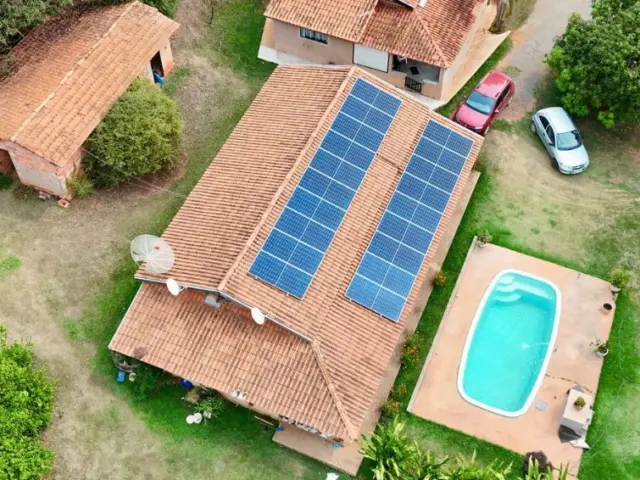
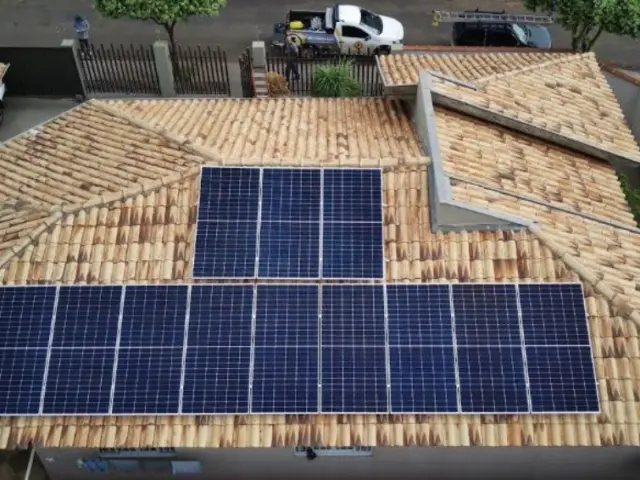
Sauaia clarified that, in the case of panels installed on roofs, as was done in the projects of the São Paulo Housing and Urban Development Company (CDHU), the maintenance cost was minimal, “in the range of 1% of the total investment per year ”. The project has been operating since 2015, in 12 thousand homes. A 70% reduction in energy bills is already a reality.
In solar plants, the executive pointed out the advantage that maintenance can be outsourced to the construction company responsible for the work or to companies specialized in solar energy. He reinforced that the equipment has a useful life of 25 years.
Another proposal that was raised by senator Efraim Filho was that the surplus energy produced by the solar panels at Minha Casa, Minha Vida could be converted into money and would return to a fund to finance new popular housing.
In summary, the implementation of solar panels in homes under the Minha Casa, Minha Vida program can bring numerous benefits, such as a significant reduction in the value of the electricity bill (or total exemption), the creation of local jobs and also help to feed back the program through reinvestment of what is produced.
The proposal is well received by parliamentarians and is currently being processed in Congress. However, there are still some issues that need to be resolved, such as the agreement with energy concessionaires to convert surplus energy produced into credit, and the possible need for adjustments to construction projects due to the cost of maintaining photovoltaic panels. .
Overall, the implementation of solar panels in Minha Casa, Minha Vida can be a great opportunity to reduce costs and help finance new affordable housing and promote democratization in access to an energy source considered by many to be “a thing for rich people”, but in fact, it is there for everyone: the Sun.
The opinions and information expressed are the sole responsibility of the author and do not necessarily represent the official position of the author. Canal Solar.


Comments
Comments are moderated before publication.Comments should be respectful and contribute to a healthy debate. Offensive comments may be removed. The opinions expressed here are those of the authors and do not necessarily reflect the views of the author. Canal Solar.