

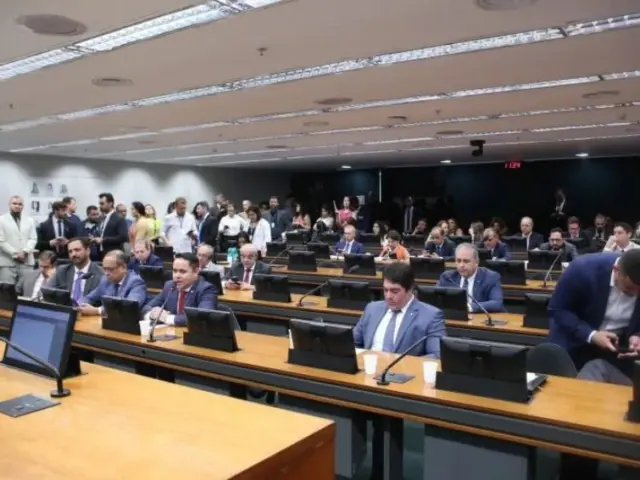
Approved in Câmara dos Deputados, on the night of this Tuesday (06), the PL 2703 / 2022 will now be forwarded to SenateWhere will need to be approved by December 22nd so that the deadline for the entry of the new energy compensation rules, defined in 14.300 Law, be postponed to July 2023.
This happens because after that date, the Brazilian parliamentarians will enter the recess period between the days December 23rd until February 1st, where the activities of the Legislative Branch end.
In addition, entities that participated in the creation of the document already work with next week as a limit, aiming for presidential sanction of the project.
The PL text gives an additional six months to the deadline for micro and mini electricity generators to request access to the distribution network without losing current benefits. Node In the case of minigeneration from PCHs of up to 30 MW, the deadline must be postponed for an additional year.
PL 2703 was a work that was born in June 2022 at the Consumer Protection Committee of the Chamber of Deputies, together with sector associations and deputy Celso Russomanno (Republicanos-SP).
The document was prepared with the contribution of micro and mini generators, who filed complaints regarding the lack of service from energy distributors regarding the installation of solar energy systems.
As the problem was not resolved by ANEEL, the proposal to extend the deadline for the entry of new rules for distributed generation was drawn up, as explained by Hewerton Martins, president of MSL (Free Solar Movement), one of the entities behind the development of the text.
“This engagement by consumers has led to an awareness on the part of Congress regarding the sense of justice, since Law 14.300 was voted on and the provisions set out in the document were not complied with by the ANEEL and by the CNPE (National Energy Policy Council),” he said.
The text was filed on the 1stº November, with entities linked to the sector searching for enough signatures that would allow the project to be voted on as a matter of urgency. As a result, the voting process was faster than usual and the text could be voted on in the Chamber of Deputies.
market assessment
The approval of PL 2703 in the Chamber of Deputies, in general, was well evaluated by professionals and entities in the solar energy sector.
A ABSOLAR (Brazilian Photovoltaic Solar Energy Association), highlighted that the decision was an “advance in the guarantees of consumer rights and an important step to preserve the application of Law nº 14.300”.
The association made a point of remembering that the legislation approved in January of this year provided for a maximum period of 180 days for its regulation by ANEEL and implementation by energy concessionaires and licensees.
“However, after this period has elapsed without any effective action being taken by the regulatory agency, this omission has caused numerous obstacles, delays, losses and difficulties for Brazilian consumers”, highlighted, in a note, the ABSOLAR.
Guilherme Chrispim, president of ABGD (Brazilian Association of Distributed Generation), classified the approval of the project as a “correct decision”.
For him, the purpose of extending the deadline for the entry into force of Law 14.300 in the understanding of ABGD and other associations in the sector, is due to the fact that the deadline that should have been met by ANEEL did not occur.
“The Agency should have made a decision by July 7, 2022 on points that were still undefined. However, this statement from the entity did not happen,” he said.
“In other words, within the limits of the Law, the Agency has not yet taken a position on relevant points”, stated Chrispim.
Among the integrators, the approval of the text was also a reason for celebration. “Everyone was looking forward to this extension, because it is not fair for the concessionaires not to have implemented all the benefits that Law 14,300 brings to Brazil (in the calculation for taxation of distributed solar energy systems)”, commented Ricardo Rizzotto, owner of EOS Solar .
For Rafael Santos, business developer at Ereng Arteon, the approval of PL 2703 is important, as many issues still need to be regulated. “We, who are in the role of developing new connections and distributed generation, still do not have a guideline from the ANEEL”, he commented,
According to him, the postponement will give consumers more time to organize themselves to obtain access opinions for their projects from distributors. “We hope that in these additional six months, ANEEL present clearer rules together with distributors so that everyone can develop and structure projects with legal certainty”, he commented.
Santos also said that integrators have realized that, as demand for solar systems has increased, it is notable that the responses they receive regarding access requests from their customers are being analyzed “any way” by distributors.
“It is clear that distributor technicians place orders in a queue and then give a very vague denial to the consumer. This denotes that the technician didn’t even evaluate the project, because he no longer has the time to do this with so much demand,” he stated.
“Who knows, now that this deadline is being approved, it will also give some relief to the distributors so that we can return a little to normality, with more technical answers about access opinions. This is one of our expectations,” she highlighted.

Comments
Comments are moderated before publication.Comments should be respectful and contribute to a healthy debate. Offensive comments may be removed. The opinions expressed here are those of the authors and do not necessarily reflect the views of the author. Canal Solar.