
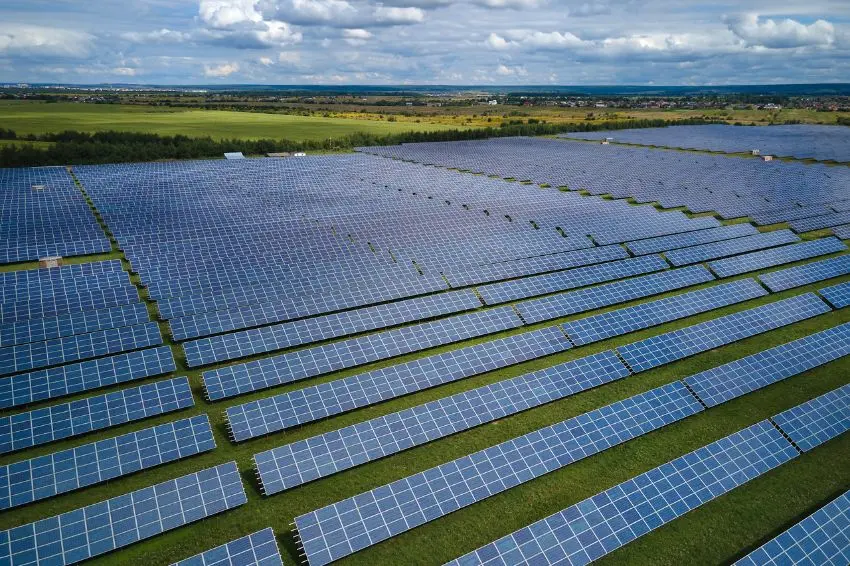
The assertion that shared generation democratizes energy, whether solar or hydroelectric, expresses a position on who should be able to participate in the energy transition.
If participation depends exclusively on the purchase of equipment and the availability of a suitable location to install it, the form of access will be conditioned by financial requirements. Collective organization offers another possibility, the legitimacy of which needs to be examined based on its legal provisions and implementation.
The research problem consists of identifying whether the separation between ownership, generation, and consumption makes the modality legally distorted or represents a choice permitted by the legal system.
The second interpretation is defended, with the caveat that the legality of each undertaking depends on compliance with applicable rules. The study does not estimate the economic impact of the modality nor does it attest to specific contracts; it examines its foundations and proposes criteria for its evaluation.
Sharing as a legislative choice
Law No. 14.300/2022 provides for shared generation through consortia, cooperatives, voluntary or building civil condominiums, or other forms of civil association established for this purpose, with the units being served by the same distributor.
Compensation is part of the SCEE (Electric Energy Compensation System), defined by the injection of energy and the free loan to the distributor, with subsequent compensation for consumption or accounting for credits.[I]
A ANEEL The Brazilian National Electric Energy Agency (Agência Nacional de Energia Elétrica) describes this modality as a gathering of interested parties to install power plants and use the energy generated to offset the participants' consumption. Its institutional presentation also distinguishes this structure from local and remote self-consumption.
Technical area of ANEEL proposes changes to the rules for shared generation.
Therefore, the existence of beneficiaries in locations other than the central office does not, in itself, constitute a deviation from the intended purpose: it is part of the logic of the recognized model.[ii]
In the interpretation advocated, personal consumption needs to be understood within the scope of the permitted collective arrangement, without requiring physical coincidence between each consumer and the equipment.
This conclusion preserves the function of the modality. An interpretation that only accepted generation within each participant's property would reduce the scope of sharing without considering the difference between the legal forms of participation.
Democratization as the expansion of access possibilities.
In this article, democratization means expanding the legal and contractual possibilities for access to solar or hydroelectric power generation. The concept does not equate to the assertion that all supply is accessible to any income level or produces an equitable distribution of benefits.
This second conclusion would depend on empirical research into who joins, what costs they incur, and how much they actually save.
Consider, as an illustrative example, a small establishment without adequate space to install panels or a family that prefers not to purchase equipment. A collective structure can offer these consumers a way to participate. The relevance of sharing stems from the possibility of organizing this alternative, subject to technical feasibility, participation criteria, and the economic conditions of the enterprise.
Democratization should also be evaluated by the quality of the established relationship. Access loses consistency when the consumer does not understand the charges or cannot identify their opt-out rights.
Therefore, it is proposed to evaluate the modality based on the scope of participation and the transparency of the relationships, avoiding transforming a commercial promise of savings into automatic proof of social inclusion.
Leasing as a means of enabling
Ownership of equipment and the right to use it are distinct legal positions. Article 565 of the Civil Code governs leasing as the transfer of the use and enjoyment of a non-fungible item in exchange for remuneration. Acquisition of the asset is not a requirement of the lease agreement itself; its purpose is to make its use available under the agreed conditions.[iii]
Applied to this topic, this distinction supports the possibility of structuring access to generation through third-party assets. The investor's asset link should not be confused with the position of the participating consumer.
The conclusion is open to interpretation and requires demonstration that the contracted structure corresponds to the operation performed. A contract without the effective provision of the object does not prove this correspondence.
Circular Letter No. 0010/2017-SRD/ANEEL It recorded the possibility of owning land and equipment through rental or lease, provided that the consideration was not fundamentally payment for the energy produced.
In reproducing the vote on the revision of REN No. 482/2012, it admitted variable components linked to equipment performance, while keeping the main component fixed.[iv]
This precedent dispels the idea that leasing is, in itself, unknown or incompatible with the regulatory concept of distributed generation. Its scope remains limited: the document was drawn up under a previous regime and does not equate to unrestricted authorization for current contracts. It is necessary to interpret it in conjunction with subsequent legislation and the characteristics of the case under analysis.
Legitimacy of the modality and specific irregularities
Article 10 of Law No. 14.300/2022 establishes a prohibition on the rental or leasing of land, lots, and properties in reais per unit of energy for inclusion in the SCEE (Brazilian Electricity Regulatory System). REN No. 1.059/2023 incorporated this provision into Article 655-D, § 3, of REN No. 1.000/2021. The existence of this limit requires careful structuring; it does not allow us to conclude that all leasing is prohibited.[v]
In the position argued here, the tax authorities must identify the obligation that is actually being remunerated. The title of the instrument, the expression "energy by subscription," or the presence of business revenue are not sufficient to determine its classification.
It is necessary to verify the rights regarding the generating structure, the organization of the participants, and the logic of the charges. Defending legitimate sharing presupposes recognizing and investigating operations that do not meet the system's requirements.
Network costs and responsibility in expansion.
The thesis of democratization does not preclude discussing who bears the costs of public policy. Law No. 14.300/2022 regulates tariff transition, the financing of components by the CDE (Energy Development Account), and the disclosure of systemic costs and benefits.
It also characterizes microgeneration and minigeneration as production intended for self-consumption. These elements are integrated into the regulatory assessment and prevent the expansion from being treated solely as a matter of commercial adherence.[vi]
It is necessary to distinguish between the adequacy of incentives and the legality of the projects. Revising financing and cost distribution does not make all participants irregular. Conversely, the legal provision of a modality does not guarantee positive distributive effects. Each conclusion requires its own justification.
For companies, responsible expansion requires contracts that explain the purpose, compensation, operational responsibilities, and the effects of exiting the business.
It is recommended to maintain consistency between memberships, registration, cost allocation, and invoice monitoring, as well as to assess how tariff changes affect the economic proposal. These measures are governance recommendations, not a guarantee of eligibility or an exhaustive list of legal obligations.
The business opportunity may lie in organizing structures that combine asset provision, operation, and participant management. Its sustainability will depend on offering understandable and legally sound conditions. Promises of cost savings must correspond to the consumer's actual situation; the interest in expanding access does not justify hiding costs or transferring risks without adequate information.
Confusion
Shared generation should not be treated as a distortion simply because it allows generation and consumption in different locations or because it uses leased equipment. These characteristics can be part of an arrangement compatible with the collective purpose permitted by law.
Leasing offers a means to make it feasible, provided that the right of use, remuneration, and execution comply with the applicable framework.
The democratization advocated in this article consists of expanding the possibilities for participation beyond the individual ownership of the generating structure. Its social value needs to be accompanied by transparency and evaluation of results.
The proposed regulatory approach aims to preserve legitimate access, correct demonstrated irregularities, and discuss the costs of the policy with explicit criteria. Thus, the defense of shared generation maintains legal basis and responsibility towards consumers and the electrical system.
Notes and references
[I] BRAZIL. Law No. 14.300, of January 6, 2022. Updated text, art. 1, X and XIV, and art. 9. Chamber of Deputies. Available at: https://www2.camara.leg.br/legin/fed/lei/2022/lei-14300-6-janeiro-2022-792217-normaatualizada-pl.html. Accessed on: Nov. 2 2026.
[ii] ANEELMicro and Mini Distributed Generation. Institutional page, participation options in the SCEE. Available at: https://www.gov.br/aneel/pt-br/assuntos/geracao-distribuida. Accessed on: Nov. 2 2026.
[iii] BRAZIL. Law No. 10.406, of January 10, 2002. Civil Code, art. 565. Compiled text. Available at: https://www.planalto.gov.br/ccivil_03/leis/2002/l10406compilada.htm. Accessed on: Nov. 2 2026.
[iv] ANEELCircular Letter No. 0010/2017-SRD/ANEEL, dated March 22, 2017. Document No. 48554.000569/2017-00, p. 4, items 19 to 23. Full copy hosted at IFSC. Available at: https://docente.ifsc.edu.br/klunger.beck/energia/extra/normas/OficioCircular_10-2017.pdfAccessed on: November 2, 2026. Used as an interpretative precedent, without presupposing the current application of all its content.
[v] BRAZIL. Law No. 14.300/2022, art. 10, at the address in footnote 1. ANEELNormative Resolution No. 1.059, of February 7, 2023, which included article 655-D, § 3, in REN No. 1.000/2021. Published in the Official Gazette of the Union on February 10, 2023. Available at: https://www2.aneel.gov.br/cedoc/pubren20231059.pdfAccessed on: November 2, 2026.
[vi] BRAZIL. Law No. 14.300/2022, articles 25 to 28 and 32. Updated text at the address in note 1. The article does not quantify subsidies, participant savings, or tariff impact for other consumers.
The opinions and information expressed are the sole responsibility of the author and do not necessarily represent the official position of the author. Canal Solar.

Comments
Comments are moderated before publication.Comments should be respectful and contribute to a healthy debate. Offensive comments may be removed. The opinions expressed here are those of the authors and do not necessarily reflect the views of the author. Canal Solar.