
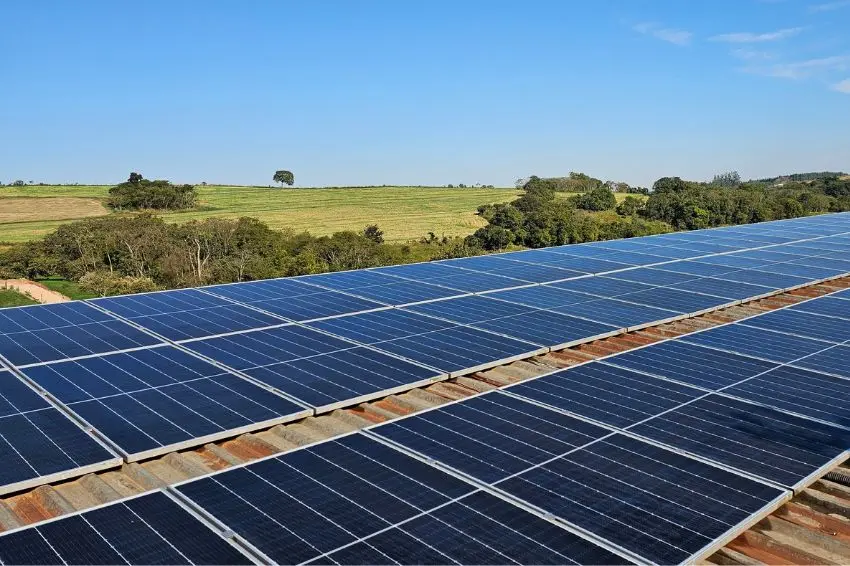
The Brazilian electricity sector is facing a regulatory transformation that could significantly alter how investments in distributed generation are planned, contracted, remunerated, and economically evaluated.
The accelerated expansion of solar photovoltaic generation, the growing participation of consumers in the SCEE (Electric Energy Compensation System), and the operational challenges faced by the SIN (National Interconnected System) are driving a major review of the Brazilian tariff structure.
In this context, the proposal presented by deserves special attention. ANEEL (National Electric Energy Agency) in Joint Technical Note No. 14/2026-STR-STD/ANEEL, linked to process no. 48500.034060/2025-88, which deals with the Modernization of Distribution Tariffs – Cycle 1 (Hourly Tariffs).
The proposal introduces a structural change: the Fixed-Time Tariff ceases to be treated exclusively as a voluntary alternative for certain consumers and becomes the standard for classifying portions of the low-voltage market.
More than just a change in the billing method, we are facing a shift with legal, economic, and contractual repercussions for the entire distributed generation ecosystem.
And there is one point that is especially relevant for the solar market: according to the proposal of ANEELNew participants in the Electric Energy Compensation System must be mandatorily enrolled in the hourly tariff modality, with no option to opt out.
This guideline requires immediate attention from investors, integrators, trading companies, consortia, cooperatives, power plant developers, and consumers who intend to enter the distributed generation market.
What is the Timely Rate and why is it? ANEEL Do you intend to implement it?
The "Tarifa Hora Certa" (Specific Time Tariff) corresponds to the hourly tariff modality, formerly known as the "Tarifa Branca" (White Tariff), whose main characteristic is to differentiate the price of energy according to the time of use.
In the conventional structure, the consumer pays a tariff that does not differentiate the time of consumption. In the hourly model, on the other hand, the values vary according to the tariff periods, reflecting the differences in the costs of servicing the electrical system throughout the day.
The justification presented by ANEEL This is related to the transformation of the Brazilian electricity grid. The growth of solar power generation has brought about a different operational reality: during certain periods of the day, especially during peak photovoltaic generation hours, there is high energy availability.
However, in the early evening, when solar generation decreases and consumption remains high, the system faces different service conditions. This difference requires more appropriate economic signaling.
Therefore, the Agency intends to encourage shifting consumption to lower-cost hours, reduce the concentration of demand during peak periods, and improve the use of available renewable energy.
The proposal also seeks to reduce tariff distortions and improve the allocation of costs among different consumer profiles. Therefore, the discussion is not limited to the creation of a new tariff. It is about a reformulation of the economic logic that guides the consumption and use of electrical infrastructure.
The mandatory requirements for new distributed generation projects: the point of greatest attention.
One of the most legally relevant aspects of Technical Note No. 14/2026 lies in the treatment given to new participants in the Electric Energy Compensation System. ANEEL It proposes three framework regimes, taking into account the consumer profile and the conditions for entering the system.
For low-voltage consumers with higher consumption, the proposal provides for automatic enrollment in the time-of-use tariff, with the temporary possibility of migrating to a flat tariff. And for consumers with lower consumption, the voluntary enrollment model remains in effect as a rule.
However, there is a specific rule for new participants in the SCEE. New members of the Electric Energy Compensation System, including consumer units with micro and mini-distributed generation and units benefiting from credits, must directly enter the hourly modality, with no possibility of leaving.
The proposal also establishes that this framework will apply to new members whose generation is connected starting 90 days after the publication of the regulation, as well as the units benefiting from the credits of these power plants.
This means that new distributed generation (DG) projects will need to consider the hourly tariff structure from the project's inception. And it will not be sufficient to evaluate only the installed capacity, the energy injected, the compensated consumption, or the percentage of allocated credits.
It will be necessary to understand how the difference between tariff periods may interfere with the economic calculation of injected and consumed energy. This is a change that can directly impact feasibility studies, compensation models, contract pricing, and investment return projections.
The impact of Law No. 14.300/2022 and the legal security of investments.
Naturally, a change of this magnitude raises questions about the compatibility of the proposal with the Legal Framework for Distributed Generation, established by Law No. 14.300/2022.
The central question is to understand to what extent the ANEEL It can modify the tariff structure applicable to consumer units participating in the SCEE, including those that made investments considering the previously existing regulations.
The Technical Note presents the understanding of Opinion No. 00166/2026/PFANEEL/PGF/AGU, according to which the Agency has the authority to apply the hourly tariff to the units participating in the SCEE, including during the transition periods provided for in articles 26 and 27 of Law No. 14.300/2022, provided that the benefit percentages applicable to the components not associated with the cost of energy are preserved.
The opinion also argues that Law No. 14.300/2022 does not guarantee the immutability of a specific tariff modality. This understanding deserves special attention, since the regulatory protection afforded to investments in distributed generation does not necessarily mean freezing the entire tariff structure applicable to consumer units.
On the other hand, the regulatory competence of ANEEL It must be exercised in accordance with the law, legal certainty, the protection of legitimate expectations, and the preservation of legally guaranteed transitional rights.
It is precisely at this intersection between regulatory competence and investment protection that one of the most important legal issues of this transformation lies. The analysis cannot be superficial. Each project requires an assessment of its connection date, legal framework, type of participation in the SCEE (Brazilian Electricity Regulatory System), contractual structure, and applicable compensation regime.
How will the compensation for energy credits work?
Another point of great importance lies in the calculation of energy credits by tariff period. The proposal does not create an independent compensation system for distributed generation.
It foresees the application, also to the hourly units of Group B, of the calculation mechanism by tariff point already regulated in the legislation and sector regulations. In short, the credits will be allocated primarily to the same tariff point in which the generation occurred.
When the service is performed at a different location, the corresponding economic conversion should be considered, taking into account the relationship between the values of the Energy TE component of the respective stations.
This mechanism deserves attention because the physical quantity of energy injected will not necessarily be equivalent, in economic terms, to the energy consumed in another tariff period.
The consequence is significant: financial models that consider only the quantitative balance of kilowatt-hours may fail to adequately represent the economic reality of the project.
For investors and power plant operators, it is essential to review the criteria used in simulations of credits, allocations, and revenue projections.
And what about the distributed generation (DG) systems that are already connected?
The proposal also deserves attention regarding existing projects. ANEEL It does not simply propose excluding already connected units from the tariff modernization process.
For these units, inclusion in the general regime is foreseen, considering the gross consumption imported from the network, accompanied by informative billing and the possibility of opting for the temporary flat tariff modality, observing the transition percentages foreseen in articles 26 and 27 of Law No. 14.300/2022.
Therefore, it is essential to distinguish between two situations:
- New SCEE participants: enrollment in the hourly modality with no possibility of leaving, according to the proposed criteria and timeframes.
- Units already connected: subject to the general transition regime, with informative billing and the possibility of opting for the temporary flat tariff, respecting applicable legal protections.
This distinction is essential to avoid misinterpretations and, above all, to correctly guide consumers and investors. Not all distributed generation projects can be treated as if they were subject to the same regulatory conditions.
The impact on distributed generation contracts: a review that cannot be postponed.
If the tariff structure changes, the contracts that economically support the projects also need to be examined. This is one of the aspects I consider most relevant from the perspective of Energy Regulatory Law.
Contracts for power plant leases, rentals, consortia, cooperatives, associations, credit sharing, service provision, asset management, and offsetting instruments may have been structured considering economic assumptions that will need to be reassessed.
Some issues then require legal and technical answers:
- Do the contracts explicitly contemplate regulatory changes that modify the tariff structure?
- Is there a plan to review the criteria for allocating and distributing credits?
- Does the remuneration methodology remain economically sound given the conversion of credits between tariff stations?
- Who will bear any potential economic differences arising from the new structure?
- Are there clauses for economic and financial rebalancing or mechanisms for contractual review?
- Did the feasibility studies consider the possibility of mandatory hourly enrollment?
- Do contracts entered into with consumers and investors adequately distribute regulatory risks?
These questions are not merely academic. They can determine the economic sustainability of ventures, the preservation of operating margins, and the prevention of conflicts between investors, generators, consumers, and operators.
Preventive contract review is no longer just a good practice; it's becoming an important risk management tool.
The regulatory timeline and the need for advance preparation.
The proposal of ANEEL It foresees the gradual implementation of hourly pricing for low-voltage consumers, contingent upon the installation of appropriate metering. The schedule recommended in the Technical Note establishes:
- 2028: consumers with consumption equal to or greater than 1.800 kWh/month.
- 2029: consumers with consumption equal to or greater than 1.000 kWh/month.
- 2031: consumers with consumption equal to or greater than 500 kWh/month.
The Technical Note recommends that billing begin in April 2028, observing the implementation phases. It also foresees an informational billing period of at least three billing cycles before any financial effects are produced for consumers undergoing the enrollment process who may opt out.
It is important to note that this timeline refers to the progressive inclusion of the low-voltage public. The specific treatment of new participants in the SCEE (Brazilian Electricity Regulatory System) has its own rules, with no possibility of opting out, according to the proposed timeframe.
Early planning is essential. Investors who wait for the full effects of the regulation to be felt may find it difficult to renegotiate contracts, revise financial models, or adapt management systems.
An international trend towards tariff modernization.
The transformation proposed by ANEEL It is also part of an international movement to modernize distribution tariffs. Regulatory experiences in the United States, Canada, and Europe demonstrate the growing use of time-of-use tariffs, especially in light of the expansion of renewable energy sources, the electrification of transportation, and the need for greater demand flexibility.
The Technical Note itself cites experiences from California and Ontario, as well as references from the CEER (Council of European Energy Regulators), ACER (Agency for the Cooperation of Energy Regulators), and FERC (Federal Energy Regulatory Commission). The logic is relatively clear: it is not enough to expand renewable generation.
It is necessary to develop economic and regulatory mechanisms capable of integrating this energy into the system efficiently. However, importing international models requires attention to Brazilian legal, contractual, and economic particularities.
The regulatory design needs to consider the Legal Framework for Distributed Generation, the characteristics of the Electricity Distribution System, the reality of distributors, and the protection of investments made in the country. Tariff modernization must go hand in hand with legal certainty.
What should companies, investors, and distributed generation (DG) operators do now?
Given this scenario, I recommend that industry stakeholders initiate an integrated assessment of their ventures, with joint action from the legal, regulatory, technical, tax, and financial areas.
Some measures are a priority:
- Regulatory diagnosis of the projects: Identify the classification of each consumer unit, the connection date, the eligibility for participation in the SCEE (Brazilian Electricity Regulatory System), and the applicable transition rights.
- Economic simulation of the "Hora Direta" (Special Time Tariff): Evaluate the effects of differentiation by tariff periods, credit conversion, and the energy consumption and injection profile.
- Contractual audit: Review contracts for shared generation, consortia, cooperatives, leasing, rental, service provision, and credit allocation.
- Assessment of legal and regulatory risks: Identify potential contractual imbalances, economic exposure, unforeseen obligations, and opportunities for compliance.
- Review of investment models: Update feasibility studies, revenue projections, payback periods, profitability, and project pricing criteria.
- Strategic planning for new ventures: Incorporate the new tariff reality from the project structuring stage, preventing investments from being made based on economic assumptions that do not correspond to the future regulatory environment.
Conclusion: Distributed generation enters a new regulatory phase.
The "Tarifa Hora Certa" (Specific Time Tariff) represents much more than a change in the way electricity is charged. It signals a transformation in the relationship between generation, consumption, credit compensation, and the economic structure of businesses.
For the distributed generation sector, the main concern lies in the proposed treatment for new participants in the SCEE (Brazilian Electricity Regulatory System), who will be required to enter the hourly modality without the possibility of leaving. This new context demands a change in attitude from economic agents.
Legal analysis cannot occur only after a contractual problem, a billing discrepancy, or a financial loss. Energy Regulatory Law needs to act preventively, anticipating scenarios, identifying risks, assessing the legality of measures, and protecting the sustainability of investments.
This is when specialized legal counsel assumes a strategic role. The question the market needs to ask is not only how much a power plant can generate, but how much that energy will actually represent in economic value under the new tariff structure.
Distributed generation will continue to be an important component of Brazil's energy transition. However, its sustainability will increasingly depend on the ability of stakeholders to understand and anticipate regulatory changes.
In the new landscape of the electricity sector, investing in solar energy is not enough. It's necessary to invest in regulatory intelligence, legal security, and economic planning. Because, in an increasingly regulated and complex market, anticipating change can be as important as making the investment itself.
The opinions and information expressed are the sole responsibility of the author and do not necessarily represent the official position of the author. Canal Solar.


Comments
Comments are moderated before publication.Comments should be respectful and contribute to a healthy debate. Offensive comments may be removed. The opinions expressed here are those of the authors and do not necessarily reflect the views of the author. Canal Solar.