

The newly elected director of ABSOLAR Helane Souza, from the Brazilian Photovoltaic Solar Energy Association in Amazonas, states that the state has the conditions to become a national reference in the integration between solar energy and storage systems, but believes that this potential will remain underutilized as long as obstacles such as dependence on diesel in isolated systems, high logistical costs, and the lack of a regulatory environment capable of stimulating new investments persist.
For her, "solar energy combined with batteries" represents a strategic alternative to increase security of supply and accelerate the decarbonization of the region.
In an exclusive interview to Canal Solar, Helane also argues that the first federal auction for battery storage marks the recognition that these systems have become an essential infrastructure for ensuring flexibility and reliability in the electricity sector.
Although the competition focuses on the SIN (National Interconnected System), she believes that its outcomes could boost a national production chain capable of benefiting the Manaus Industrial Hub, as well as paving the way for new investments in solutions aimed at isolated systems in the Northern Region.
First woman to lead the representation of ABSOLAR In the Amazon, Helane argues that the expansion of renewable energies in the region should be treated as a development policy, combining environmental preservation, legal security, and strengthening of local industry.
According to the executive, the forest "is not an obstacle to development, but the state's greatest asset," and clean energy can transform the reality of Amazonian communities without compromising environmental conservation.
You assume the directorship of ABSOLAR In the Amazon, the explicit challenge is to accelerate decarbonization in a state still heavily dependent on fossil fuels. What are the main structural and logistical barriers that the Amazon faces today in converting its enormous solar potential into large-scale reality?
The Amazon region offers some of the best conditions to demonstrate how solar energy and storage systems can transform the energy reality of isolated communities and regions.
At the same time, it faces very particular challenges. We have a large geographical dispersion of the population, communities that are difficult to access, high logistical costs, and a strong dependence on diesel-powered generators and plants in isolated systems, which makes energy supply more expensive, more polluting, and more vulnerable.
To advance the decarbonization of the region, it is essential to expand the planning of electrical infrastructure and create a regulatory and investment environment that encourages solar generation projects associated with battery storage.
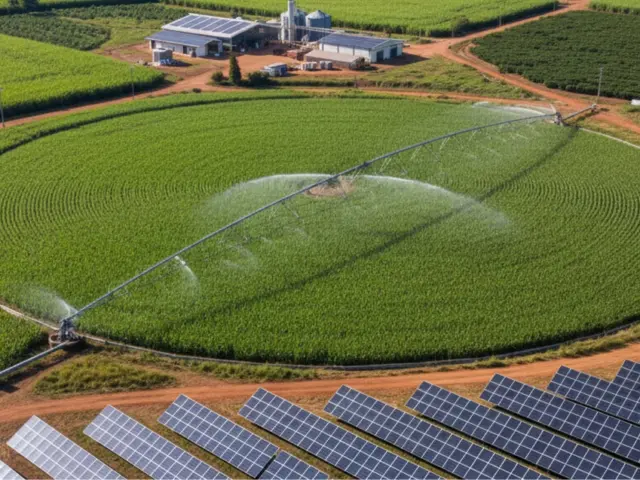
This combination is especially strategic for the Amazon region, as it allows for increased security of supply, reduced consumption of fossil fuels, and the provision of better quality energy for the population and productive activities.
Our role in ABSOLAR The goal will be to strengthen dialogue between the productive sector, governments, and society to accelerate this transition, transforming the state's enormous solar potential into economic development, job creation, and decarbonization.
Given the vast territory of Amazonas, what local public policies do you intend to prioritize with the state government and municipalities to accelerate this growth?
The state of Amazonas already has approximately 323 MW of installed self-generation solar power, distributed across more than 17,8 photovoltaic systems, but this potential is still far from what the state can achieve.
Our priority will be to support public policies that expand the adoption of solar energy and batteries, both in regions already connected to the National Interconnected System (SIN), so that they become less dependent on the transfer of energy produced in other regions, and in isolated systems and communities, bringing greater reliability to the supply and reducing the cost of acquiring diesel, which is fundamental for current generators.
This includes encouraging solar and electricity storage projects in public buildings, schools, hospitals, sanitation systems, and public lighting, as well as stimulating financing options for consumers, rural producers, and businesses. It will also be crucial to strengthen professional training, stimulate new private investments, and increase legal security for those wishing to invest in the sector.
The federal government has scheduled the first LRCAP (Capacity Reserve Auction focused on Storage) for December of this year. How do you assess the attractiveness of the rules of this auction for attracting investments in battery-based storage systems (BESS) specifically for the Amazon ecosystem?
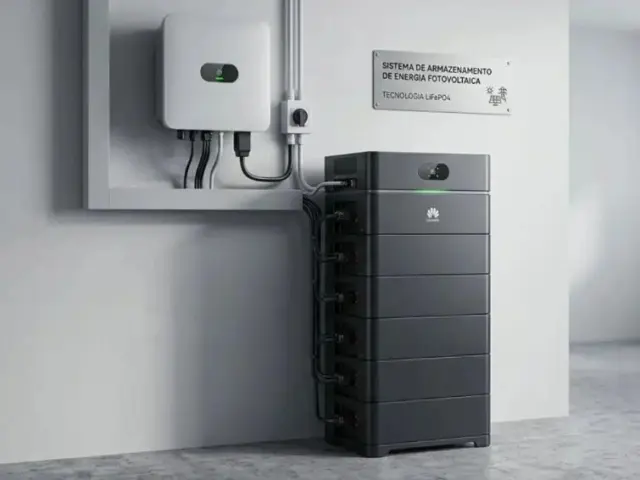
The realization of the first LRCAP focused on energy storage represents a historic milestone for the Brazilian electricity sector. It is a recognition that energy storage systems have become an essential infrastructure to guarantee flexibility, reliability, and security to the national electricity system.
A ABSOLAR We consider it positive that the auction establishes long-term contracts, bringing cost reductions to society and greater predictability to investors. At the same time, we understand that there are still important regulatory improvements to allow the full development of the Brazilian energy storage market, especially in taking advantage of all the functionalities that batteries can offer to the electrical system.
It is worth highlighting that the LRCAP focused on Storage aims to provide power reserves to the National Interconnected System, which is important for the stability of the electrical system, especially in regions where there is a greater imbalance in the generation/demand ratio.
This is the case with the interconnection between the Northeast subsystem, where there is significant solar energy generation, and the Southeast/Central-West subsystem, where there is high demand for electricity. This interconnection already has limitations in its energy transmission capacity, which causes entire power plants to have their generation interrupted at various times.
The auction favors projects located at specific points in the electrical grid where they are most needed, through a bonus factor in the evaluation of auction bids. These points were presented by MME Normative Ordinance No. 136/2026 and include locations in the states of AL, BA, CE, MG, PB, PE, PI, and RN.
For Amazonas, the Isolated Systems Auctions represent a greater opportunity, due to the need to gradually reduce dependence on diesel. We hope that this movement will inaugurate a cycle of new investments and technological development also in the Northern Region.
The December auction brings rigorous technical requirements, such as the operation of autonomous batteries (grid-forming batteries). Considering the peculiarities of isolated systems and the electrical grid in Amazonas, are local entrepreneurs prepared to meet these high-performance requirements?
The objective of the auction is to provide power reserves to the National Interconnected System (SIN), and isolated systems are not the subject of this auction. This does not mean that the auction does not bring opportunities to the region, which may be essential in supplying equipment for these projects, since part of the auction will be directed towards solutions based strictly on national equipment, and given the high competitiveness of the Manaus Free Trade Zone among national production hubs.
The auction regulations divided the bidding process into two products, including provisions for local content criteria required by BNDES (Brazilian Development Bank) for one of them. Is the supply chain in Amazonas capable of absorbing this technological storage demand in the short term, or are we still heavily dependent on imports?
Developing a national energy storage chain will be a gradual process. Today, a significant portion of the equipment and components is still imported, as is the case in various segments of the energy transition.
On the other hand, the local content requirement can act as an important stimulus for Brazilian industrialization, attracting manufacturers, expanding investments, and strengthening national suppliers over the coming years.
In the case of Amazonas, there is an important competitive advantage represented by the Manaus Industrial Hub, which has a tradition in the manufacture of electronic equipment and has the conditions to participate in this new production chain.
With regulatory predictability, market scale, and appropriate incentive policies, the state can become one of the national protagonists in the production and integration of technologies focused on energy storage.
The expectation of ABSOLAR The goal is for LRCAP to be just the first step towards consolidating a permanent storage market in Brazil, capable of stimulating investment, innovation, the creation of skilled jobs, and greater competitiveness for the entire production chain.
You were born in Novo Airão, in the heart of the Anavilhanas mountains, and were one of the pioneers in the solar energy market in Amazonas. How do your experience connected to your Amazonian roots and your specialization in energy regulation and law shape your vision on balancing forest preservation with economic progress through renewables?
Being born in the heart of the archipelago taught me early on that our forests are not an obstacle to development, but rather our greatest asset. As a pioneer in the region, my vision has always been to generate energy without destroying our ecosystem. I emphasize that the expansion of renewable energy in the Amazon goes beyond clean energy; for many families and communities, it means dignity and access to information.
However, for investments in renewables to reach the Amazon in a structured way, protecting our forests, legal and regulatory security is necessary. With legal and regulatory security, renewable energy becomes a bridge between development and preservation.
What message do you have for women who aspire to leadership positions in the clean energy and storage sector, a segment historically dominated by men?
Every challenge demands resilience, and we women can contribute a great deal to this sector with our long-term vision and attention to detail. I believe in our potential, and that adequate qualifications will increasingly give us opportunities to sit at the decision-making table. Until then, it is important to unite through support networks such as industry associations to share ideas and fight for a fair and balanced energy sector for all.
all the content of Canal Solar is protected by copyright law, and partial or total reproduction of this site in any medium is expressly prohibited. If you are interested in collaborating or reusing part of our material, please contact us by email: redacao@canalsolar.com.br.

Comments
Comments are moderated before publication.Comments should be respectful and contribute to a healthy debate. Offensive comments may be removed. The opinions expressed here are those of the authors and do not necessarily reflect the views of the author. Canal Solar.