
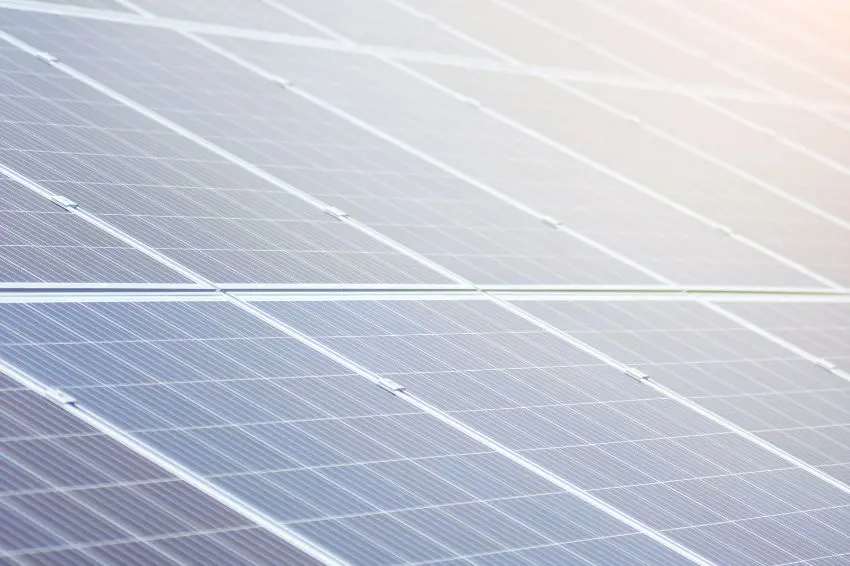
According to the report, more than 90% of the leading Chinese manufacturers of photovoltaic solar equipment recorded losses in 2026. Renewables 2026, released by the IEA (International Energy Agency).
The survey indicates that excess production capacity and falling equipment prices have compromised companies' profit margins, causing a financial crisis in the sector, despite the growth in global demand for solar energy.
According to the Agency, more than 70 Chinese companies in the sector have filed for bankruptcy since 2024. This scenario highlights the challenges faced by the country's photovoltaic industry, which maintains a dominant position in the global supply chain, from polysilicon production to the manufacture of solar modules.
The IEA highlights that the expansion of industrial capacity beyond demand has intensified competition among manufacturers, putting pressure on prices and reducing the profitability of operations.
Despite these difficulties, China continues to concentrate the largest part of the world's photovoltaic equipment production chain. In addition to the financial problems faced by manufacturers, the Chinese solar energy market also shows signs of slowing down.
According to the report, the shift from a fixed-tariff model to competitive auctions led to a nearly 55% reduction in photovoltaic capacity additions in the first nine months of 2026, compared to the same period of the previous year.
Given this scenario, the IEA revised downwards its projection for the growth of China's renewable energy capacity between 2026 and 2031. The reduction was approximately 116 GW, equivalent to 5% compared to the estimates presented in the previous report.
Despite the revision, the agency assesses that the country will continue to expand its participation in the global renewable energy market and should exceed the new targets for installed capacity and electricity generation established in its 15th Five-Year Plan.
An alternative to Chinese industry.
The concentration of the photovoltaic production chain in China has also driven the search for suppliers in other countries. In this context, India stands out as one of the main markets with the potential to diversify the global production of solar equipment.
According to the IEA, by 2031, India is expected to be the only country, besides China, with the capacity to manufacture all the main components of the photovoltaic chain on a large scale, including polysilicon, wafers, cells, and modules.
This expansion could help reduce the geographic concentration of production and broaden supply alternatives for international markets. Even so, the agency emphasizes that Chinese dominance remains significant at all stages of the industrial chain.
Solar will continue to lead the expansion of renewables.
Despite the financial difficulties faced by Chinese manufacturers, the outlook for the expansion of solar energy remains positive. The IEA estimates that global installed capacity from renewable sources is expected to grow by almost 85% between 2025 and 2031, with photovoltaic energy accounting for more than three-quarters of this growth.
In total, global renewable capacity is expected to increase by almost 4.800 GW between 2026 and 2031, a volume 57% higher than the growth recorded in the previous six years.
China's share of the global expansion of renewables, in turn, is expected to decrease. After accounting for more than 60% of global growth in 2025, the country is projected to represent 53% of capacity additions in the projected period.
This relative decline will be accompanied by growth in other markets, especially India, Southeast Asia, Africa, and the Middle East, driven by incentive policies, increased competitiveness of renewable technologies, and concerns about energy security.
The agency also revised upward its projections for the United States, India, Southeast Asia, Sub-Saharan Africa, and Latin America, offsetting the reduced estimates for China.
According to the IEA, the growth in global demand for solar energy should continue to support the expansion of installed capacity, even in an environment of financial difficulties for some manufacturers.
all the content of Canal Solar is protected by copyright law, and partial or total reproduction of this site in any medium is expressly prohibited. If you are interested in collaborating or reusing part of our material, please contact us by email: redacao@canalsolar.com.br.



Comments
Comments are moderated before publication.Comments should be respectful and contribute to a healthy debate. Offensive comments may be removed. The opinions expressed here are those of the authors and do not necessarily reflect the views of the author. Canal Solar.