
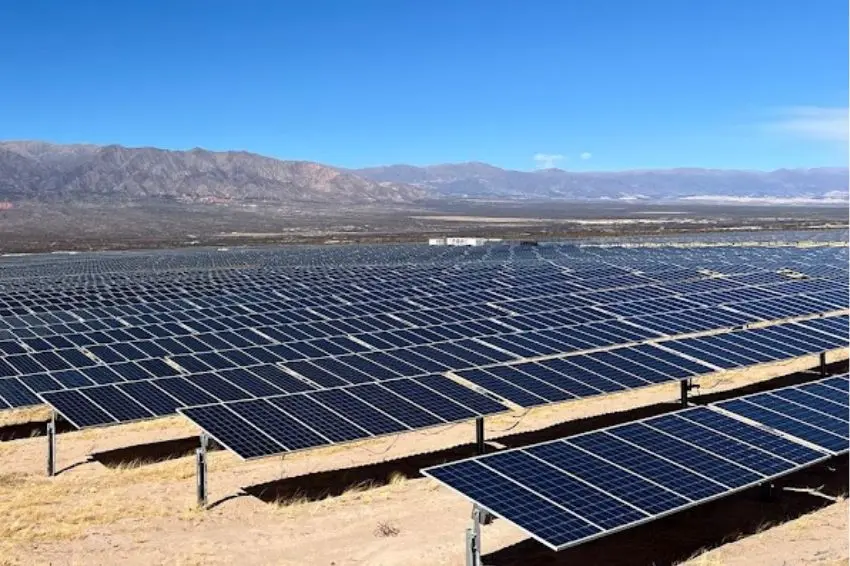
The volume of recycled solar panels is expected to grow rapidly in the coming decades, keeping pace with the expansion of photovoltaic energy around the world, studies show. new projections from IRENA (International Renewable Energy Agency).
According to the organization, the annual disposal of modules is expected to exceed 3 million tons in 2035 and more than 25 million tons per year in 2050.
According to the organization, this progress is directly related to the growth in installed photovoltaic capacity. Currently, solar energy accounts for almost half of the total installed renewable generation capacity in the world.
Since the modules are designed to operate for approximately 25 to 30 years, the growth of installations also means that an increasing amount of equipment will reach the end of its useful life in the coming decades.
In terms of capacity, IRENA estimates that more than 400 GW of photovoltaic panels could reach the end of operation by 2050.
Logistics will have to keep pace with the growth of waste disposal.
The amount of equipment that will need to be taken out of operation will also require a larger infrastructure for collection, transport and processing.
According to IRENA, in the next ten years alone, at least 120 heavy truck trips will be needed to transport all the discarded modules.
The Agency also estimates that more than 150 medium-sized treatment facilities, operating at full capacity, will be needed to meet the projected volume.
Given this scenario, the organization points to the circular economy, based on reduction, reuse, and recycling, as one of the ways to manage the end-of-life of equipment.
Over 90% of the materials can be recovered.
Although the modules have a limited lifespan, a large portion of the materials used in their manufacture can be reused. According to IRENA, currently available technologies allow for the recovery of more than 90% of the materials present in photovoltaic panels, including glass, aluminum, copper, silicon, and silver.
The Agency points out that, with future technological advances, the recycling rate of certain valuable minerals could approach 100%. Once recovered, these materials can return to the market and be used in the manufacture of new industrial products.
This reuse could also generate billions of dollars in the coming decades. According to IRENA estimates, the market value of materials recovered annually from end-of-life photovoltaic modules could reach US$6 billion in 2040 and exceed US$20 billion in 2050.
Recycling can also create jobs.
The infrastructure needed to receive discarded equipment should involve activities such as collection, transportation, sorting, repair, reuse, and recycling.
According to IRENA, the photovoltaic sector alone was already responsible for more than 7,2 million jobs in 2024, equivalent to 43% of renewable energy-related jobs worldwide.
A study cited by the Agency and conducted by a network of social enterprises in Europe indicates that, with adequate training, activities related to the reuse of electronic waste can generate between 60 and 140 jobs for every thousand tons of materials collected.
IRENA emphasizes, however, that the development of this supply chain needs to be accompanied by labor policies, safety standards, and environmental protection measures to reduce health risks and ensure adequate conditions for workers.
Solar panels: myths and truths about disposing of photovoltaic modules
all the content of Canal Solar is protected by copyright law, and partial or total reproduction of this site in any medium is expressly prohibited. If you are interested in collaborating or reusing part of our material, please contact us by email: redacao@canalsolar.com.br.




Comments
Comments are moderated before publication.Comments should be respectful and contribute to a healthy debate. Offensive comments may be removed. The opinions expressed here are those of the authors and do not necessarily reflect the views of the author. Canal Solar.