
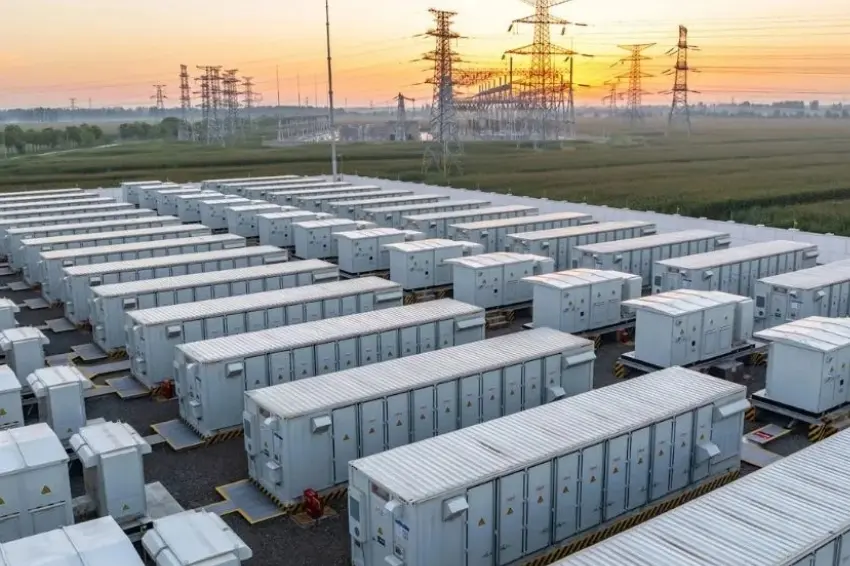
1. Introduction
For much of the history of the electricity sector, generation and consumption were treated as virtually simultaneous phenomena. Energy was supposed to be produced at the same instant it was demanded, with planning responsible for ensuring sufficient capacity to meet load variations and system contingencies. This paradigm is changing.
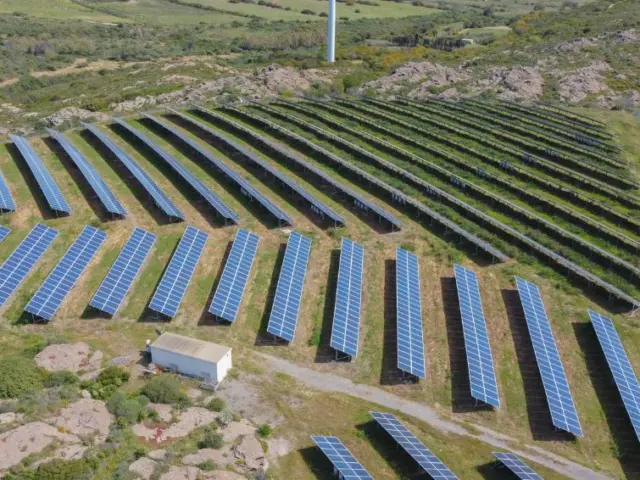
The expansion of wind and solar photovoltaic sources adds large volumes of generation to the system, the availability of which depends on natural conditions and does not necessarily coincide with peak consumption times.
Meanwhile, the electrification of transport, the digitalization of the economy, the growth of data centers, distributed generation, and the emergence of more active consumers are making the demand profile increasingly complex.
The contemporary challenge, therefore, is not just about producing more energy. It is about producing, transporting, storing, and making energy available where and when it has the greatest value for the system. It is at this point that storage becomes a strategic asset.
A storage system can absorb energy during periods of high supply or lower prices and release it during peak demand. It can respond to frequency deviations in fractions of a second, provide power in critical situations, maintain grid voltage, reduce overloads, assist in system restoration, and increase the utilization of renewable energy projects.
Unlike equipment that performs a single function, storage can generate multiple sources of value from the same asset. This characteristic, known as value stacking, or revenue stacking, is central to understanding its economic viability.
In Brazil, the topic has definitively left the experimental sphere. ANEEL In June 2026, it regulated autonomous storage systems and systems co-located to generating plants. The MME (Ministry of Mines and Energy) also established guidelines for the first Capacity Reserve Auctions dedicated to battery storage systems, with long-term contracts expected and supply starting in 2028.[1]
The change is significant: the battery is no longer treated merely as a component of an installation, but is now subject to regulatory framework compatible with an undertaking in the electricity sector.
2. The paradigm shift: from stored energy to systemic flexibility
Traditional economic analysis tends to value a battery by the amount of energy it can store. While this capacity is relevant, it doesn't fully reflect the asset's value.
The true economic benefit of energy storage is flexibility. Flexibility is the ability to rapidly modify energy consumption, injection, or withdrawal patterns to meet system needs. This response can occur on different time scales: milliseconds, seconds, minutes, hours, or days.
Thus, the same system can perform distinct functions, such as absorbing surplus renewable generation; shifting energy from off-peak to off-peak hours; supplying power during critical periods; providing primary or secondary frequency control; supplying reactive power and voltage support; reducing peak consumer demand; replacing or reducing the use of diesel generators; increasing the reliability of critical installations; avoiding or postponing network reinforcements; assisting in system restoration after disturbances; enabling the formation of isolated networks through grid-forming resources; reducing losses and congestion; and optimizing usage and connection contracts.
EPE (Empresa de Pesquisa Energética) already recognized, in its studies, that batteries offer fast response, modularity and locational flexibility, and can be used in both centralized and distributed applications.[2]
This functional multiplicity breaks down the traditional boundaries between generation, transmission, distribution, commercialization, and consumption. A battery can consume energy during charging, supply energy during discharge, provide services to the grid, and operate as safety infrastructure for a consumer.
It is precisely this hybrid nature that makes storage valuable and, at the same time, challenging for regulation.
Brazilian sectoral law was built upon relatively watertight categories. The generator produces, the transmission company transports, the distribution company provides the network service, and the consumer uses the energy. Storage, however, can perform all these operations at different times.
Therefore, simply classifying it as generation or consumption would mean artificially reducing its economic function.
The most effective regulation should not only ask "what is a battery?", but primarily "what service is it providing in a given operation?".
3. The formation of the new Brazilian storage market
The development of storage technology in Brazil initially occurred through research, development, and innovation projects. Strategic Call for R&D ANEEL # 21 / 2016 sought to test technical and commercial arrangements applicable to the electricity sector. According to the Agency, twenty-nine projects were received, twenty-one were approved in the initial evaluation and twenty were completed.[3]
This experimental cycle allowed us to accumulate knowledge about technologies, security, control, network integration, and commercial applications. The next step was regulatory development.
In 2023 the ANEEL Public Consultation No. 39 was launched to discuss the improvements needed for the integration of storage systems, including batteries and reversible hydroelectric plants. The process was complemented by technical seminars, debates on international experiences and analyses of grid-forming technologies.[4]
On June 2, 2026, the Agency approved two key regulatory acts. The Regulatory Resolution ANEEL Decree No. 1.161/2026 began to regulate autonomous storage systems, establishing registration and authorization procedures.
The interested party may request a Storage System Grant Registration Order — DRO-SAE — or directly request authorization. The DRO is useful for environmental licensing, financing and preliminary project development.[5]
The Regulatory Resolution ANEEL No. 1.162/2026, in turn, regulated the colocation of storage systems in generating plants, inserting specific rules in Normative Resolution No. 1.071/2023. Thus, wind, solar, thermoelectric and other source projects can incorporate storage into the original project or into already granted facilities.[6]
This normative recognition has important consequences. First, it reduces legal uncertainty regarding the implementation of autonomous projects.
Second, it allows for the structuring of storage assets without them necessarily being linked to a specific generation plant. Third, it creates a regulatory framework for financing, granting, licensing, connection, and contracting.
Fourth, it expands the possibility of developing hybrid or co-located projects, in which generation and storage share facilities, connectivity, infrastructure, and business strategies.
In parallel, the Ministry of Mines and Energy published, in June 2026, the guidelines for the Storage Capacity Reserve Auctions. The auctions allow battery systems with national or imported equipment, with operation scheduled to begin on August 1, 2028.[7]
The public notices submitted for public consultation by ANEEL They foresee, among other conditions, a minimum power of thirty megawatts, discharge capacity for four hours, centralized dispatch by the ONS (National System Operator) and fifteen-year contracts. Remuneration should occur through a fixed revenue, paid in monthly installments, in exchange for the availability of the asset.[8]
The design represents the first structured mechanism for contracting large-scale storage capacity in the country. More than just contracting batteries, the Brazilian government is beginning to contract availability, power, and flexibility.
4. Main business models
The consolidation of storage as an economic asset depends on the existence of revenues capable of covering its implementation, operation, degradation, replacement, and financing costs.
However, there is no single business model applicable to all projects. The design must consider location, duration, power, operating regime, connectivity, technology, consumer profile, and contractable services.
4.1 Large-scale autonomous storage
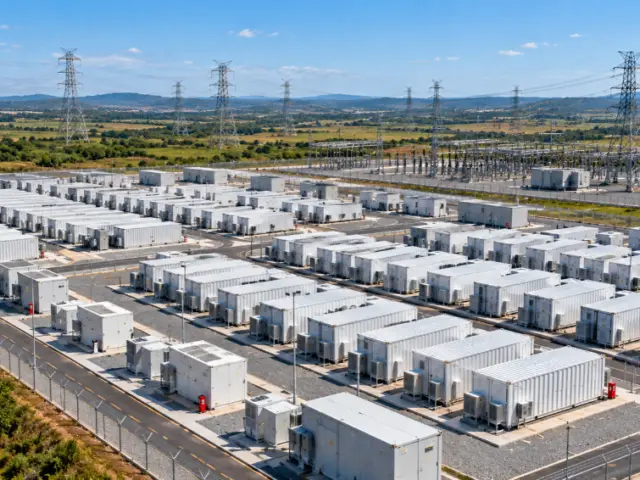
The autonomous system, often called a stand-alone BESS, is not necessarily associated with a generating plant. It can be installed at a strategically selected point in the grid and operate according to price signals, operator commands, or bilateral contracts.
Its location can be defined to meet transmission constraints; increase the reliability of a given subsystem; reduce congestion; offer power reserve; provide ancillary services; arbitrate prices between periods; and meet locational needs identified by planning.
The 2026 Capacity Reserve Auction model is an example of availability-based contracting. In this arrangement, the main revenue does not come from the sale of stored energy, but from the obligation to maintain available power for dispatch when required.
This distinction is essential. The battery does not produce primary energy. It shifts energy over time and provides responsiveness. Therefore, its remuneration should reflect availability and service provided, not just the megawatt-hours discharged.
4.2 Storage located near solar and wind power plants
Colocation allows for the integration of batteries into generation projects, sharing connectivity, land, equipment, licensing, and operational infrastructure.
This arrangement can provide reduced generation cuts; shifting renewable production to peak hours; greater delivery predictability; smoother ramp-up; better utilization of connectivity capacity; fulfillment of contractual commitments; or provision of additional services to the system.
The power plant will no longer offer only variable energy but will instead provide a more stable, predictable, and controllable product.
In regions subject to flow restrictions, storage can absorb some of the generation that would be reduced by operational command. However, its viability must be analyzed carefully: a battery does not, by itself, eliminate permanent structural constraints and has a limited storage capacity.
The investment should consider the frequency, duration, and predictability of restrictions, as well as the rules applicable to dispatch and remuneration.
4.3 Storage behind the meter
The storage installed in consumer units can be used to reduce demand costs, shift consumption, increase self-consumption of distributed generation, avoid the use of diesel generators, and provide emergency power.
For Group A consumers, a BESS can be programmed to limit peak demand, optimize tariff contracting, and reduce exposure to peak hours.
For consumers with solar power generation, the battery allows them to retain some of the energy produced during the day and use it later, increasing instant self-consumption and reducing exchanges with the grid.
Studies by EPE indicate that certain behind-the-meter applications can become economically viable, especially in replacing diesel generation during peak hours, depending on the system cost, tariff and usage profile.[9]
Viability should not be assumed. It depends on hourly simulation, efficiency, discharge depth, annual cycles, degradation, contracted demand, tariff structure, and cost of capital.
4.4 BESS as a Service
In the model known as Battery Energy Storage as a Service, the consumer or user does not necessarily purchase the system. A third party invests in, installs, operates, and maintains the asset, being compensated through a monthly fee, savings sharing, or payment based on performance.
This arrangement reduces the need for initial investment by the client and transfers some of the technological and operational risks to the service provider.
Contracts may stipulate fixed remuneration; participation in the savings generated; a minimum guarantee of cost reduction; minimum availability; number of cycles; efficiency; module replacement; liability for degradation; security obligations; data ownership; or even the sharing of additional revenue.
This is a promising model, but it is legally sophisticated. The contract needs to clearly separate asset ownership, energy ownership, performance risks, revenue rights, and responsibilities to the distributor, the ONS (National System Operator), the CCEE (Chamber of Electric Energy Commercialization), and environmental agencies.
4.5 Microgrids, resilience and critical supply
Hospitals, industries, data centers, telecommunications companies, public facilities, and units located in isolated regions place high value on continuity of supply.
In these cases, the economic benefits of storage can be linked to reduced interruptions, production losses, equipment damage, and contingency costs.
Storage can also integrate microgrids capable of operating temporarily in isolation. Grid-forming technologies allow inverters to contribute to the formation and maintenance of the grid's electrical parameters, a function that is especially important in systems with less synchronous machine participation.
In a study published in 2026, EPE recommended for the Cruzeiro do Sul region, in Acre, a BESS of one hundred megawatts and two hundred megawatt-hours, connected at 69 kilovolts, as a technical-economic alternative to increase reliability, respond to contingencies and provide ancillary services.[10]
This example demonstrates that batteries are not merely commercial arbitrage assets. They can also constitute infrastructure and energy security solutions.
5. Remuneration for services rendered
The main economic challenge of warehousing is not demonstrating its usefulness. It's transforming that usefulness into contractable revenue.
A battery can provide various services, but not all currently have transparent payment mechanisms.
5.1 Recipe based on power availability
In Capacity Reservation Auctions, remuneration is linked to the system's availability for dispatch. The investor receives a fixed income and assumes obligations related to power, duration, availability, and performance. This model provides cash flow predictability and favors the financing of projects.
However, the contractual structure must adequately regulate scheduled and forced outages; module degradation; minimum capacity throughout the contract; equipment replacement; energy required for charging; electrical losses; exposure to energy prices; penalties; connection restrictions; and dispatch criteria.
Fifteen-year contracts require special attention, considering that equipment may suffer significant degradation and require replacements during their term.
5.2 Price Arbitrage
Arbitrage involves charging the battery when energy is cheaper and discharging it when prices are higher.
Although intuitive, this model depends on the existence of sufficiently large price differences to cover losses, degradation, operating costs, taxes, charges, and cost of capital. Revenue should not be calculated solely based on the gross price difference. The economic equation needs to consider:
Net arbitrage revenue = unloading revenue – loading cost – losses – charges – taxes – degradation cost.
The more frequently a battery is cycled, the higher the potential gross revenue, but also the greater the tendency for degradation.
5.3 Ancillary services
Ancillary services are resources necessary for the safety, stability, and quality of operation, such as frequency control, voltage support, operational reserve, and power recovery.
Batteries offer significant advantages because they respond quickly and can modulate power with high precision.
The problem in Brazil lies in the absence, for various services, of clearly priced markets or products accessible to new players. Without specific remuneration, part of the systemic value remains invisible to the investor.
Regulatory evolution should create technically defined products, with criteria for qualification, measurement, verification, availability, and payment. It will also be necessary to prevent certain services from being required free of charge as a technical requirement, even though they produce a measurable economic benefit to the system.
5.4 Services to distribution and transmission networks
Storage systems can postpone traditional expansion investments, alleviate overloads, and assist in local voltage control.
A distributor may, in certain situations, compare two alternatives:
- immediately expand a substation or circuit; or
- Temporarily hire the flexibility of a storage system.
The second alternative may be faster and more economical, especially when load growth is uncertain or concentrated in a few hours.
For this market to develop, it will be necessary to create mechanisms for the competitive contracting of unconventional solutions, avoiding conflicts of interest and ensuring neutrality.
6. Regulatory challenges
Despite the progress made in 2026, the Brazilian regulatory framework is not yet complete.
6.1 Hybrid legal nature
During charging, the storage device draws energy from the grid. During discharge, it injects energy. At other times, it provides services without necessarily carrying out significant net energy exchange.
The automatic application of consumption and generation rules can lead to double taxation or charges, compromising the viability of the asset.
Regulation needs to differentiate between energy destined for system losses; temporarily stored energy; auxiliary self-consumption; energy intended for commercialization; and the provision of systemic services. Without this distinction, there is a risk of accumulated charges on both the input and output of energy.
6.2 Access to and use of networks
Connecting autonomous systems requires defining technical procedures, access studies, guarantees, usage agreements, and operational responsibilities.
It is also necessary to determine how usage amounts will be contracted when the asset alternates between withdrawal and injection.
Simply adding the maximum load and discharge power can lead to excessive and economically inefficient contracting, especially when these operations do not occur simultaneously.
Regulation should recognize the controllable operational profile of BESS and allow for contractual solutions compatible with its actual behavior.
6.3 Measurement and accounting
Storage requires measurement systems capable of identifying energy used in charging; energy discharged; losses; auxiliary consumption; energy source; discharge destination; services provided; and whether or not the operation is associated with a specific power plant.
In co-located projects, this separation is even more important for accounting, certification, taxation, contracting, and eventual traceability of renewable energy purposes.
6.4 Taxation and charges
Taxation can be one of the main barriers to the sector. When energy is purchased for charging and subsequently resold or made available to the grid, there is a risk of successive economic impacts on an operation that essentially involves a temporal displacement.
Proper structuring will depend on federal and state legislation, the classification of operations, and the definition of the entity responsible for the purchase, storage, and sale.
Projects should be preceded by a specific tax analysis regarding ICMS (Brazilian state sales tax), PIS/Cofins (Brazilian federal social security contributions), sector-specific charges, and accounting treatment. There is no single tax solution applicable indiscriminately to all models.
6.5 Revenue Stacking
Value stacking is fundamental to the competitiveness of warehousing. However, revenue accumulation cannot result in double compensation for the same capacity commitment.
The contract or regulation should answer:
- Can an asset acquired through auction operate in the free market?
- Can it provide ancillary services?
- Can it conduct arbitration?
- Who bears the cost of charging energy?
- Which recipes belong to the entrepreneur?
- Which operations are incompatible with the main obligation?
- How to avoid downtime at the time of dispatch?
The most efficient solution is not to prohibit additional revenue, but to establish clear limits so that complementary services can be provided without compromising the contracted obligation.
6.6 Safety, licensing and end of life
Battery-based systems require regulations regarding fire prevention and control, thermal control, installation, transportation, emergency response, and final disposal.
Licensing must take into account the chemicals used, the scale of the project, the location, and the technological risks.
Mechanisms for accountability regarding the decommissioning, recycling, and disposal of modules at the end of their useful life should also be provided.
The investor needs to incorporate these costs from the financial structuring of the project, preventing future obligations from remaining uncovered.
7. Opportunities for investors
Storage opens up a cross-cutting market. Its opportunities are not limited to battery manufacturers.
7.1 Project Development
The regulation of autonomous and co-located systems opens up opportunities for developers specializing in identifying connection points, obtaining permits, conducting studies, structuring licensing, and preparing projects for auctions or private contracts.
Well-located projects can acquire value even before construction begins, especially when they have advanced access, land, permits, and contractual arrangements.
7.2 Renewable generation with higher added value
Solar and wind power plants can use energy storage to create more reliable products better suited to the needs of free consumers.
Instead of selling only variable energy, the agent could offer time blocks, customized curves, reduced exposure, and greater predictability.
This tends to bring the storage of corporate supply contracts and portfolio management strategies closer together.
7.3 Infrastructure and investment funds
Long-term availability contracts have characteristics that are compatible with infrastructure investments.
However, the availability of financing will depend on the quality of the contracts, the indexation of revenues, the allocation of degradation risk, the guarantees, the manufacturer, and the operator's technical capacity.
Funds and financiers will need to develop specific due diligence methodologies, considering that the residual value and performance of batteries differ from conventional generation assets.
7.4 Technological services and operation
The value of a BESS doesn't depend solely on the equipment. It depends on the software that determines when to charge, unload, and reserve capacity.
Opportunities are emerging for energy management platforms; aggregators; price and generation forecasting; control systems; predictive maintenance; safety monitoring; portfolio optimization; remote operation; and performance certification. In many projects, the operating algorithm may be as relevant as the battery itself.
7.5 National industrial chain
The 2026 auctions include a modality aimed at systems with national content, signaling public interest in the development of the production chain.[11]
The opportunity encompasses systems integration, inverters, transformers, switchboards, software, engineering, construction, operation services, recycling, and components.
However, local content policies must be calibrated to avoid excessive cost increases or technological delays.
7.6 Consumers and Performance Models
Large consumers can contract solutions without directly acquiring the asset.
Contracts based on shared economy, performance, or availability allow you to transform investment into operating expense.
This market could grow especially among industries with high demand, consumers subject to interruptions, and facilities that use diesel generators.
8. The importance of contracts
The growth in storage will require more sophisticated contracts than those traditionally used for equipment acquisition.
A BESS supply and operation contract must address, at a minimum, nominal and usable power; initial and guaranteed capacity; depth of discharge; cycle efficiency; availability; annual degradation; number of cycles; manufacturer warranties; replacement and expansion; acceptance criteria; cybersecurity; protection of operational data; grid integration; charging responsibility; ancillary revenues; penalties; insurance; decommissioning; recycling; and regulatory and tax events.
In service contracts, it will also be essential to define a baseline for measuring the savings generated. Without an objective methodology, the parties may disagree on the financial benefit actually provided.
In co-located projects, the instruments should regulate connection sharing, operational priorities, ownership of stored energy, and responsibility for restrictions. Market development will not only be technological, but also contractual.
9. Prospects for the Brazilian electrical system
Storage alone will not replace all forms of flexibility. The system will continue to require transmission, dispatchable generation, demand response, regional integration, and planning.
However, batteries could reduce dependence on one-off solutions and offer faster, more modular responses. The trend is for the Brazilian market to evolve in three stages. The first is the centralized contracting of capacity, already initiated with the 2026 auctions. The second will be the creation or expansion of mechanisms for remuneration of ancillary services and flexibility.
The third will be the formation of a more decentralized environment, with aggregators, distributed resources, active consumers, electric vehicles, and behind-the-meter systems participating in the operation and the market. In this environment, storage can operate as a link between generation, consumption, and the grid.
The creation of this new market will depend, however, on regulatory consistency. It is not enough to authorize the equipment. It is necessary to allow services to be contracted, measured, and remunerated.
10. Conclusion
Energy storage is moving from a peripheral position to becoming one of the central infrastructures of the energy transition.
Its value stems not only from its ability to store electricity. It stems from the possibility of converting variable energy into controllable energy, capacity into availability, surpluses into security, and speed into systemic stability.
Brazil took decisive steps in 2026 by regulating autonomous and co-located systems and structuring the first auctions dedicated to storage. These moves remove the technology from the exclusively experimental realm and begin its effective incorporation into sectoral planning and contracting.
Nevertheless, the market's success will depend on overcoming significant challenges: network access, contracting usage amounts, taxation, metering, ancillary services, degradation, security, and revenue stacking.
The main regulatory change needed is conceptual. Storage should not be remunerated solely for the energy it delivers, but for the flexibility, availability, speed, and reliability it offers to the system.
For investors, this is a time of market formation. There are regulatory, technological, and contractual risks, but also opportunities for early positioning in a chain that will involve infrastructure, renewable generation, digital services, engineering, financing, operation, recycling, and energy management.
The most valuable asset of the future electrical system may not simply be the one that produces the most energy, but the one that can make it available exactly when, where, and in the way the system needs it.
Notes and references
[1] NATIONAL ELECTRIC ENERGY AGENCY — ANEELAutonomous Electrical Energy Storage Systems — Batteries. Brasília, 2026; ANEEL. Electrical Energy Storage Systems colocated to generating plants. Brasília, 2026. The official pages state that autonomous systems are regulated by Normative Resolution No. 1.161/2026 and that Normative Resolution No. 1.162/2026 governed colocation.
[2] ENERGY RESEARCH COMPANY — EPE. Battery Storage Systems: applications and relevant issues for planning. Rio de Janeiro: EPE, 2019. The study highlights the rapid response, modularity, operational flexibility and locational diversity of batteries.
[3] NATIONAL ELECTRIC ENERGY AGENCY — ANEELEnergy Storage Systems — Strategic Call for R&D No. 021/2016. Brasília, 2024. The Agency records twenty-nine projects received, twenty-one initially approved, and twenty completed.
[4] NATIONAL ELECTRIC ENERGY AGENCY — ANEELInternational Experience on BESS & Grid Forming. Technical seminar related to Public Consultation No. 39/2023. Brasília, 2025.
[5] NATIONAL ELECTRIC ENERGY AGENCY — ANEELAutonomous Electrical Energy Storage Systems — Batteries. Brasília, 2026. The official guidance describes the DRO-SAE and authorization procedures foreseen in Normative Resolution No. 1.161/2026.
[6] NATIONAL ELECTRIC ENERGY AGENCY — ANEEL. Electrical Energy Storage Systems located at generating plants. Brasília, 2026. Normative Resolution No. 1.162/2026 inserted article 16-A into Normative Resolution No. 1.071/2023.
[7] ENERGY RESEARCH COMPANY — EPE. Capacity Reserve Auction in the form of Power — Storage 2026. Rio de Janeiro, 2026. The official page reports the publication of MME Normative Ordinance No. 136/GM/MME, of June 1, 2026, and the forecast for the start of operation on August 1, 2028.
[8] NATIONAL ELECTRIC ENERGY AGENCY — ANEELBrazil's first energy storage auctions enter public consultation. Brasília, July 28, 2026. The bidding documents under consultation foresee fifteen-year contracts, a minimum power of thirty megawatts, a duration of four hours, and remuneration through a fixed monthly revenue.
[9] ENERGY RESEARCH COMPANY — EPE. Micro and Mini Distributed Generation and Batteries Behind the Meter — PDE 2035. Rio de Janeiro, 2025. EPE reports that certain applications may be economically viable, especially in replacing diesel generators during peak hours, depending on the cost of the system.
[10] ENERGY RESEARCH COMPANY — EPE. EPE recommends unprecedented solution with grid-forming batteries to increase the reliability of supply in Acre. Rio de Janeiro, Jan. 21, 2026. The study recommends a 100 MW/200 MWh BESS in Cruzeiro do Sul.
[11] ENERGY RESEARCH COMPANY — EPE; NATIONAL ELECTRIC SYSTEM OPERATOR — ONS. Methodology, premises and criteria for the 2026 Capacity Reserve Auctions — National Storage and Storage. Rio de Janeiro, 2026.
The opinions and information expressed are the sole responsibility of the author and do not necessarily represent the official position of the author. Canal Solar.

Comments (1)
Comments are moderated before publication.Comments should be respectful and contribute to a healthy debate. Offensive comments may be removed. The opinions expressed here are those of the authors and do not necessarily reflect the views of the author. Canal Solar.
Excellent material
Excellent content