

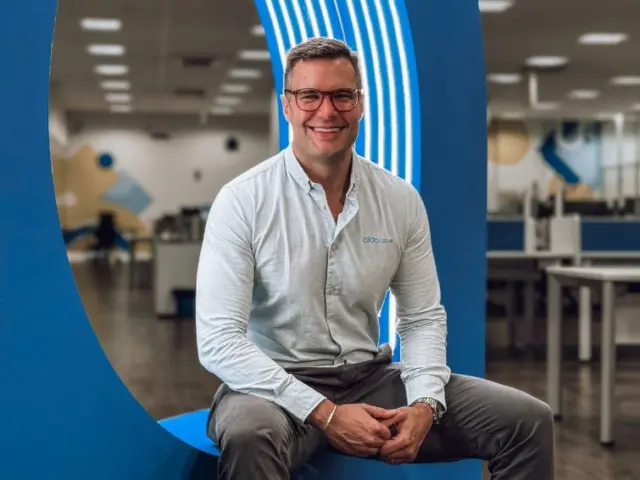
“The solar energy market is still expanding and needs to be explored. The storage system is here to stay and it is essential to be prepared to take advantage of the opportunities in this market.” This is the analysis of Joaquim Fernandes, business director at Solmais.
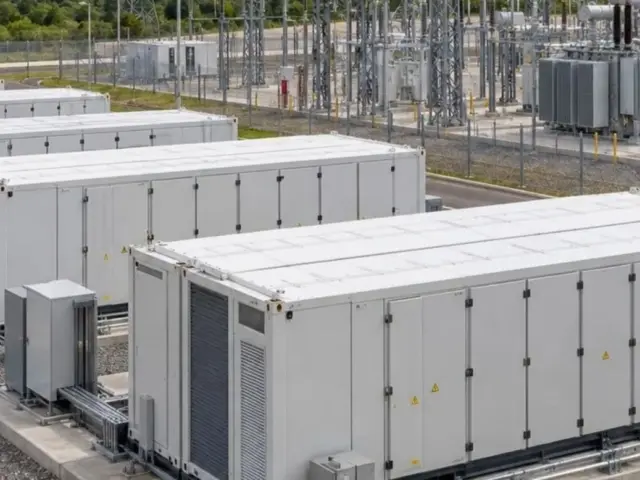
During the podcast Solar Talk last Tuesday (6), the executive highlighted that the solar market scenario has evolved significantly in recent years. He also commented that, initially, the solar sector was limited to basic systems, but today, there is a significant change with more advanced technologies.
During the chat, Fernandes commented that one of the benefits of the battery system is the independence that this system brings.
“With the system of storage, you have the freedom to decide how you want to use your energy. For example, my priority may be to use solar energy, but if there is no sun, the priority may be the battery, and, ultimately, you can use the grid or a generator. You gain the possibility of choosing how to use your energy, which is the most important thing”, he said.
“Safety and comfort are essential. In many cases, energy storage has already been an important solution, such as for hospitals and other places where a lack of power is not an option,” he added.
The director also pointed out that the application of batteries in residential systems does not necessarily provide an immediate financial return, but rather comfort and energy security. “In the case of small producers or entrepreneurs — as we mentioned earlier with the example of the milk producer — the scenario is different,” he added.
“These consumers need grid stability, and although there is reasonable infrastructure, many still struggle with the lack of energy security. Today, many small businesses are opting for grid-zero systems and energy storage. This type of system is here to stay,” he said.
Another point highlighted by Solmais' Business Director is the reduction in technology, which has fallen by around 50% in the last year. “A few years ago, the cost of a 5 kWh battery varied between R$18 and R$22. Today, a similar battery costs between R$8 and R$10, making the system much more accessible,” he commented.
“For a home with an average consumption of 20 kWh per day, as is the case in many homes in Brazil, a 5 kWh backup system can guarantee a few hours of energy in the event of a power outage, which is a significant gain in comfort,” he explained.
High energy demand for AI: how can solar energy be the solution?
The director cited the example of the city of São Paulo (SP), which recently suffered blackouts. “Imagine a city like São Paulo, one of the largest in Latin America, where power outages happen frequently, especially in recent years. Being without power, even for a few hours, is an unpleasant experience for anyone,” he added.
Is grid-zero worth it?
The director stated that the “grid-zero” solution was created to meet the needs of customers with specific consumption demands. “For example, we had a customer, such as a supermarket, that had a contracted demand and did not want to increase it. To solve this, we offered the grid-zero solution, installing a system within the capacity of the contracted demand, without injecting it into the grid. This approach helped the customer maintain control over its demand without the need for expansion,” he reported.
“Today, the situation has changed. In many regions, grid capacity is at its limit, and the expansion of grid-connected systems faces barriers,” he added.
In an interview with Canal Solar, TTS Energia, a company specialized in developing renewable energy solutions, shared some cases of grid zero projects. In partnership with Grupo Jacto, the company carried out a project in Paulópolis (SP), implementing a grid zero solar system, which connects the system to the electricity grid without exporting energy.
When to use zero-grid technology?
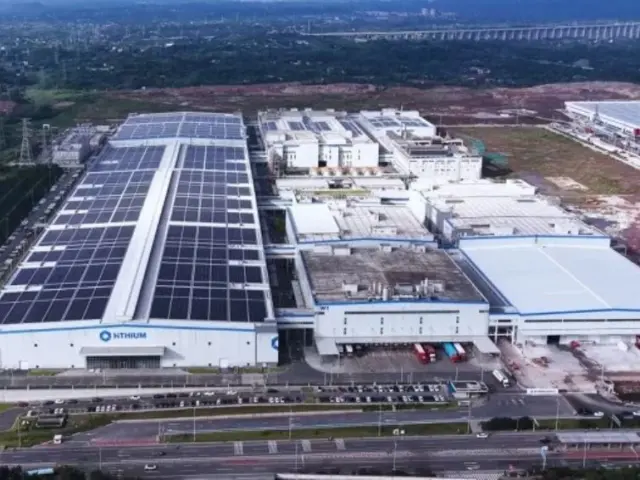
This project has 11.350 photovoltaic modules installed on roofs and carports, in addition to 43 inverters, with a power of 5,54 MWp in DC (direct current) and 4,58 MW in AC (alternating current). The project has a DEIF control system, ensuring maximum performance for the client. It stands out as the largest rooftop plant in Brazil, with a total installed power of 6,40 MWp.
Another project developed by TTS Energia, in partnership with Flex LTD, was a system in Sorocaba (SP). The plant has an installed capacity of approximately 1,35 MWp, the project uses 36 20 kW inverters (720 kW in total) and five 110 kW inverters (550 kW in total), in addition to 2.925 photovoltaic modules.
How does an interactive off-grid work?
Another topic raised by Fernandes was the application of interactive off-grid inverters in photovoltaic systems. He explained that this solution interacts with the grid only as a reference, without injecting energy into it. According to him, in the event of a power outage, the interactive off-grid inverter can discharge the battery in the priority loads of a home or business.
“If you already have an on-grid system installed, you can install an interactive off-grid inverter in one of the phases. Most of these interactive off-grid inverters are single-phase, with 127V or 220V output,” he explained.
“You can connect it to one of these phases and, in parallel, increase the loads. You can also organize the panel to charge and generate energy for the different phases during the sunny period, using the battery,” he added.
When asked if it is possible to install an interactive system without a solar panel, Fernandes was categorical. “Yes, it is possible,” he said.
Free from blackouts: apartments can also store energy
“You can charge the battery with power from the grid. Some people also prioritize the system so that it charges the battery automatically. In addition, it is possible to use solar energy for this process, or even connect the battery for specific loads as needed,” he said.
“In addition, storage systems offer autonomy, depending on the battery capacity and charging needs. With a solar panel installed, autonomy is even greater, as the system can capture energy during the day to keep the batteries charged, providing even greater safety and comfort for the consumer,” he explained.
“When we add the solar panel, we have the possibility of guaranteeing energy until later, enhancing storage and increasing backup time. With the energy generated by the sun, the loads are directly supplied, and if a cloud passes and momentarily reduces solar generation, the system automatically adjusts the flow to direct energy from the battery without relying entirely on it when the sun comes out again,” he commented.
Financing
During the Solar Talk, Fernandes also discussed the importance of financing in implementing solar energy projects, with or without batteries. Fernandes states that the market is mature in terms of bank financing, and banks are ready to support systems with batteries. “I say this with confidence, because I have already spoken to the main financial institutions in the solar sector, and they all agree. They recognize the viability of the system, the quality of the product, its guarantee and durability,” he stated.
SP, PA and MT lead financing of photovoltaic systems in the 3rd quarter
What are the trends that could come to Brazil?
Also during Papo Solar, Bruno Kikumoto highlighted the latest research carried out by Bloomberg, which states that the majority of residential solar energy systems installed in Germany and Italy already contain batteries.
“This year, we had an experience with some integrators in Germany. We ran a promotional campaign and had the opportunity to meet a German integrator who speaks Portuguese, which was incredible. At his company, 100% of the systems sold already include batteries,” added Fernandes.
Solmais’ Business Director also stated that in the German market, battery-free systems are no longer sold, as batteries allow for managing energy use and taking advantage of times when tariffs are lower on the grid. This flexibility adds value and makes the cost of batteries more viable. “It won’t be long before this model becomes commonplace in other places. Given the state of the grid, we will need a controllable energy distribution, such as solar energy with batteries,” he commented.
“In the United States, for example, I saw VPP (Virtual Power Plant) models, where the owner of a solar system with a battery can dispatch energy to the grid at scheduled times and receive an annual remuneration of around a thousand dollars. This model is advantageous, as it allows the owner to manage his own energy and still obtain financial benefits”, he added.
“This offers impressive flexibility. With the interactive system, the user can program the time to dispatch battery power, which is particularly advantageous in more developed markets such as Germany,” he highlighted.
Finally, Fernandes recommends investing in training and courses, learning about the installation and configuration of storage systems. “This will be essential to keep up with the evolution of the sector. With the market expanding rapidly, this is the ideal time to prepare,” he concluded.
Watch the full episode
all the content of Canal Solar is protected by copyright law, and partial or total reproduction of this site in any medium is expressly prohibited. If you are interested in collaborating or reusing part of our material, please contact us by email: redacao@canalsolar.com.br.

Comments
Comments are moderated before publication.Comments should be respectful and contribute to a healthy debate. Offensive comments may be removed. The opinions expressed here are those of the authors and do not necessarily reflect the views of the author. Canal Solar.