

The strong hail storm, which fell last week on South of Minas, left damage in at least 19 cities in the region. In Cape Verde, the streets were covered in ice and it even took an excavator to remove it.
In Campos Gerais, for example, the rain caused power outages and trees, damaged vehicles and broken roofs. According to Civil Defense, at least 600 homes were hit by the storm, which lasted around 25 minutes.
Of this total, it is possible that some houses had installed photovoltaic systems. Data from ANEEL (National Electric Energy Agency) point out that the municipality has 332 photovoltaic DG (distributed generation) plants, of which 130 are installed in homes.

Therefore, faced with a scenario like this, will the solar panels withstand hail? There is also some Safety What covers this type of damage? O Canal Solar spoke with experts who spoke about the subject. Check out:
Modules withstand hail?
According to Mendelsson Rainer, a researcher at LESF (Unicamp's Energy and Photovoltaic Systems Laboratory), photovoltaic modules are prepared to withstand hail events up to a certain intensity.
“Internationally, the panels are tested in accordance with the IEC 61215-2:2021 standard, which includes several durability and quality tests within its scope”, he pointed out.
There is a test in this standard that verifies the module's ability to withstand the impact of hail. The plate's durability is tested in the laboratory with a machine that produces ice balls of different diameters and is capable of throwing them at different speeds.
“The ice balls must reach specific locations on the photovoltaic panel. The module's approval in this test will depend on the maximum power lost”, reported Rainer.
“A power degradation of less than 5% is acceptable, as long as its electrical insulation has not been compromised during the test and no visible damage has occurred to the glass,” he explained.
Is it safe to keep the system with broken modules running?
Professor Marcelo Villalva, director of LESF, states that the objective of the certification tests is to verify the minimum durability and functioning conditions in the event of hail events.
“However, intense and atypical atmospheric events can cause irreversible damage to photovoltaic panels – in which case they must be replaced”, he highlighted.
For him, modules with damaged glass must be removed from use. “Even if the system appears to continue to function well after the modules break, there is a risk of reverse currents or even electrical arcs, which can cause fires and cause greater damage.”
“Damaged panels cannot be repaired and must be replaced with new ones. It is recommended to replace it with compatible power modules, with the same number of cells and with a short-circuit current slightly higher than that of the original module”, concluded Villalva.
For more information, check out the article: Replacing defective photovoltaic modules, published in the 7th edition of Magazine Canal Solar.
Insurance for PV modules
Monclair Araújo, director of Pulsar Energia Solar, commented on the storm that hit the South of Minas and warned about the importance of taking out insurance for photovoltaic equipment.
“I think it serves as a warning for insurance to be considered. And also in case of damage, turn off the system until the solution is found, to avoid fire risks,” he pointed out.
But which insurance covers damage caused by storms? Vanda Somera, director of Visioni Corretora de Seguro, clarifies that each insurance company has its own rules regarding possible accidents, and are therefore assessed on a case-by-case basis.
According to Sidney Cezarino, director of Property, Engineering Risks, Miscellaneous Risks and Energy at Tokio Marine, when the photovoltaic modules are already operating, it is necessary to first define what will be the destination of the energy generated by the equipment.
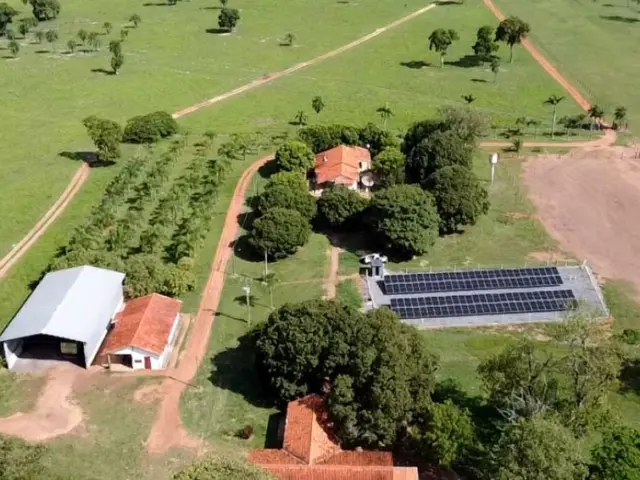
In cases where the energy generated by the panels is intended for personal use, the ideal insurance is equipment insurance, with the Agro product being for installations in rural areas and the RD (Miscellaneous Risks) product for those located in urban areas. .
“This insurance protects photovoltaic equipment after completion of assembly, that is, when it is already operating. It is a protection for assets. The basic coverage offered covers damage caused by fires of any nature, lightning, explosions, robbery and qualified theft, windstorms, hail, or any external damage”, he explained.
Solar panel insurance brings benefits to businesses and consumers
Jarbas Medeiros, executive director of Porto Seguro, commented that the company offers coverage for photovoltaic solar panels in cases similar to what happened in the South of Minas.
“We have specific coverage for solar panels, which covers losses in the event of electrical damage, windstorms or hailstorms, broken glass and even in cases of theft or theft, going beyond protection aimed solely at natural phenomena. Under this coverage, the insured will be compensated according to the amount contracted,” he stated.



Comments
Comments are moderated before publication.Comments should be respectful and contribute to a healthy debate. Offensive comments may be removed. The opinions expressed here are those of the authors and do not necessarily reflect the views of the author. Canal Solar.
Comments on this article are closed.