
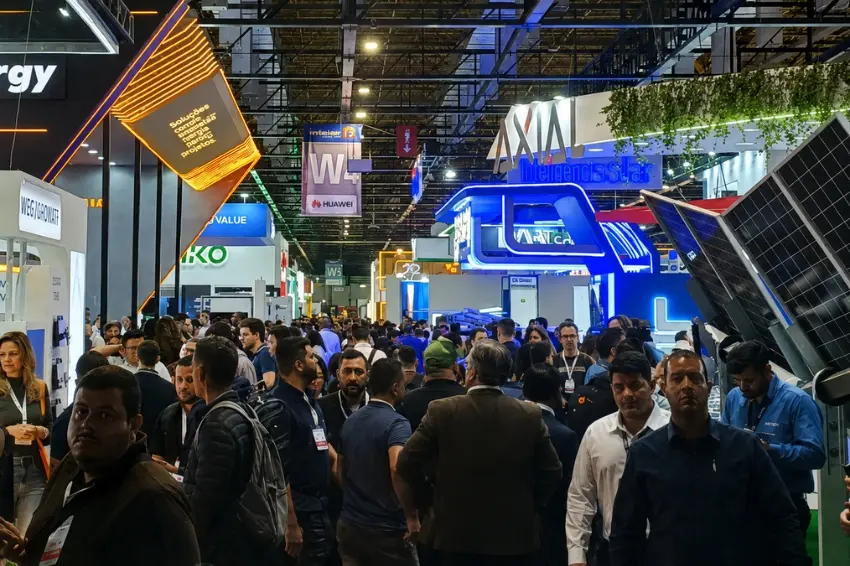
In 2026, Intersolar South America will reach its 13th edition in Brazil in a scenario quite different from that encountered at its debut in 2013.
For over a decade, the fair has followed the expansion of solar energy in Brazil and has also broadened its own scope.
The event, initially focused on the photovoltaic market, has expanded to include energy storage, electric mobility, electrical infrastructure, digitalization, and other technologies related to the energy transition.
In this report, the Canal Solar recalls the key moments in this journey and the changes that led the fair to its current configuration.
2013: arrival in Brazil amidst the first steps of GD.
The first edition of Intersolar South America in Brazil took place at a crucial moment for the development of the national photovoltaic market.
Shortly before, in April 2012, the ANEEL (The National Electric Energy Agency) had published Normative Resolution No. 482/2012, establishing the first rules for connecting micro and mini-generators of renewable sources to distribution networks.
Among the main changes was the creation of the SCEE (Electric Energy Compensation System), a mechanism that allowed consumers to generate their own energy and use the surplus injected into the grid to offset consumption later.
In practice, the regulation paved the way for homes, businesses, industries, and rural properties to begin installing grid-connected photovoltaic systems.
The first consumer units included in the compensation system began to be billed in 2013, after the necessary periods for application, project analysis, and approval of connections by the distributors.
Meanwhile, a supply chain was beginning to form. In December 2012, the Ideal Institute launched the Map of Companies in the Photovoltaic Sector, through the America of the Sun Program.
The platform started with around 50 registered companies and, two years later, already had more than 350 suppliers.
It was in this environment that the first Brazilian edition of Intersolar South America took place. The event brought together 64 exhibiting companies from 12 countries, 60 speakers, 459 conference participants, and 2.288 visitors.
At that time, discussions were focused on issues that were beginning to define the future of this energy source in the country, including the participation of solar energy in auctions promoted by the federal government and the challenges of implementing the newly created compensation system.
2015 to 2018: trade fair grows along with the photovoltaic market
Between 2015 and 2018, Intersolar South America went through a period of expansion, keeping pace with the advancement of photovoltaic energy and the increased interest of national and international companies in the Brazilian market.
In 2015, the third edition focused primarily on the growth of photovoltaic applications in the residential and commercial sectors. Distributed generation (DG) began to gain ground, expanding opportunities for module and inverter manufacturers, distributors, structural companies, designers, and installers.
The following year, the fourth edition took place amidst a challenging economic scenario in Brazil. Despite the crisis, the photovoltaic sector maintained a growth trajectory, a trend that also began to appear in the size and diversity of the companies present at the fair.
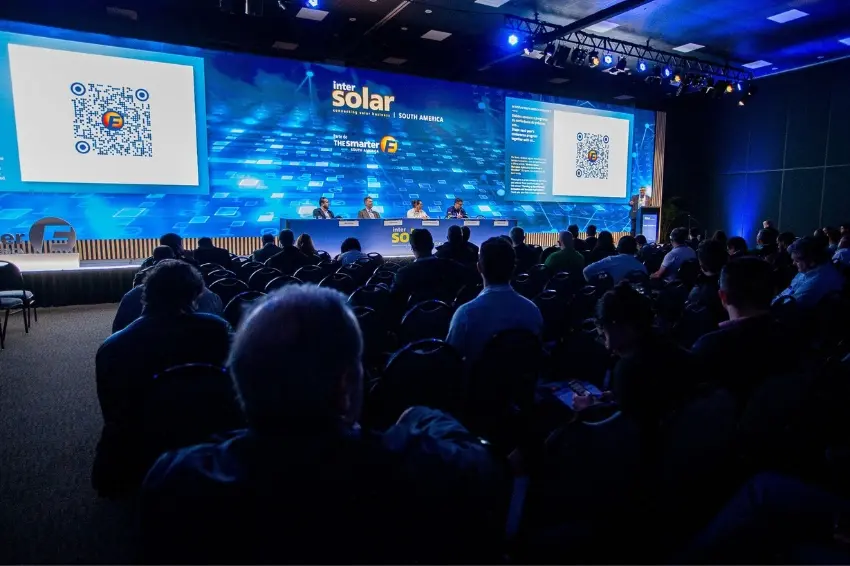
This expansion gained greater visibility in 2017. In the fifth edition, the space allocated to the exhibition was expanded to accommodate more international companies and brands, especially manufacturers of modules and inverters interested in the growth of the national market.
The fair thus began to reflect a more diversified photovoltaic chain, with a greater presence of manufacturers, distributors, integrators and suppliers of different technologies.
In 2018, the sixth edition concluded the first phase of the event's trajectory. Until then, Intersolar South America maintained a structure predominantly focused on the solar market, but this configuration would change the following year.
2019: Intersolar becomes part of The smarter E South America
In 2019, Intersolar became part of The smarter E South America platform, expanding the scope of the event beyond photovoltaic generation.
The new configuration incorporated discussions on energy storage, electric mobility, digitalization, smart grids, infrastructure, and energy management.
The change occurred at a time when Brazil was already among the 20 largest solar markets in the world, and the expansion of renewable sources was beginning to bring about new discussions about the integration of energy generation, distribution, storage, and consumption.
During the event, professionals, investors, manufacturers, and industry representatives discussed distributed and centralized generation, project financing, and the development of the national production chain.
The conference also addressed the financing of large-scale projects. Representatives from CELA, BNDES, Itaú BBA, IFC Brasil, Vinci Partners, and the Climate Bonds Initiative participated in discussions on financing mechanisms and investments for the expansion of this energy source.
The market's growth was also reflected in job creation. According to IRENA (International Renewable Energy Agency), Brazil entered, for the first time that year, the group of the ten largest job creators in the photovoltaic solar sector, occupying the eighth position worldwide.
The survey counted more than 43 jobs in the sector. An analysis of... ABSOLARBased on a more comprehensive methodology, it was estimated that approximately 60 jobs were generated by the Brazilian photovoltaic chain that year.
2020 and 2021: Pandemic disrupts schedule, and fair returns during water crisis.
However, the growth trend was interrupted in 2020 when the edition of The Smarter E South America was canceled due to the Covid-19 pandemic and the health restrictions adopted in Brazil and other countries.
The return to in-person work occurred in 2021, at another critical moment for the Brazilian electricity sector. In addition to the effects of the pandemic, the country was facing the worst water crisis in over nine decades, a scenario that once again brought into question the diversification of the electricity matrix and the security of energy supply.
At the same time, the photovoltaic market was experiencing a period of expansion, driven by reduced technology costs, tax changes involving equipment in the supply chain, and progress in discussions about a legal framework for distributed generation.
The 2021 edition brought together 28 participants and 250 exhibitors, establishing, until then, the largest audience in the event's history in Brazil. One of the main topics of that period was Bill No. 5.829/2019, which would establish the legal framework for micro and mini-distributed generation.
The proposal mobilized businesses, organizations, and consumers throughout the year and was approved by the Chamber of Deputies in August, with 476 votes in favor, three against, and three abstentions. Subsequently, it passed through the Senate and returned to the Chamber for a final vote.
2022: Brazil joins the group of fastest-growing solar markets.
In 2022, the ninth edition took place in a market that had already reached a significantly larger scale. According to a survey by the IEA (International Energy Agency), Brazil added 10 GW of solar power that year, almost double the volume recorded in 2021.
The result placed the country in fourth position among the markets that added the most photovoltaic capacity in the world in 2022. Globally, 240 GW of solar energy were added, raising the accumulated photovoltaic capacity to approximately 1,2 TW. China led the expansion, with 106 GW added.
The IEA also pointed out that the increase in energy tariffs in different countries, including Brazil, has contributed to raising the competitiveness of photovoltaic generation and interest in the technology.
For The smarter E South America, the market transformation also meant a change in the profile of the trade show itself. While distributed generation was still in its infancy in 2013, nine years later the country had a much broader network of manufacturers, distributors, integrators, and developers.
2024: Fair reaches new scale
In 2024, The smarter E South America reached its 11th edition, reflecting a reality different from that observed in the previous decade.
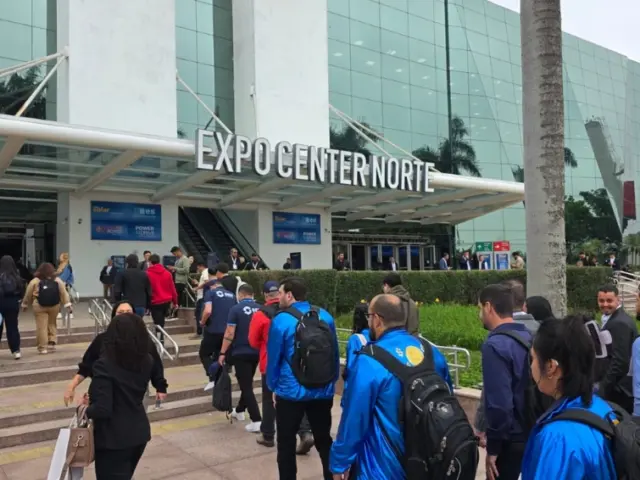
Held between August 27th and 29th at Expo Center Norte, the event registered record numbers of attendees and national and international exhibiting companies.
The growth of the trade show mirrored the diversification of the sector itself, where photovoltaic energy remained at the heart of Intersolar South America, but the environment of The Smarter E South America already brought together a wider range of technologies and companies linked to the transformations in the energy market.
The change in scale also highlighted the maturation of the Brazilian supply chain. The fair no longer functioned merely as a showcase for modules, inverters, and photovoltaic systems, but as a meeting point for different agents involved in the generation, distribution, storage, and consumption of energy.
During this period, topics that had appeared in a secondary role years earlier began to gain more prominence in industry discussions, paving the way for a 2025 edition even more focused on the integration of different technologies.
2025: Batteries, electric mobility, and hydrogen broaden the debate.
Alongside solar energy, discussions about energy storage in large batteries, electric mobility, and green hydrogen gained prominence in the program and exhibition area.
The growing presence of these segments showed how the sector's agenda had changed. The expansion of renewable generation remained relevant, but issues related to storage, the infrastructure needed for electrification, and the integration of different technologies began to occupy a larger share of the debates.
This diversification is also reflected in the very structure of The smarter E South America. In 2025, the event brought together 600 exhibiting companies distributed across four trade shows: Intersolar South America, ees South America, Eletrotec+EM-Power South America, and Power2Drive South America.
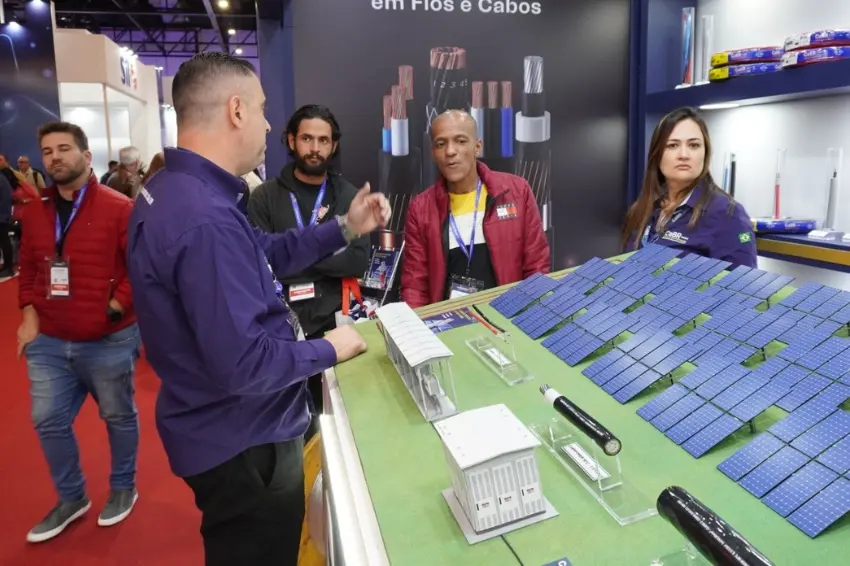
Each of them came to represent different parts of this ecosystem, allowing the platform to bring together everything from photovoltaic generation to storage solutions, electrical infrastructure, and mobility.
The result helped to illustrate the difference between the current trade fair and the one first held in Brazil in 2013. In its debut, there were 64 exhibiting companies from 12 countries. By 2025, the series of events had reached 600 exhibitors.
The participants' evaluation also indicated a continuation of this trend: according to data presented by the organization, 97% of exhibitors stated that they intended to return to future editions.
Thus, 2025 consolidated a change that had been building since the adoption of The smarter E brand in 2019: Intersolar remained one of the pillars of the program, but began to share the stage with technologies that gain importance as the participation of renewable sources in the electricity system increases.
2026: 13th edition broadens perspective on technology integration
After witnessing more than a decade of expansion in the Brazilian photovoltaic market, Intersolar South America has reached a stage where industry discussions are moving beyond the installation of new solar capacity.
Topics such as energy storage, digitalization, electric mobility, energy intelligence, electrification, and the integration of different technologies are now sharing space with traditional issues related to photovoltaic generation, reflecting the transformations in the energy market.
The event brings together different segments of the energy chain in an integrated program, with debates focused on the main aspects of the energy transition.
Throughout the three days, the program will once again feature four integrated congresses, each focused on a specific area of the sector: Intersolar South America, ees South America, Power2Drive South America, and Eletrotec+EM-Power South America.
Next, see what each of these conferences will bring to the 2026 edition.
The Intersolar South America Congress will focus on the challenges and trends in the photovoltaic market, addressing topics related to production, storage, electrification, and energy transition technologies. The program will also discuss what the sector's transformations represent for the solar segment, including market trends, future business models, and the role of financing, digitalization, and new technologies.
The ees South America Congress will focus on energy storage. Held in São Paulo, the event brings together international experts, manufacturers, project developers, and systems integrators to discuss trends, business opportunities, and new solutions for the sector.
Among the topics planned are a focus on fixed and mobile energy storage, electromobility, intelligent energy management, large-scale and off-grid applications, as well as green hydrogen and gas-powered energy conversion technologies.
By addressing key issues in markets, financing, technical standards and business models, ees South America contributes to laying the foundations for the future energy system and is part of a global series of conferences covering Europe, South America and India.
When it comes to electromobility, the highlight will be the Power2Drive South America Congress, which will focus on ways to expand electric mobility powered by renewable sources and the infrastructure needed to support this progress.
The program will discuss the expansion of charging networks, markets with the greatest growth potential, as well as business models, regulatory frameworks, and solutions for integrating electric vehicles into the energy system.
Another key point will be the development of a broad and efficient charging infrastructure, considered one of the necessary factors to support the growth of electromobility and the transition to a more sustainable transportation system.
Integrated into The smarter E South America, the congress will bring together international experts, companies, government representatives, and researchers in São Paulo to present and discuss charging solutions, battery technologies, and new business models for the sector.
The proposal aims to connect the different agents in this chain and discuss the technological and regulatory advancements needed to accelerate the expansion of electric mobility in South America.
Completing the program, the Eletrotec+EM-Power South America Congress will focus on electrical infrastructure and energy management, with discussions on low and medium voltage installations and the ongoing transformations in energy systems.
The event brings together professionals, companies, and experts involved in the design, installation, operation, and maintenance of electrical infrastructure, ranging from distributed renewable generation to overhead and underground networks.
Amid the expansion of renewable energy sources and electric mobility, the congress will discuss challenges such as the growth in electricity demand, the increased use of grids, and the transition from centralized systems to increasingly distributed models.
The program will also cover electrical distribution technologies, energy storage, charging infrastructure for electric vehicles, power quality, automation, digitalization, and energy management in grids, utilities, and buildings.
Another key point will be the role of flexibility among consumers, prosumers, and storage systems in building more reliable, efficient, and resilient electrical grids.
Aimed at professionals in the electrical sector, the congress will also present case studies and solutions to engineering challenges, as well as discuss technological trends, market evolution, and aspects that can support technical and business decisions.
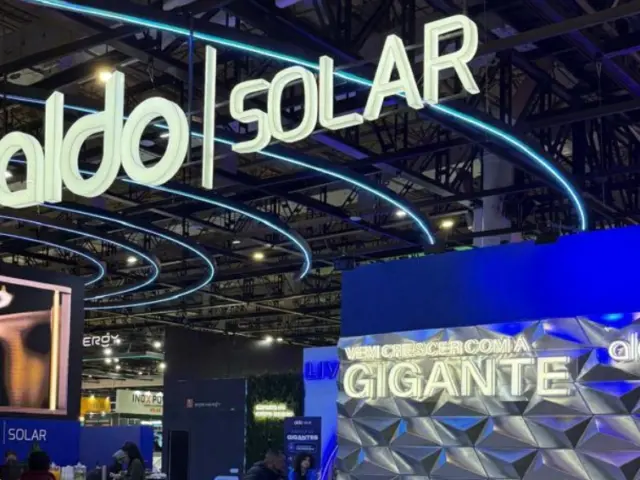
The scale achieved by the previous edition helps to illustrate the magnitude of this transformation. After bringing together 600 exhibiting companies in 2025, The smarter E South America will occupy all the pavilions of Expo Center Norte this year, expanding the space dedicated to the different areas of the energy sector.
Thirteen editions after its debut in Brazil, the event's evolution mirrors a shift also occurring in the market itself.
While in the early years the debate was mainly focused on the expansion of photovoltaic generation, now the discussion also involves how to store, transport, manage and use an increasing amount of renewable energy more efficiently.
In this scenario, the integration between solar, storage, electric mobility, and energy infrastructure ceases to appear as an isolated discussion and becomes part of an increasingly interconnected agenda, a movement that will be reflected in the corridors, stands, and congresses of the 2026 edition.
all the content of Canal Solar is protected by copyright law, and partial or total reproduction of this site in any medium is expressly prohibited. If you are interested in collaborating or reusing part of our material, please contact us by email: redacao@canalsolar.com.br.

Comments
Comments are moderated before publication.Comments should be respectful and contribute to a healthy debate. Offensive comments may be removed. The opinions expressed here are those of the authors and do not necessarily reflect the views of the author. Canal Solar.