
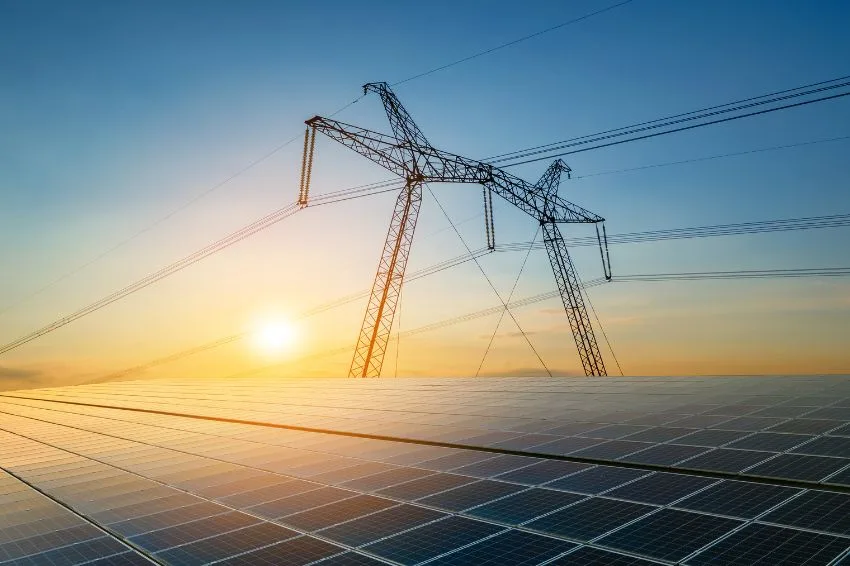
Thymos Energia, a business consultancy specializing in the energy sector, has facilitated more than 2 GW in self-production contracts in the last two years. This amount indicates that 40% of all contracts signed in Brazil, in the self-production modality, were advised by the company.
According to Thymos Energia, the expansion of the electricity matrix, mainly from renewable sources, has been driven by the private sector. The company believes that companies are increasingly investing resources in new ventures and signing long-term contracts for self-production.
Another factor driving this scenario is the reduction in public auctions due to the stagnation of the regulated electricity market. “In recent years, we have seen an increase in demand for self-production, and although the model based on equivalence is the most common, there is still an evolution in asset leasing contracts,” he says. Jovanio Santos, Director of New Business at Thymos Energia.
The consultancy reinforces, however, that despite being an advantageous investment, the energy self-production market is complex. This is because the journey involves multidisciplinary aspects, with analysis of assets and risks, consumption profiles and current regulations and in the operation itself at the CCEE (Electric Energy Trading Chamber). In addition, the contracts are long, with an average duration of 15 years.
“The self-production structure is developed specifically for each consumer. Additionally, the contract management aspect at CCEE must be taken into account. This is essential, given that the agreements are long-term,” says Jovanio.
Based on current regulations, Thymos recently advised on projects for generators Atlas Renewable and Atiaia Renewables for a company that comprises ten photovoltaic plants and also for the company V.tal, which purchased energy for its business arm in the data center sector, Tecto – a market that is rapidly expanding in the country.
“Digital infrastructure companies, for example, have opted to use renewable energy to comply with their ESG strategies, and self-production is an alternative to be considered in this context”, says the director of Thymos Energia.
The executive also highlights that other aspects, such as proximity to the connection point to the network and communication infrastructure, must be considered when evaluating the location of the data center installation. “We have been helping our clients with these aspects, offering end-to-end solutions regarding the energy supply strategy,” says the executive.
Atiaia Renováveis now has 7 plants that meet the 17 UN SDGs
Support for businesses in the electricity sector
Currently, Thymos works to support the structuring of self-production with a methodology that comprises six stages: diagnosis and financial viability, market consultation, evaluation and negotiation of proposals, due diligence (financial and technical-regulatory), and technical monitoring of discussions involving the preparation of the MoU (Memorandum of Understanding) and definitive contracts.
Thymos Capital, the company's business unit for the M&A market (acronym in English for mergers and acquisitions) in the energy sector, structures self-production projects exclusively for generators.
“Among the services we offer we can list support for the sale of assets and identification of consumers with the appropriate profile for each specificity of a company’s generation project”, explains Andre Fonseca, Managing Director of Thymos Capital.
Growing market
Estudos da EPE (Energy Research Company) estimates that self-production should reach 91,8 TWh in 2034, equivalent to an annual growth rate of 2.4%. For the public agency, the sectors that should lead this movement of expansion of self-production are cellulose, steel and petrochemicals.
Thymos Energia points out, however, that the data center segment should further boost this number. According to an analysis by the MME (Ministry of Mines and Energy), the country already has 9 GW of demand, adding connection requests from this market until 2035.
Thymos projects more than R$60 billion in investments in data centers by 2030
What is self-production?
Self-generation of energy is a modality in which companies or consumers produce their own renewable energy. There are three structural models: typical, in which the consumer builds and operates the plant independently; by lease, with the transfer of the plant's assets for a fixed price; and self-generation by equalization of shares, with the structuring of a SPE (special purpose company) with a generator.
The second and third options are currently the most widely adopted, as the consumer can count on the experience of a generation player in the electricity sector to facilitate the transaction.
all the content of Canal Solar is protected by copyright law, and partial or total reproduction of this site in any medium is expressly prohibited. If you are interested in collaborating or reusing part of our material, please contact us by email: redacao@canalsolar.com.br.


Comments
Comments are moderated before publication.Comments should be respectful and contribute to a healthy debate. Offensive comments may be removed. The opinions expressed here are those of the authors and do not necessarily reflect the views of the author. Canal Solar.