
The Brazilian electricity sector is characterized by cycles of balance and imbalance. There are times when the rules seem to work predictably, followed by phases in which the existing instruments are no longer capable of maintaining the economic, institutional and operational order of the system.
At such times, the well-known attempts at recovery emerge: legal, regulatory or legislative solutions that seek, each in their own way, to stem the crises and restore normality.
But what recent years have shown is that, regardless of the path chosen, the outcome is usually the same: society is the one who pays the bill.
Whether as a taxpayer, via public resources, or as a consumer, through energy tariffs, the burden of imbalances in the sector invariably falls on the final link in the chain.
Now, faced with new billion-dollar liabilities under debate, the sector is beginning to rehearse yet another response. And with it, the possibility of creating a new “account” arises, which we can now call, albeit informally, the Account Curtailment — the most recent candidate to perpetuate this logic of socializing losses.
Before we move on to the issue itself, however, it is worth recalling some recent episodes that help us understand what is, once again, at stake.
MP 579/12 and the renewal of concessions
The electricity sector began the last decade with the promise of a structural reduction in energy tariffs. In 2012, the government issued Provisional Measure No. 579/12, later converted into Law No. 12.783/13, which established conditions for the early renewal of concessions.
To enable lower tariffs, generators were asked to accept remuneration limited to the cost of the service plus O&M (Operation and Maintenance), in addition to adhering to the quoted energy model, sold to distributors at reduced prices.
As an incentive in return, the extension of the concession contracts was offered. However, the motivation behind this restructuring went beyond sectoral engineering — it was a politically and electorally biased move, aimed at containing inflation rates on the eve of the 2014 election, avoiding tariff adjustments that could put pressure on the economy.
However, the side effects soon set in. With the loss of market competitiveness and the forced reduction in concessionaires' revenues, chaos ensued. Added to this was the water shortage, which required the emergency contracting of thermoelectric energy at significantly higher prices to guarantee supply.
Without sufficient resources to cover their own costs, subcontracted distributors began to operate at a deficit, paving the way for a liquidity crisis in the sector.
It was in this scenario that the Conta-ACR emerged, structured as a sector loan, with the participation of financial institutions and guarantees from the Union, intended to cover the billion-dollar deficit of distribution companies.
The rationale was to prevent the cash crisis of these companies from resulting in a collapse in supply, spreading the payment of this debt over the following years, with recovery via tariffs.
The amortization of the ACR Account was carried out through a tariff charge inserted in the CDE (Energy Development Account), precisely to dilute the impact in a way that is less noticeable to the consumer — although, in practice, this represented a tariff increase spread over time.
MP 579, which aimed to reduce tariffs, ended up, paradoxically, generating one of the biggest liabilities in the electricity sector and establishing a clear precedent: in the face of madness, a bill is created, resources are injected into the system and the final cost is passed on to society.
GSF: when hydroelectric plants were forced to stop (but the bill arrived)
In the wake of the impacts of MP 579, the electricity sector faced the GSF (Generation Scaling Factor) crisis, one of the most emblematic episodes of imbalance in the Energy Reallocation Mechanism (MRE).
With prolonged water shortages and the need to ensure system reliability, it was decided to prioritize the dispatch of thermoelectric plants — more expensive, but considered safer from an operational perspective.
In this scenario, several hydroelectric plants that are part of the MRE remained outside the dispatch, accumulating significant losses, even though they had, in theory, the capacity to generate, considering the calculations of their physical guarantees.
The logic that was put in place was imperative: to ensure the continuous supply of energy, even at the cost of economically penalizing hydroelectric plants, whose assets were underused while the thermal park operated on a larger scale.
To rebalance the situation, a legislative solution was created, formalized in Law No. 14.052/2020, which authorized the renegotiation of hydrological risk. The proposal included the creation of a risk franchise — a minimum percentage of exposure assumed by the generators themselves — and, in return, the extension of generation concessions.
Once again, there was an exchange: whoever agreed to absorb part of the losses guaranteed contract extension and future predictability, while the remaining portion of the economic impacts ended up diluted in the tariffs and gradually transferred to the consumer.
COVID-account: the model repeats itself
A few years after the crisis caused by MP 579, the electricity sector once again resorted to familiar solutions. Given the economic effects caused by the COVID-19 pandemic — with a sharp drop in consumption, increased defaults and the risk of financial imbalance among distributors — the COVID-Account was created, once again structured as a sector loan guaranteed by the Union and with staggered payment via tariff.
As had occurred with the ACR Account, the costs were incorporated into the CDE, which again served as an apparently milder channel to dilute, over the years, the impact on energy bills.
And so, the script was repeated: faced with the imbalance, collective financing was organized, seeking to maintain the sector's liquidity and, inevitably, redistributing the final cost among consumers.
Here is an addendum: as this is a systemic and extraordinary crisis, there were those who argued that the resources should have come directly from the National Treasury, covered by the General Budget of the Union, and not from energy bills.
“Curtailment Account”
If the pattern of the Brazilian electricity sector has been to create tariff solutions to cover the gaps left by successive crises, the Curtailment Account emerges as yet another candidate to follow this pattern.
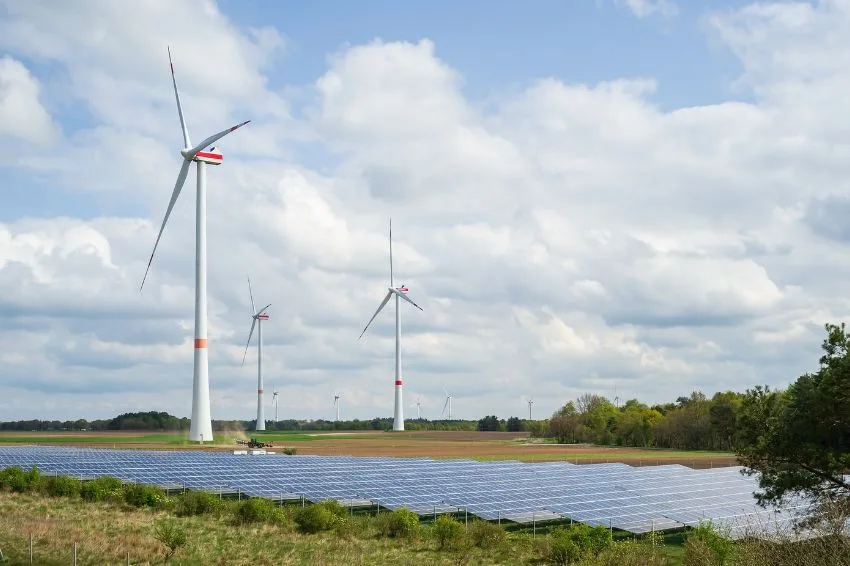
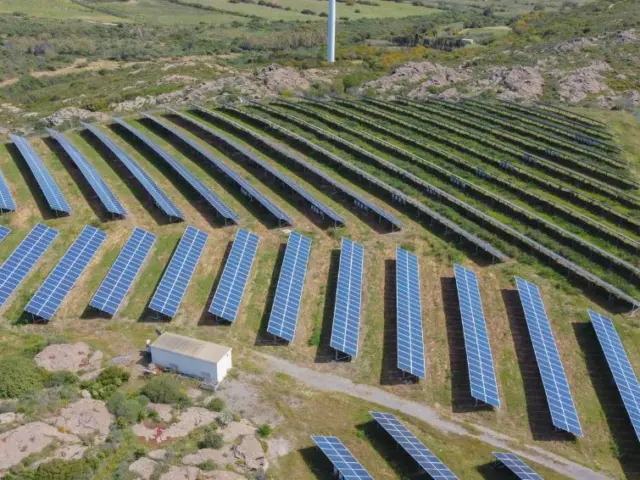
The liabilities under discussion, exceeding R$1 billion, arise from operational (and structural) restrictions that prevented the full dispatch of renewable plants, especially wind and solar plants, in scenarios of high energy resources, but with limitations in the outflow capacity.
The problem, however, is not simple. There is resistance within the ANEEL regarding the idea of passing this cost on to consumer tariffs, especially via ESS (System Service Charges), a mechanism designed to cover expenses linked to the operational security of the system — and not to compensate agents for structural transmission limitations or changes in the order of merit of dispatch.
After all, who would be reasonable to penalize for restrictions that the generators themselves did not cause and over which they had no control?
In view of the growing pressure from the sector on this issue, the CMSE (Electric Sector Monitoring Committee) held an extraordinary meeting in March 2025 to discuss the impacts of curtailment on renewable generation.
As a result, it was decided to create a working group (WG) to analyze and propose measures to mitigate cuts in energy generation and reduce the financial losses of generators.
The group, coordinated by the Electric Energy Secretariat of the Ministry of Mines and Energy (MME), will include the participation of representatives from ANEEL, EPE, ONS and CCEE. The agenda includes the diagnosis of the causes of curtailment and the preparation of both regulatory and structural proposals to minimize the problem.
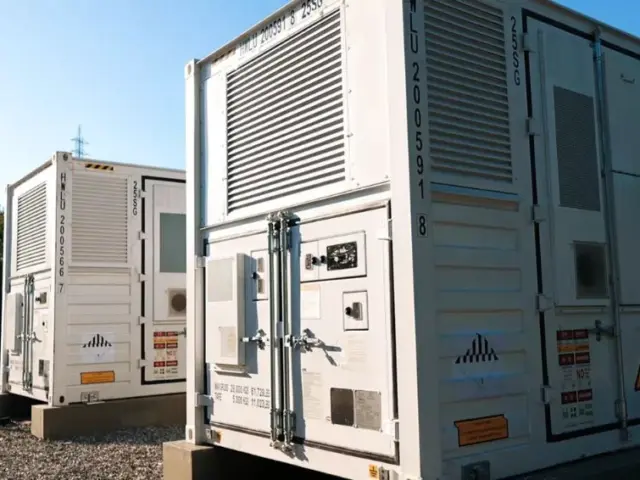
Among the possible solutions discussed, the highlights are the reinforcement and expansion of the transmission infrastructure, the anticipation of works to drain generation, the use of synchronous compensators in the Northeast and even the evaluation of energy storage as a way of making the system more flexible.
In other words, once again, attempts to find already known solutions seem to be emerging. Could the CDE be the way to accommodate this additional burden?
Here another reflection is required: could the CDE, already overburdened by a multitude of subsidies, compensations and sectoral public policies, still bear this additional burden?
With so many overlapping purposes and increasing costs, the CDE has become an opaque and difficult-to-monitor mechanism, gradually transforming itself into a kind of “universal account” for any sectoral problem.
And so we come to the inevitable provocation: if it will not be via ESS, if the CDE is already showing signs of exhaustion and if the Treasury does not present itself as an alternative (as a mitigating public policy), who will pay the Curtailment Account?
We may be facing an impasse again. After all, when the cash flow doesn't add up, the electricity sector knows exactly who to turn to: the distributor's captive consumer. This topic deserves attention, as the sector's history teaches us lessons that we revisit here.
The opinions and information expressed are the sole responsibility of the author and do not necessarily represent the official position of the author. Canal Solar.


Comments
Comments are moderated before publication.Comments should be respectful and contribute to a healthy debate. Offensive comments may be removed. The opinions expressed here are those of the authors and do not necessarily reflect the views of the author. Canal Solar.