

Storage, as we know, has occupied a prominent position in energy supply system installations. More than just a system component, storage is a key player in the solution, as it not only enhances solutions but also enables installations in many cases.
Flow reversal, curtailment, clipping, and hourly PLD are some factors that, in themselves, justify the use of batteries to store energy for use when and how needed, but the growing use of batteries goes far beyond these.
Storage increases predictability in the electrical system and significantly reduces dependence on operating expensive and polluting thermal power plants, which are still used today during peak demand periods to ensure electricity is supplied to consumer centers.
In addition to offering an almost immediate response to variations in consumption demand – something that thermal power plants cannot achieve – the use of batteries also reduces the costs of producing electricity, reduces environmental impacts, improves grid stability, and brings much-needed security to the electricity sector.
It's logical, then, to think that if the electrical system is dynamic and its needs are increasingly greater and more diverse, batteries must keep pace with these changes. This reasoning is largely correct, and it's clear that the development of increasingly efficient battery solutions with higher energy density and even greater safety is a major pursuit for cell, battery, and system manufacturers.
To analyze the trends and paths these components are taking, we will use data and facts obtained from visits to three international trade shows held this year: the Energy Storage Systems fair in Beijing and SNEC in Shanghai, both in China, and Intersolar in Munich, Germany.
If, at these three fairs, we didn't see any new products or launches that surprised us like in past years, we feel that the paths that companies are taking are those of improving equipment that already exists on the market and is already being used in facilities.
Speaking of cells, for some years now, we've seen the pursuit of greater storage capacity as the path industries are pursuing. Cells with increasingly larger capacities to compose equally larger battery banks have been the focus of recent trade shows.
A few years ago, lithium cells that previously stored 50Ah or 75Ah have already given way to the 128Ah cells of 2 years ago, reaching the 280Ah cells of last year and which are already being replaced by 314Ah cells and even larger.
This means that cells are storing more energy as the need for storage has increased worldwide. Lithium iron phosphate cells continue to dominate the market, but I've been closely monitoring the rapid advancement of sodium-ion cells, among other technologies.
The increase in cell capacity does not necessarily mean that it is at the same rate as the increase in energy density, that is, a cell with twice the capacity of its predecessor does not have half its volume or weight.
Density hasn't increased as much as capacity supply. Technology has its limits, and I understand that density increases have been smaller each year, suggesting we're approaching the limit imposed by the chemistry used.
One concern of the industry has been the extraction of heat from inside the cells, as every chemical reaction in lithium cells produces heat, some more than others, but all produce this increase in temperature that can compromise the performance and even the safety of the battery.
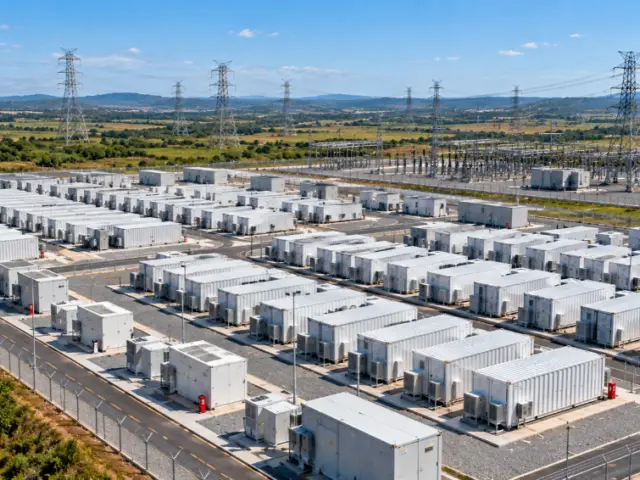
To reduce this heat extraction problem, industries have been developing improved systems and solutions, and this is where cell cooling with liquids comes into play, making heat exchange much more efficient than air exchange, even with air conditioning. This solution is already widely used in cell modules and in BESS systems from various brands.
Another technology gaining traction and becoming an ally in cell safety and efficiency is the use of solid-state electrolytes. The electrolyte is one of the internal components of cells that enables the efficient exchange of electrons between electrodes. Previously, it was mostly liquid or gel. With the adoption of solid-state electrolytes, both charging and discharging efficiency and safety are significantly improved.
More than the exchange or emergence of various technologies, industries are investing in more mature solutions. Do we have flow batteries? Yes, as well as sand batteries or other types, but the superiority of these is clear. LFP and Na+.
Putting more energy into cells (even at larger sizes) poses a serious problem. If something goes wrong, how can we handle so much energy? How can we protect the facilities from such a large amount of energy?
To help solve these problems, storage systems have relied on BMS (Battery Management Systems), the electronic circuits that control, monitor, and protect the cells' operation. These systems are implemented with Artificial Intelligence (AI) capabilities to ensure problems are detected earlier and mitigation actions are faster and more effective. AI has also contributed to the longer lifespan of these storage systems and better control, resulting in greater system efficiency.
All these advances are being accompanied by a drastic drop in the price of cells, and consequently, of storage solutions. In one year, prices have plummeted by nearly 25% and continue to fall, albeit at a slower pace.
In short, technology continues to advance, and better solutions are being introduced and implemented every day. And Brazil, with its enormous potential for storage applications, still relies on what's being presented at trade shows around the world. We still have access to new technologies and are increasingly being approached by manufacturers and integrators to ensure battery use becomes increasingly popular.
The opinions and information expressed are the sole responsibility of the author and do not necessarily represent the official position of the author. Canal Solar.

Comments
Comments are moderated before publication.Comments should be respectful and contribute to a healthy debate. Offensive comments may be removed. The opinions expressed here are those of the authors and do not necessarily reflect the views of the author. Canal Solar.