
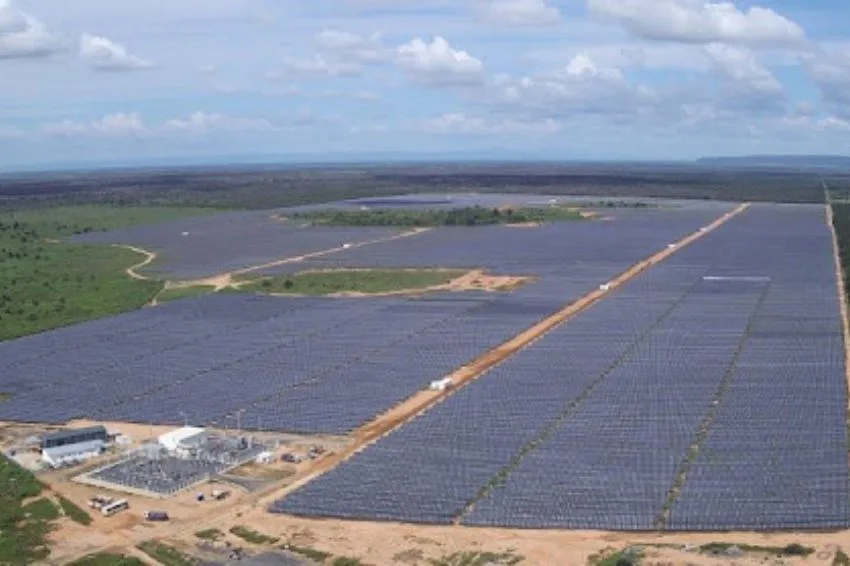
Report published in the 26th edition of the Magazine Canal Solar. click here and download now for free!
The solar energy sector in Brazil ends 2024 with significant milestones, consolidating itself as one of the main sources of electricity generation in the country.
The year brought technological advances, significant growth in installed capacity and important contributions to the country's sustainability and economy.
However, it was also marked by challenges such as the rejection of projects due to flow reversal, the increase in taxes on photovoltaic modules, cuts in energy generation and extreme weather events that directly impacted the sector.
In this retrospective, we revisit some of the main events that marked the year in the national photovoltaic market, projecting the next steps for a sector that continues to grow.
Flow reversal and Resolution 1.098 of the ANEEL
The year was quite challenging for professionals working in the DG (distributed generation) market in Brazil, especially with regard to flow inversion – one of the most debated topics among integrators, consumers and concessionaires.
Normative Resolution 1.098, published by ANEEL (National Electric Energy Agency) on July 31, brought new guidelines for the technical and regulatory treatment of DG projects, redefining criteria for analyzing the feasibility of connections.
The resolution established three specific scenarios in which flow reversal cannot be used as a justification for rejecting projects:
- Zero-grid plants, which do not inject energy into the grid;
- Installations that meet the free criteria and have power compatible with local consumption;
- Microgeneration of up to 7,5 kW, in local self-consumption mode.
These parameters, however, created challenges in the process of adapting to the new rules, with many integrators and consumers complaining that they are insufficient to alleviate delays and technical rejections without apparent justification on the part of the concessionaires.
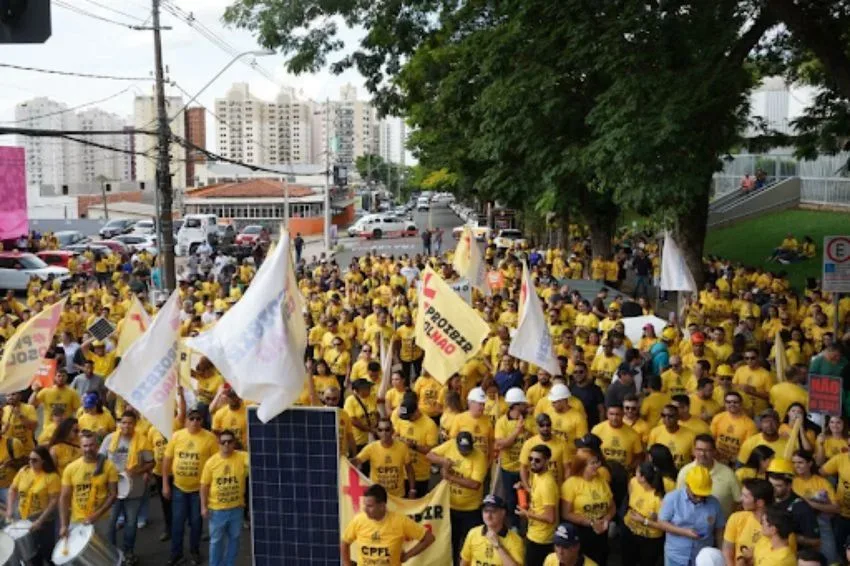
Throughout the year, demonstrations in several states, especially in Minas Gerais and São Paulo, highlighted the discontent of professionals in the photovoltaic sector with the practices of some distributors, who used flow inversion as a barrier to new connections.
Protests organized by associations such as INEL (National Institute of Clean Energy) and MSL (Free Solar Movement) put pressure on ANEEL and dealers for a more transparent and fair implementation of the new rules.
One of the most prominent demonstrations took place on November 1st at the headquarters of CPFL, in Campinas (SP), and RGE, in São Leopoldo (RS).
However, although the year was challenging, Resolution 1.098 helped to increase the use of hybrid and zero-grid systems, showing that the Brazilian market is diversifying and finding solutions to overcome technical difficulties.
Fake Power
The term fake power, or “fake power”, was also one of the most debated topics in the solar energy sector in 2024, especially due to the impact on market confidence and generation projections.
This problem, which involves the delivery of nominal power by inverters that does not correspond to the actual generation or compatible with the capacity of the modules, has generated concerns throughout the photovoltaic chain.
Throughout the year, several complaints were recorded about systems that presented significant discrepancies between generation reports and the energy actually produced.
One of the main challenges faced was the lack of technical standardization and supervision in DG projects.
Many systems were installed without rigorous performance testing or adequate audits to verify equipment compliance.
The occurrence of fake power, with that, undermined consumer confidence in solar systems, especially in regions where integrators used uncertified equipment or equipment of dubious origin.
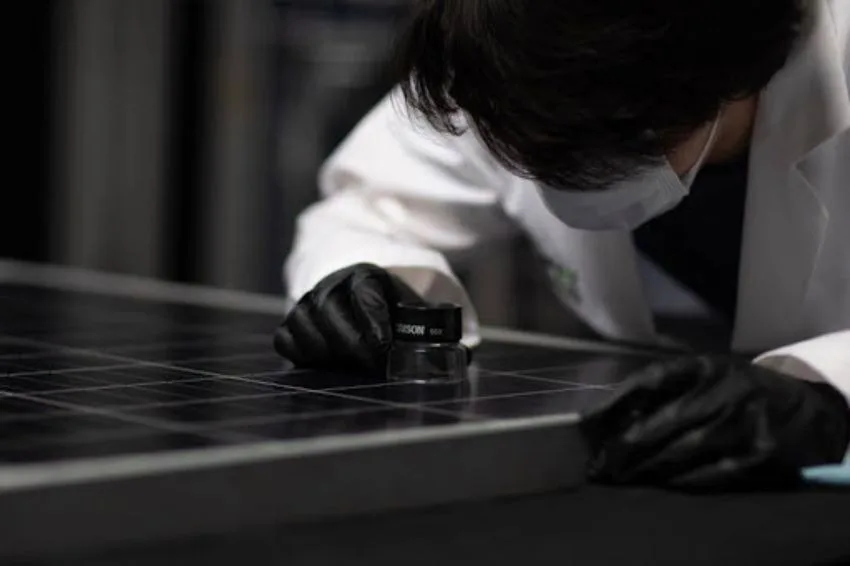
The problems culminated in an unprecedented inspection action carried out by Inmetro (National Institute of Metrology, Quality and Technology), with the aim of evaluating the quality and compliance of products available on the market.
The agency submitted samples of photovoltaic panels from different brands to laboratory tests and identified irregularities in at least one product, which presented significantly lower power than that declared by the manufacturer on the label.
In addition to this case, two other brands are also being analyzed in accredited laboratories. The operation covered the states of Mato Grosso, Minas Gerais, Espírito Santo and Goiás.
Inmetro promised to carry out new inspections throughout 2025, leading the market to believe that the impact of fake power may be reduced next year, not only because of this but also because there is greater awareness among companies on the subject.
Want to read the full report? Download the 26th edition of the Magazine for free now Canal Solar clicking here.
all the content of Canal Solar is protected by copyright law, and partial or total reproduction of this site in any medium is expressly prohibited. If you are interested in collaborating or reusing part of our material, please contact us by email: redacao@canalsolar.com.br.

Comments
Comments are moderated before publication.Comments should be respectful and contribute to a healthy debate. Offensive comments may be removed. The opinions expressed here are those of the authors and do not necessarily reflect the views of the author. Canal Solar.