
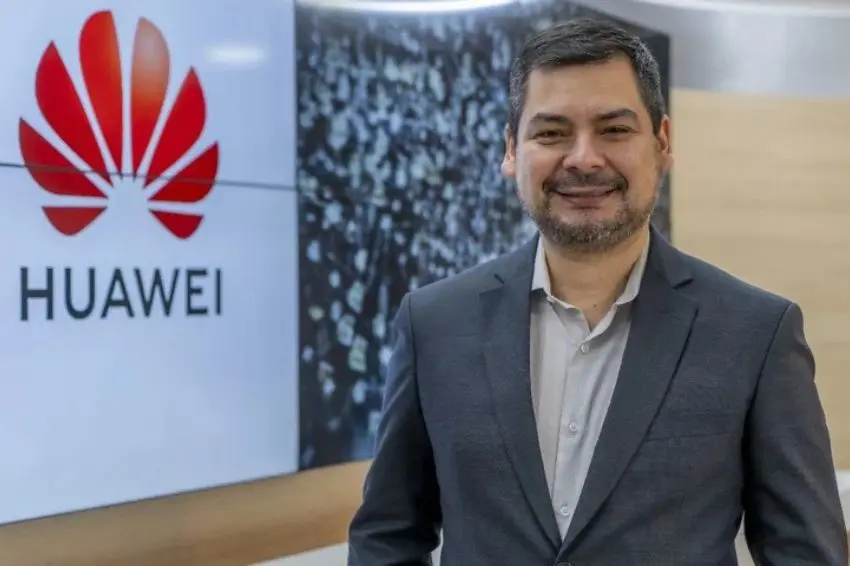
Of the approximately 300 GW registered for the first LRCAP-BESS (Capacity Reserve Auction) Focused on contracting Battery Energy Storage Systems) scheduled for December, only between 3 GW and 4 GW are expected to actually reach the competitive stage, according to Roberto Valer, CTO of Huawei Digital Power Brazil.
The estimate was presented during a recent meeting between the executive and the XP ESG Research team, which discussed the prospects for energy storage in Brazil before the auction. The reduction between the 300 GW registered and the capacity actually enabled should occur due to three main filters:
- The technical qualification process is conducted by EPE (Energy Research Company);
- The limitations of the electrical grid, assessed by the ONS (National System Operator) in aspects such as flow margin, load and discharge limits;
- Impacts on system stability; and the requirements for financial guarantees.
Even with this filtering, Valer considers the government's 2 GW forecast conservative. In his assessment, the volume that manages to overcome the selection stages will be sufficient to support a contract of 3 GW to 4 GW.
Market focus areas
According to Valer, two issues are the focus of attention before the bidding process. One is the division of the contract between Product A, subject to local content requirements, and Product B, open to the participation of imported equipment. In the assessment presented at the meeting, the largest share of capacity should be contracted under Product A.
The second point is defining who will be responsible for paying the EER (Energy Reserve Charge). The allocation of these costs needs to be established before the contracts are formalized and, according to Valer's assessment, could affect the auction schedule.
One alternative discussed by the sector is to decouple the definition of the charge from the formalization of the contract, although this solution could also result in a postponement of the bidding process.
Brazil's first battery auction receives over 6 project entries.
Market still in its early stages
Despite the interest generated by the auction, the Brazilian market for battery energy storage systems (BESS) is still in its early stages. According to Valer, there are approximately 1,4 GWh contracted in the country, mainly concentrated in off-grid applications aimed at serving remote communities.
In the global market, installed capacity reached approximately 100 GWh in 2025, concentrated mainly in the United States and the Asia-Pacific region, particularly in China. Between 65% and 70% of this volume corresponds to front-of-the-meter systems.
C&I, networking, and diesel expand opportunities.
The expectation is for expansion, especially in the commercial and industrial (C&I) segment. One of the applications highlighted by Valer is energy arbitrage, allowing consumption to be shifted to times with lower tariffs and reducing the cost of electricity.
Two other areas could also gain traction. One is the use of batteries to postpone or optimize investments in network upgrades, functioning in certain situations as an alternative to expanding transmission and connection infrastructure. The other is the replacement of diesel generators, mainly in sectors such as agribusiness and mining.
data centers
The expansion of data centers also appears as a potential driver of demand. Today, batteries are used in these facilities mainly as backup systems, ensuring continuity of supply during outages, usually for periods of 15 to 30 minutes.
According to the assessment presented to XP, the trend is for these functions to expand as the growth of artificial intelligence increases the demand for electricity. In this scenario, BESS systems can contribute not only to security of supply, but also to the management of the connection and variations imposed on the grid.
For XP, the combination of regulated contracting and these new applications reinforces the perception that Brazil is approaching a tipping point in the adoption of storage systems.
all the content of Canal Solar is protected by copyright law, and partial or total reproduction of this site in any medium is expressly prohibited. If you are interested in collaborating or reusing part of our material, please contact us by email: redacao@canalsolar.com.br.


Comments
Comments are moderated before publication.Comments should be respectful and contribute to a healthy debate. Offensive comments may be removed. The opinions expressed here are those of the authors and do not necessarily reflect the views of the author. Canal Solar.