
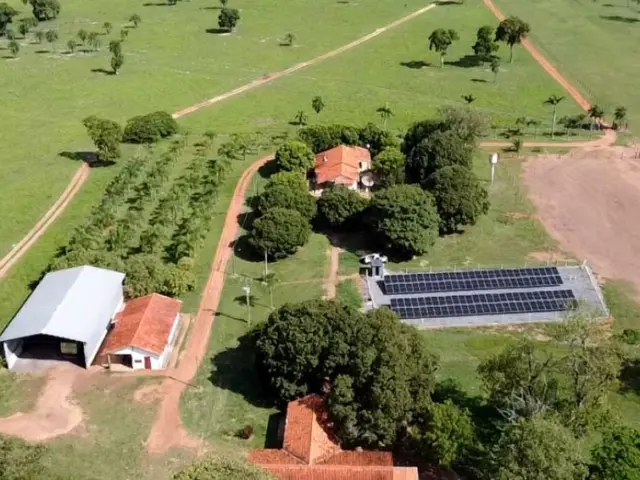
Solar energy has been a great ally for rural producers, optimizing electricity costs, increasing productivity and favoring sustainability in rural activities. An example of this is the three-pivot irrigation system implemented on a rural property in the southwest of Goiás, around 300 km from Goiânia, using solar energy.
The irrigation system is supplied through a 773 kWp photovoltaic system, with 700 kVA inverters, 750 kVA diesel generator and a battery bank with 300 kWh autonomy. The great novelty of the project is that the entire system operates in the form of a microgrid, which is a completely autonomous and stable microgrid, without the need to supplement the electrical grid. The inverters, battery bank and diesel generator operate in a coordinated manner, which guarantees excellent reliability in handling loads.
The hybrid solar was integrated into the existing irrigation system installations with 2310 335W modules from JA Solar, and battery banks in four 300 kWh/150 kVA racks. The irrigation system, which was previously powered completely by a 750 kVA Caterpillar generator, now saves 60% in diesel consumption after installing the solar system with batteries.
Payback
Considering all the benefits, such as productivity gains and avoided costs, the payback (initially calculated in 6 years) can be even more attractive. The estimate is that with the solution the end customer will see a 60% reduction in daily diesel consumption.
In addition, evaluating the project as a whole (irrigation system + energy) the end customer will be able to greatly improve productivity, doubling the number of crops per year, the number of bags per hectare and reducing the cost of production per crop.
It will also avoid spending on transporting diesel and maintaining the generator, with all these factors, the estimated investment made by the customer is between one and two years, due to the advance he will have in costs and the productivity he will achieve.
Milestone in the photovoltaic sector
This is the first hybrid system in Brazil and the first in the world in irrigation application, being a milestone in the solar energy market.
Care during commissioning
The main precautions during commissioning were related to protecting the generator, as they are all critical and can damage the generator. Among them: control of the system's reactive power, preventing inverters from working only with active power and reverse power control. The latter is the most important control, if it is not well adjusted, the inverters can inject more energy into the system than necessary and inject power in reverse into the generator, in this case the damage is immediate and in addition to losing the generator, we could impact throughout the customer's plantation.



Comments
Comments are moderated before publication.Comments should be respectful and contribute to a healthy debate. Offensive comments may be removed. The opinions expressed here are those of the authors and do not necessarily reflect the views of the author. Canal Solar.