
The history of organizations has shown us, over time, how important cost management is for a company to not only survive, but also be competitive and establish a competitive edge over its competitors. It doesn't matter if you are a follower of more classic management theories such as those of Fayol or Taylor, or if you are familiar with and apply the latest in management, such as the blue and red ocean theories, exponential organizations and design thinking.
One thing all of these theories have in common is that just as our nails need to be cut constantly, so do the costs and expenses of our companies. If we don't trim and take care of them constantly, it can cause us serious problems. In line with all of this, it is undeniable that for a company to carry out adequate cost management, electricity must be a constant issue.
In a survey conducted in March 2016 by CNI (National Confederation of Industries), in a report published by Portal da Indústria, electricity is an important input for industry: almost 80% of industrial companies use it as their main source of energy. Also according to this study, 93% of companies that mainly use electricity in the production process noticed an increase in energy costs, and of these, 35% stated that the impact of the increase in energy tariffs on the total cost was high.
Although the overwhelming majority of companies are aware of these increases, only 52%, or just over half, of the companies have taken any action to deal with the cost of energy. Digging a little deeper into the data, it is possible to identify that, of the 52% of companies that have taken some action to deal with the problem, only 10% have invested in self-generation and 6% have replaced their energy source.
The overwhelming majority (71%) have only implemented energy efficiency actions or programs to a greater or lesser extent. This proves the market potential yet to be developed with solar energy, promoting both self-generation and the replacement of energy sources, especially in distributed generation. Due to the many different ways of producing a good, the current complex production chains, as well as the many different goods to be produced, each industry has its degree of dependence and a representation of electricity in costs.
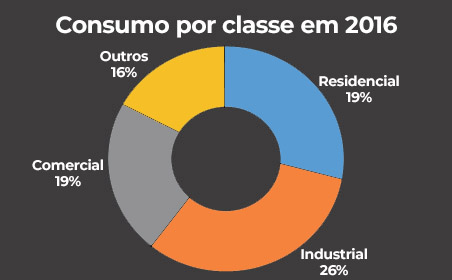
However, they corroborate the data above and the importance of electricity in the costs of companies, especially industries. Data published by EPE (Energy Research Company) in January 2017, consolidating the figures from 2016, show that, of the 460.380 GWh consumed in the country, industry alone represented 36% of the total (the largest share, equivalent to 164.254 GWh), followed by residences, with 29% (132.893 GWh) and the commercial sector with 19% (88.185 GWh). Companies (industries and commerce) represent almost half of total consumption, with a 45% share.
In addition to the importance of electrical energy in the costs of companies, especially industries, but without forgetting those involved in commercial activities, it is necessary to analyze how this cost varies over time, as well as evaluate how solar energy can help entrepreneurs protect themselves . In addition to inflation, common to any market, but especially sensitive in Brazil, it is necessary to point out that the energy matrix in the country is known to be composed, for the most part, of water sources.
Brazilian energy matrix
In order to properly investigate the evolution of tariffs, it is necessary to understand the energy matrix in Brazil. According to the report of the Meeting of the Energy Industry Chamber of FIEMG (Federation of Industries of the State of Minas Gerais), published by ANEEL (National Electric Energy Agency) in 2016, 65% of installed capacity in Brazil comes from these sources.
When there is any type of restriction on the raw material for this energy, as seen over time in various water crises, there is a need to put other more expensive sources into operation, such as thermoelectric plants, which according to the same report represent 27% of the country's generation capacity. When these sources are used, an operating cost is added, which translates into an increase in tariffs for consumers.
We analyzed the last 13 years and, according to data from ANEEL, the average supply tariff increased by 230% from 2003 to 2016. It is interesting to note that the IPC (Consumer Price Index), calculated by USP/FIPE (University of São Paulo) – one of the most widely used and reliable indexes for measuring inflation in the country – accumulated an increase of 80,01% in the same period. The electricity tariff showed a difference of approximately 150 percentage points in relation to the accumulated inflation in the period analyzed.
It is worth noting that, despite the clear trend line of increase over the years, observed by the red line in Graph 2, there were periods of stability (as can be seen between 2006 and 2007, with a variation of 0,08%), periods of decline (for example between 2012 and 2013, which recorded a drop of approximately 19%), and periods of sudden rise (observed, among others, in 2014 and 2015, recording approximately 42% increases).
This lack of synchronization and the difficulty in predicting tariffs over the years are a crucial factor of concern in business projections. It is known that the price of energy will increase over the years, but it is not known how much or when. Equally important in the evolution of tariffs, in addition to the dependence on rainfall, the certainty of increases and the lack of synchronization in these increases, is the large portion of taxes within these tariffs.
The current need for fiscal adjustments in the country by the government brings another factor: it is not possible to have any kind of prediction about the role that these taxes will have in tariffs, as well as the government's role in tariff control. An illusory control of tariffs or a fiscal scenario without predictability would not be unprecedented.
What can be expected from the market in the coming years (and which could already be observed timidly in 2017) is a recovery of the economy in general, including industries, which have accumulated years of decline. This improvement will certainly bring the need for more electricity and, consequently, due to the law of supply and demand, possible price increases.
But how can solar energy help industries protect themselves in this hostile environment? It is worth using Porter's strategic analysis here. In 1979, Michael Porter published an article in the Harvard Business Review about the five competitive forces that shape strategies: rivalry between competitors, bargaining power of customers, bargaining power of suppliers, threat of new competitors and substitute products. In general terms, Porter's theory states that a given company should analyze, for each of these forces, whether or not it has a competitive advantage.
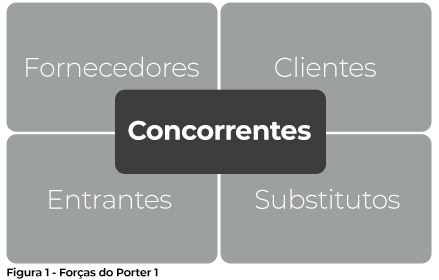
We would like to draw attention to the strength in which solar energy can really work in favor of the entrepreneur: the negotiating power of suppliers. In general, the negotiating power with electricity suppliers is practically zero for most companies. It is not possible to negotiate the rate, change suppliers or bargain terms in most companies.
For those who choose to buy on the free market, however, there is no negotiation as there would be when purchasing inputs and services, for example. The power to negotiate is almost entirely out of the hands of the companies that consume the electricity. Solar energy in Brazil is experiencing a period of remarkable growth.
Normative resolutions 482 and, more recently, 687 of 2015, give entrepreneurs greater confidence in investing in this type of solution. We will not even go into the merits of all the good that this entrepreneur will also be doing for the planet and how, by using this source, they can obtain profits by adding value to their products.
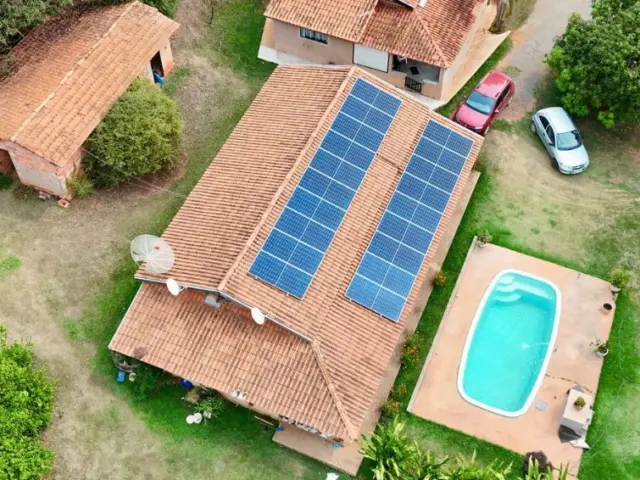
By using solar energy, with the company responsible for its own generation, it is possible to turn the game around, becoming practically immune to tariff increases. Using Porter again, when a certain company invests in solar energy, becoming immune to increases, and its competitors do not, by having a new (and certain) increase in electricity, the company that invested has an important strategic competitive advantage over the market.
Obviously, there are barriers to be overcome. In a growing market, but new to Brazil, especially for high-voltage customers, discussions about peak hours, contracted demand and generation limits, tariff values and financing sources, among other things, are questions that we must work to resolve.
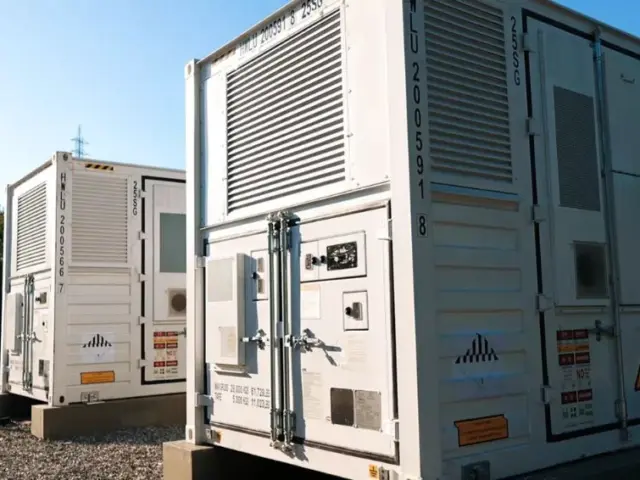
However, when using on-grid systems, it is not necessary to invest in battery infrastructure, which reduces the capital required for implementation, in addition to the possibility of some technologies allowing the gradual implementation of plants. For the purpose of protecting against increased costs, a company that is currently 100% uncovered in relation to electricity costs can, for example, implement 20% or 50% of its needs and, with the amount saved, gradually continue the process of changing sources, until reaching the desired index.
In general, the average payback period for a solar energy system for companies is five to seven years, and can extend to ten to 12 years, depending on the value of the kWh paid by a given company. Even so, it is a highly viable business, as the system is designed to last over 25 years.
Due to the culture of immediacy present in our country, an investment that pays for itself in a period ranging from one fifth to half of the system's lifespan may seem like a lot, but it is our role to show the way and continue to develop the market so that solar energy becomes increasingly representative in the country. Solar energy contributes to the energy matrix, improves distribution efficiency and helps entrepreneurs to have greater control over the costs of such an important factor as electricity.



Comments (1)
Comments are moderated before publication.Comments should be respectful and contribute to a healthy debate. Offensive comments may be removed. The opinions expressed here are those of the authors and do not necessarily reflect the views of the author. Canal Solar.
There is an error in graph 1, the sum is not 100%. There is also an error in the paragraph preceding the graph, regarding the numbers.