
A solar power generation project with battery storage installed in a residence in the interior of São Paulo is expected to provide savings of over R$ 50 per year on the electricity bill, according to estimates from Ecori, the distributor responsible for supplying the equipment.
According to the company, the system also allowed the property to operate for seven consecutive days without using electricity from the grid.
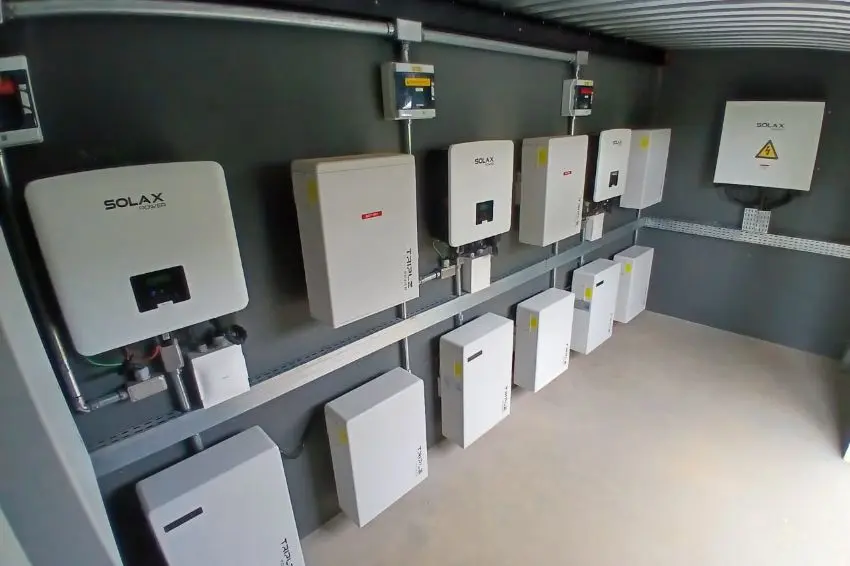
The installation was developed by Renew Energia and used SolaX hybrid inverters integrated with photovoltaic modules and batteries.
According to Ecori, the investment is projected to yield a return within five years, considering the economic and operational conditions of the project.
The solution was developed to meet the homeowner's need to maintain electricity supply during utility outages, especially to ensure the operation of equipment used in their professional activities carried out at home, including internet connectivity.
For this purpose, the project received four 8,3 kW SolaX hybrid inverters, coupled with 12 5,8 kWh batteries and 44 Canadian Solar 665 Wp photovoltaic modules.
In total, the installation has a nominal inverter power of 33,2 kW, an installed photovoltaic power of 29,26 kWp, and a nominal storage capacity of 69,6 kWh.
Initially designed to offer a minimum autonomy of 48 hours, considering the consumption profile and energy needs of the owner.
However, a test conducted by the team in charge demonstrated that the installation could remain in place for longer without depending on the utility company's supply.
To evaluate the solution's performance, the main circuit breaker for the residence was switched off, simulating an interruption in the electricity supply.
With the disconnection, the system began to operate in isolation from the grid, using electricity produced by the photovoltaic modules and energy stored in the batteries.
During the day, solar power was generated to meet the household's consumption needs and allow for battery recharging. At night, when the solar panels stopped producing electricity, the stored energy was used to power the equipment.
According to the distributor, this cycle repeated itself for seven consecutive days, including during periods of rain, without it being necessary to re-establish the connection to the electrical grid.
The result is related to the specific conditions of the test, including the household's consumption profile, available photovoltaic generation, and installed storage capacity.
According to Ecori, the performance also reinforces the importance of proper sizing and integration between equipment to meet the autonomy planned for each project.
In addition to reducing electricity costs, the main feature of the solution is its ability to maintain power supply during grid outages.
According to Ecori, the growing demand for continuity in electricity supply and the evolution of storage technologies also expand the possibilities for integrating companies to operate.
In this scenario, identifying consumer needs is one of the fundamental steps in defining the most appropriate solution, considering factors such as consumption profile, desired autonomy, and storage capacity.
The company emphasizes that technical sizing and compatibility between inverters and batteries are essential to ensure that the systems meet the conditions stipulated in the project.
In addition to supplying equipment, Ecori states that it invests in the technical and commercial training of its partners, focusing on the development of projects that incorporate storage technologies.
The distributor also brought together solutions for different applications through a strategy called "From Micro to Macro," which includes equipment from brands such as APsystems, SolaX, GoodWe, SolarEdge, and Hoymiles.
The portfolio includes microinverters, hybrid and conventional inverters, batteries, battery energy storage systems (BESS), photovoltaic modules and mounting structures, intended for residential, commercial and industrial applications.
According to Ecori's assessment, the integration of these technologies allows integrators to expand their services beyond conventional photovoltaic generation, incorporating energy storage and management solutions tailored to the needs of each consumer.
all the content of Canal Solar is protected by copyright law, and partial or total reproduction of this site in any medium is expressly prohibited. If you are interested in collaborating or reusing part of our material, please contact us by email: redacao@canalsolar.com.br.

Comments
Comments are moderated before publication.Comments should be respectful and contribute to a healthy debate. Offensive comments may be removed. The opinions expressed here are those of the authors and do not necessarily reflect the views of the author. Canal Solar.