
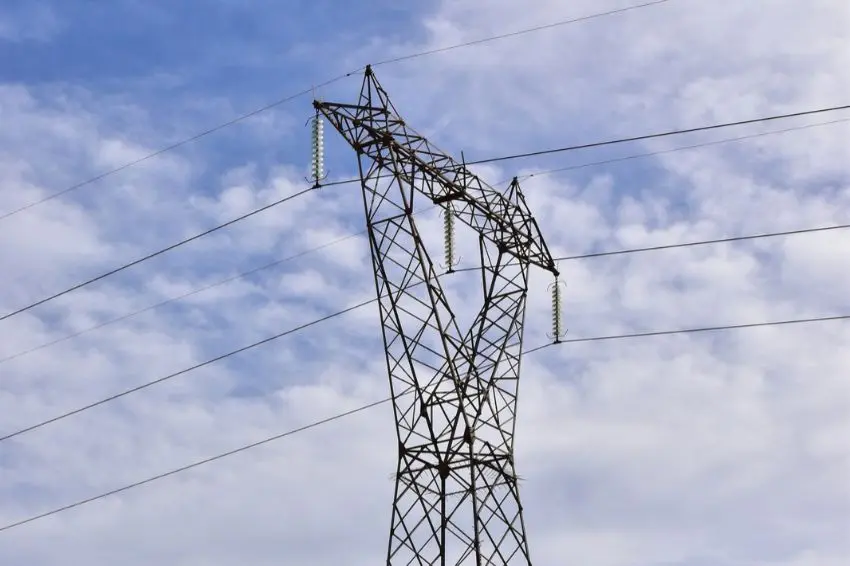
Decree No. 13.097, signed on August 12, regulated a necessary change: low-voltage industrial and commercial consumers will be able to choose their energy supplier starting November 25, 2027; all others, including residential consumers, will be able to do so on November 25, 2028.
Opening up the market increases competition and freedom of choice. To generate trust, it needs to start with verifiable numbers. Minister Alexandre Silveira, head of the Ministry of Mines and Energy (MME), estimated that the migration could reduce the portion of the bill corresponding to energy purchases by 20% to 22%.
The distinction is essential: it's not the same discount on the total bill. Even so, a public estimate of this magnitude needs to be accompanied by the assumptions, the data, and the calculation methodology.
The actual savings vary depending on consumption patterns, tariff area, taxes, and contracted risk. If energy purchases represent one-third of the bill, a 20% reduction in this component equates to approximately 6,7% on the bill. The remainder includes network costs, charges, and taxes.
Law No. 15.269 also distributes the effects of over-contracting or involuntary exposure between the regulated and free markets; free consumers also bear the cost of the capacity reserve.
The decree is correct in providing for a standard product regulated by the National Electric Energy Agency (Aneel) and a comparison platform, but it will only be useful if it shows the total cost.
There is also a consistency test. By stating that generators will no longer have the "easy" option of selling to distributors and passing costs on to consumers, Silveira enunciated a correct principle: those who sell energy must face competition. The same standard needs to apply to the mandatory capacity contracts paid for by everyone.
In the Aneel Auction 2/2026, the main capacity reserve auction of 2026, 18.977,158 MW were contracted. CCEE (Chamber of Electric Energy Commercialization) estimates total revenue of R$ 515,7 billion. The official result showed an average discount of 5,52%, representing savings of R$ 33,64 billion. There are contracts for up to 15 years.
Later, the technical area of the TCU (Federal Court of Accounts) pointed to reduced competition, concentrated contracting, and late delivery of information about demand. It also noted that the ceiling prices, revised 3 days after the initial announcement, increased by up to 100,89%.
When comparing costs and contracted values, it estimated a potential overpricing of R$ 214 billion — or R$ 138 billion preserving the investment cost adopted by EPE (Energy Research Company). It is necessary to record what the TCU (Federal Court of Accounts) decided and what it did not decide. The plenary session neither confirmed the overpricing nor imputed any loss.
The court deemed the evidence insufficient for a definitive conclusion, did not suspend the contracts for reasons of energy security and legal stability, and ordered further analysis. The decision allowed the bidding process to continue; it did not resolve the economic controversy. Proceeding is not the same as issuing a certificate of cost-effectiveness.
That's where the question of approximately R$ 200 billion remains. To understand it, it's necessary to separate numbers that, although related to the same auction, measure different things. The R$ 515,7 billion corresponds to the total estimated revenue from capacity reservation contracts, which can last up to 15 years.
The R$ 33,64 billion figure released by CCEE represents the savings calculated from the average discount of 5,52% obtained in the auction compared to the ceiling prices used in the bidding. This number, therefore, indicates how much would have been saved in relation to the price ceiling adopted in the auction, and not necessarily what the efficient cost of the capacity actually contracted is.
The issue raised by the TCU's technical area is different. It involves comparing the contract values with estimates of investment costs and other economic components of the projects. In a second scenario, maintaining the investment cost used by EPE, the estimate was reduced to R$ 138 billion.
These figures were not confirmed by the TCU plenary as definitive losses or overpricing. What occurred was the recognition that the available elements were insufficient for a final conclusion and the determination to deepen the analysis.
It is precisely in this difference that the question of approximately R$ 200 billion lies. On one hand, there is a savings of R$ 33,64 billion calculated on the auction's ceiling price; on the other hand, there is a technical estimate of R$ 138 billion to R$ 214 billion of possible overpricing when the contracted values are compared with cost references.
One thing does not automatically eliminate the other, because a discount in relation to the ceiling price demonstrates that the contract was awarded below the limit established by the bidding process, but it does not, by itself, demonstrate that this limit corresponded to the efficient cost of the contract. The central point, therefore, is not to choose which number is correct, but to demand a reconciliation of the methodologies that produced these results.
The Ministry of Mines and Energy (MME) and the Energy Research Company (EPE) submitted documents, and... ANEEL He responded to the Court, but the case remains open and, so far, there is no public conclusion that definitively demonstrates where the discrepancy lies between these estimates.
Therefore, the economic question remains open: it is necessary to show, with verifiable calculations, how the R$ 33,64 billion in savings was reached and, simultaneously, how the estimate of R$ 138 billion to R$ 214 billion in potential overpricing is refuted or confirmed.
Until these accounts are reconciled item by item, the amount of approximately R$ 200 billion cannot be treated as a proven loss, but neither can it be dismissed simply because the contracts were signed at a discount compared to the ceiling price.
If the estimate is wrong, it is necessary to demonstrate, with publicly available calculations, where it fails. If it is correct, even partially, it is necessary to explain how the consumer will be protected. This does not anticipate judgment nor assign responsibility without proof. A doubt of this magnitude cannot disappear simply because the contracts went ahead—much less become a footnote in a bill paid for up to 15 years.
Energy security may require capacity, but it does not dispense with economic discipline. The answer is to publish an item-by-item reconciliation: demand, ceiling prices, investment, operation, fuel, concentration, and contracted values.
The upcoming tenders should compare thermal power plants, hydroelectric expansion, batteries, demand response, and hybrid solutions under equivalent requirements. Technological neutrality means contracting the necessary service through competition, lower systemic cost, and verifiable price.
Opening up the free market is necessary. But there will be no confidence while economic gains are announced and an estimate of up to R$ 214 billion in mandatory contracts remains without public conclusion.
A market is not free simply because it allows one to choose their supplier; it also needs to allow for the tracking of every cost. Until the methodologies are reconciled, the figure of approximately R$200 billion is not a verdict—it remains a question without a conclusive answer.
The opinions and information expressed are the sole responsibility of the author and do not necessarily represent the official position of the author. Canal Solar.


Comments
Comments are moderated before publication.Comments should be respectful and contribute to a healthy debate. Offensive comments may be removed. The opinions expressed here are those of the authors and do not necessarily reflect the views of the author. Canal Solar.