

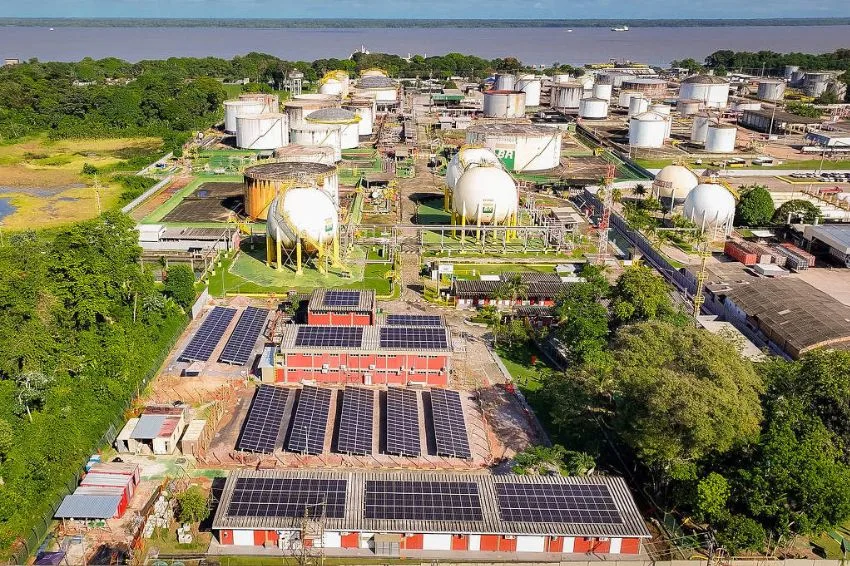
Transpetro, a subsidiary of PetroThe company responsible for transporting fuels inaugurated its second solar power plant in Brazil. The installation was carried out at the company's terminal in Belém (PA), with an investment of R$ 3,2 million. The first unit began operating in April, in Guarulhos (SP).
In total, the new plant has 300 kW of power, distributed across 480 photovoltaic modules installed in an area of 3.000 m², including the unit's roofs. The energy generated will be used to power local operations and has a capacity equivalent to the average consumption of approximately 80 homes.
With this, Transpetro estimates annual savings of approximately R$400 and a reduction of 30 tons of CO₂ per year. The Belém terminal is one of the company's largest, responsible for moving 2,3 million cubic meters of fuel in 2024, including diesel, gasoline, and other derivatives. The products arrive at the site via the Mataripe refinery (BA) and other regional terminals.
The initiative is part of the "Terminal + Sustainable" program, which also includes a rainwater collection and reuse system. The structure currently in operation is capable of recovering up to 3,6 cubic meters per year, and a further expansion is expected to increase this figure to 4,9 cubic meters, reducing the facility's water consumption by up to 40%.
Besides Belem (PA), the company is also considering installing a new solar plant at the Coari terminal in Amazonas, located in a sensitive area of the Amazon Rainforest. transpetro is also negotiating to sign remote generation contracts, with the aim of supplying all of its 48 terminals with renewable sources connected to the national electrical infrastructure.
all the content of Canal Solar is protected by copyright law, and partial or total reproduction of this site in any medium is expressly prohibited. If you are interested in collaborating or reusing part of our material, please contact us by email: redacao@canalsolar.com.br.





An answer
Dear sirs,
It's a good thing that Brazil's largest company is waking up to photovoltaic generation. Here's a question: Why doesn't it also install this type of generation on offshore platforms, since they're already adopting wind power? We know that platform power generation had a major problem with flicker, which affected the quality of the energy generated. Solar generation already performs very well in this regard. An engineer and professor on the subject above.