
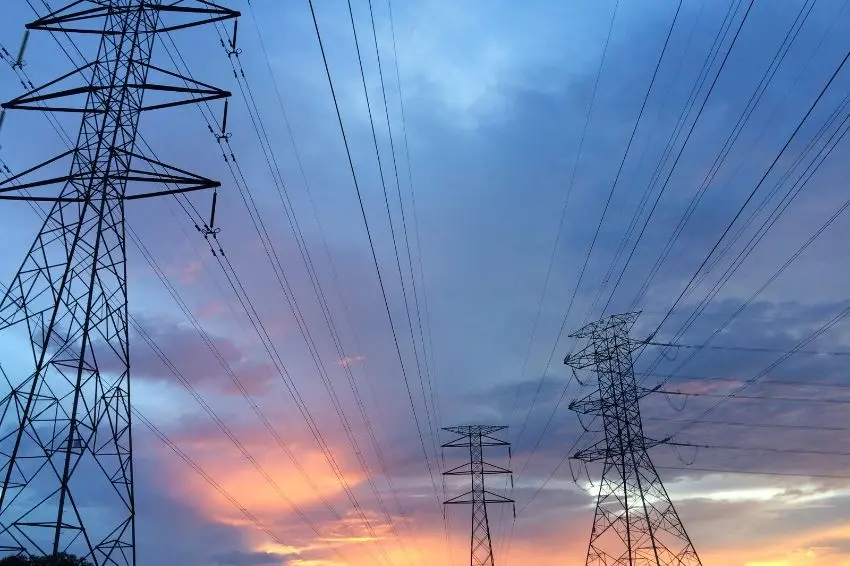
The transformation of the electricity sector demands increasingly significant investments. However, as new technologies are incorporated and system operation becomes more complex, the risks associated with these investments also change.
The availability of capital remains crucial, but it is not sufficient to guarantee the viability of projects. Investors and financiers need to understand how revenues will be generated, what factors could compromise them, and who will have to assume the risks involved.
This reflection gained relevance during the mission to Australia, carried out in May 2026. In previous articles in this series, we discussed how the expansion of renewable energy sources has been demanding changes in infrastructure, system operation, price signals, and the relationship with consumers.
In this eighth article, we add another dimension: how to finance the investments needed to sustain this transformation?
During our visit to CEFC (Clean Energy Finance Corporation), we learned about an experience that offers important elements for this discussion. Created in 2012, CEFC is a public institution, wholly controlled by the Australian government, focused on expanding investments in clean energy technologies and projects.
Their model is not to be confused with the traditional granting of subsidies. The institution carries out financing and investments with commercial criteria, using public resources to mobilize private capital and contribute to the development of projects that face financing barriers.
CEFC emerged in a context where Australia needed to accelerate the transformation of an electricity matrix historically dependent on coal. The government recognized that certain technologies and infrastructure necessary for the transition faced difficulties in attracting private funding under the conditions then available.
The parallel with Brazil doesn't lie in the need to create a similar institution. The country already has the BNDES (National Bank for Economic and Social Development), in addition to private banks and a capital market that participates in the financing of energy and infrastructure projects.
The question is whether the existing instruments are prepared to keep pace with the changes in risks and business models in the electricity sector.
However, there is an important difference between the two contexts. While CEFC was created to help overcome barriers to financing new investments, Brazil also faces growing concern about the financial sustainability of renewable projects that have already been implemented and financed.
When risks change after investment.
The expansion of solar and wind power generation has mobilized significant amounts of capital in Brazil over the past few years. Many of these projects were structured with power purchase agreements, production projections, and financing mechanisms that sought to offer predictable revenues throughout their lifespan.
However, the transformation of the electricity sector is altering some of these assumptions. The increase in generation cuts, known as curtailment, is one example. Power plants that have the technical capacity to produce energy may be forced to reduce their generation due to transmission restrictions, electrical safety requirements, or situations of excess supply in certain periods.
The economic causes and consequences of these cuts are not necessarily the same. However, when restrictions reduce expected revenues, they can compromise the cash flow of businesses and their ability to repay contracted financing.
This reality is already influencing credit assessments in the sector. BNDES has been incorporating the effects of curtailment into the analysis of new financing and examining alternatives for certain existing operations, including specific measures for contractual flexibility.
This is not a widespread postponement of debt payments, but a sign that risks previously considered manageable now require greater attention.
Private financiers face similar concerns. Deteriorating financial conditions for certain projects can lead to contract renegotiations, demands for additional guarantees, and, in more serious situations, the enforcement of guarantees established to secure debt repayment.
The effect can extend beyond the directly affected ventures. When banks and investors identify greater uncertainty about a segment's revenues, this perception tends to influence the financing conditions of new projects, either by increasing equity and collateral requirements or by raising financial costs.
This creates a contradiction that deserves attention: the electricity sector needs to continue attracting investments to expand and modernize its infrastructure precisely when certain risks are making financing more complex.
The role of public capital in the Australian experience.
CEFC's actions help to understand how public instruments can overcome certain financial barriers without replacing private investors.
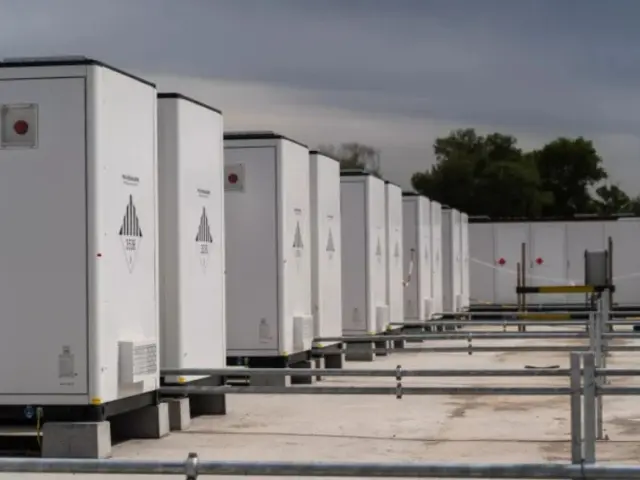
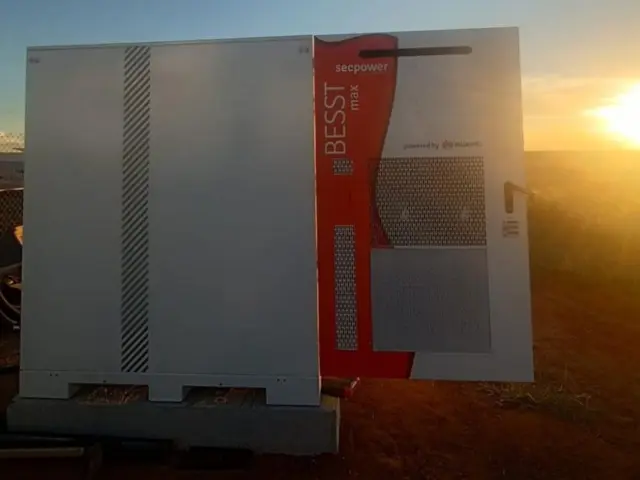
One example is the Waratah Super Battery, an energy storage project with a capacity of 850 MW and 1.680 MWh, developed in the state of New South Wales. The project was designed to contribute to the security of the electricity grid, offering a rapid response to certain system contingencies.
CEFC contributed AUD 100 million to support the project's development, as part of an AUD 500 million funding round led by BlackRock Private Markets, with participation from Australian and international institutional investors.
The relevant aspect is not only the volume of investment, but the logic behind its structuring. The participation of a specialized public institution contributed to mobilizing resources destined for a technology with operational and economic characteristics different from traditional sources of generation.
This activity is not limited to large projects. In August 2026, CEFC announced a partnership of AUD 100 million with the asset manager Infradebt, aimed at financing medium-sized renewable energy projects connected to distribution networks, including solutions that combine solar generation and storage.
These are initiatives with distinct profiles, but they reflect the same concern: developing financial instruments suited to the characteristics of the investments needed to transform the electrical system.
This does not mean that public funding should indiscriminately absorb risks that private investors do not wish to assume. Its use requires selection criteria, economic evaluation, governance, and appropriate resource management mechanisms.
Public capital can help develop markets and mobilize investment. However, it does not eliminate project risks nor does it replace the need for economically sustainable business models.
What does this experience represent for Brazil?
The Australian experience does not demonstrate that increasing public funding is, in itself, the answer to the increased risks in the Brazilian electricity sector.
BNDES already plays a significant role in structuring long-term projects. Private banks and institutional investors also participate in this market, using different credit and investment instruments.
The challenge lies in understanding how these institutions should act in the face of changing risks. In the case of curtailment, for example, renegotiating debts may be necessary to preserve economically viable projects facing financial difficulties. However, financing alone does not solve the root causes of generation constraints.
If the problem stems from network limitations, it will be necessary to assess the expansion or operation of the infrastructure. If it results from oversupply at certain times, the solution may involve greater flexibility, new consumption mechanisms, and appropriate economic signals.
In both cases, the financial solution needs to align with the operational and regulatory realities of the sector. It is also necessary to distinguish between the risks inherent to business activity and those arising from regulatory changes or systemic conditions that were not adequately reflected in the original investment models.
This distinction is important to avoid two extremes: leaving relevant projects without alternative funding sources or automatically transferring risks that should remain the responsibility of investors to the public sector.
The challenges don't end with solar and wind power generation.
This discussion becomes even more important when we consider that the transformation of the Brazilian electricity sector is not limited to the recent expansion of solar and wind power sources.
We are entering a new phase, marked by the incorporation of battery energy storage systems (BESS) and the growing participation of OERs (Distributed Energy Resources), including distributed generation (DG), storage, and demand response mechanisms.
These technologies expand the system's operational possibilities, but present economic characteristics different from those traditionally considered in financing generation projects.
As we have seen, a battery, for example, can offer power availability, perform energy arbitrage, and provide flexibility services. However, the possibility of combining these revenue streams depends on market rules and applicable remuneration mechanisms.
While many traditional generation projects rely on long-term commercialization contracts, certain investments in storage and flexibility may depend on different revenue sources, some of which are still under development in the Brazilian market.
As we discussed in previous articles in this series, the incorporation of new technologies requires a coordinated evolution of regulation, operation, and economic signals. This need also extends to financing.
Banks, investors, and public institutions will need to evaluate business models that present risks distinct from those traditionally associated with the construction and operation of power plants.
Financing transformation requires understanding its risks.
The next stage in the transformation of the Brazilian electricity sector will require investments in generation, transmission, storage, digitalization, and flexibility resources, each with its own characteristics of risk and remuneration.
The Australian experience shows that public investment instruments can help mobilize private capital, especially when new technologies and markets face financing barriers.
In Brazil, the issue is not simply about expanding the supply of credit or transferring risks to public institutions. It is about ensuring that projects have the economic and regulatory conditions to generate revenues commensurate with the investments made.
There will be no financially sustainable energy transition without proper risk allocation, consistent remuneration models, and regulatory predictability.
Ultimately, financing the adoption of new technologies is only part of the challenge. The other, equally important part, is building an electricity sector capable of economically sustaining its own transformation.
It's important to remember that Brazil doesn't need to start from scratch. The experience of countries that have already faced similar challenges offers important references for improving our regulations, taking advantage of solutions that worked and also learning from those that did not produce the expected results.
The opinions and information expressed are the sole responsibility of the author and do not necessarily represent the official position of the author. Canal Solar.

Comments
Comments are moderated before publication.Comments should be respectful and contribute to a healthy debate. Offensive comments may be removed. The opinions expressed here are those of the authors and do not necessarily reflect the views of the author. Canal Solar.