
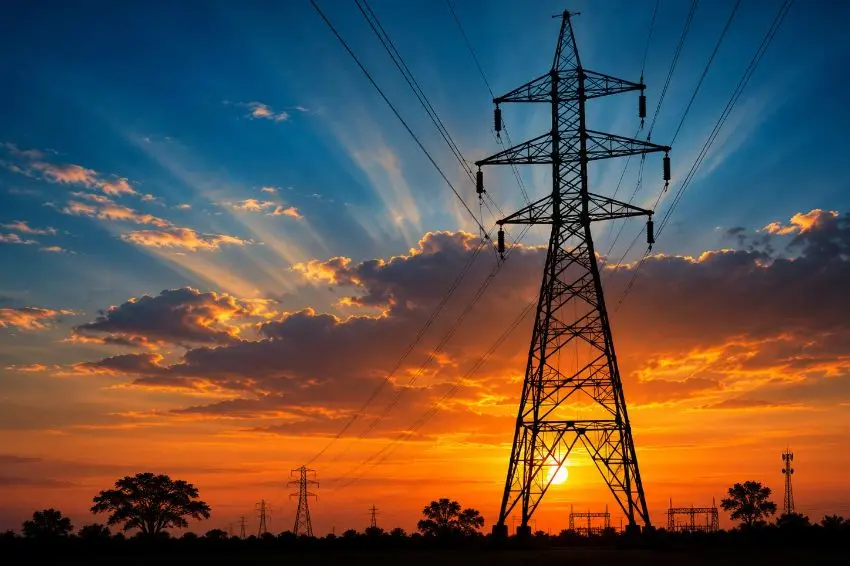
Lisbon allowed me to take a closer look at a market that has accumulated more than two decades of experience in the liberalization, competition, and commercialization of electricity.
At the fifth edition of EVEx Lisboa, in November 2026, I moderated the panel “The Rhythm of the Markets — Opening, trading, liquidity and new platforms”, held on November 3rd, during the Brazil–MIBEL Forum.
Participants included Ricardo Lucas Nunes, from OMIP; Gerusa Côrtes, from CCEE; Rodrigo Ferreira, from Abraceel; Carlos Filipe Moreno, from ACEMEL; and Sergio Lopes, from Cemig. The debate brought together complementary perspectives on price formation, negotiation, guarantees, and risk management.
I returned to questions that have accompanied my work in the electricity sector since 1997: what happens after consumers gain the right to choose their supplier? How can we offer contracts tailored to different profiles? And how does the expansion of renewable energy alter the risks that need to be managed?
Portugal and Spain help answer these questions. Their trajectory shows concrete achievements, but also persistent challenges in competition, price formation, security of supply, and the integration of renewables.
A market that generated almost 287 TWh in 2025.
The Market (Iberian Electricity Market) was developed to integrate the wholesale markets of Portugal and Spain, respecting the regulatory particularities of each country. Its operation combines different trading environments.
OMIE manages the daily and intraday markets, in which buyers and sellers trade energy for delivery close to consumption. OMIP offers an organized derivatives market, with futures contracts and other instruments used in managing price exposure.
According to the OMIE annual report, 286,7 TWh were traded in the daily and intraday markets in 2025, a growth of 2,8% compared to 2024. Of this volume, 241,8 TWh were traded in the daily market and 44,9 TWh in the intraday markets. The arithmetic average price of the Iberian daily market reached €65,73/MWh, an increase of 3,9% compared to the previous year.
These figures refer to the short-term wholesale market. They do not represent the final tariff paid by the consumer, which incorporates network components, taxes, and other charges, depending on the country and the contract.
Organizing negotiations across different time horizons is especially relevant. The risk associated with next-day energy delivery is distinct from that of a contract for the coming months or years. Specific instruments allow generators, traders, and consumers to manage these exposures.
OMIE itself recorded a significant operational change in 2025: the adoption of 15-minute trading periods, implemented in the intraday market in March and in the daily market in October. This granularity allows for a more precise reflection of supply and demand variations, a discussion that is gaining momentum in light of solar expansion.
Freedom of choice needs to work in practice.
In August 2025, the liberalized Portuguese market had more than 5,7 million customers and accounted for approximately 95% of electricity consumption in mainland Portugal, according to ERse (Energy Services Regulatory Authority).
Another survey by ERSE, released in October 2026 with data from 2025, shows significant differences between contracting profiles: 83% of the energy from the large customer segment and 46% of the energy from the industrial segment, in the free market, were contracted in modalities fully indexed to the market. Among domestic customers, 98% of the energy contracted in the free market was linked to fixed prices.
These percentages refer to contracted energy, not the proportion of consumers. Even so, they help reveal distinct behaviors: consumers with greater management capacity may assume exposure to market prices; families tend to prioritize predictability of expenses.
The issue goes beyond the formal freedom to choose a supplier. It requires that there are commercial products suited to each consumer's profile, accessible information, and conditions that allow for comparison of offers.
In Spain, the CNMC (National Commission for Markets and Competition) recorded a supplier switching rate of 23,6% in the electricity sector between October 2024 and September 2025. Of the total switches, 82,4% occurred between suppliers within the same free market. The average reported time for the switch was five days.
The mobility between suppliers is a useful indicator of competition, although it does not eliminate the need to analyze the quality of offers, contractual transparency, and customer service. For Brazil, these dimensions will be decisive when new consumer profiles begin to exercise their right to choose.
Renewable expansion is transforming commercialization.
Portugal and Spain also offer an opportunity to observe the commercial consequences of electricity systems with a high share of renewable sources.
In 2025, according to Red Eléctrica, renewable sources accounted for 55,5% of Spanish electricity generation, not considering the estimate of self-consumption. Wind power accounted for 21,6% and solar photovoltaic for 18,4%.
In Portugal, according to REN, renewables produced around 37 TWh, equivalent to 68% of the national electricity consumption in 2025.
In this indicator, hydroelectric production accounted for 27% of consumption; wind power, 25%; solar power, 11%; and biomass, 5%. The indicators for the two countries have different denominators: share of Spanish generation and equivalence to Portuguese consumption. Therefore, they should be analyzed separately.
Higher solar production at certain times puts downward pressure on short-term prices, especially when it coincides with reduced demand. When solar generation decreases, other sources, storage, and demand response become more important. Depending on market conditions and rules, zero or negative prices may occur.
This changes the economic analysis of the contracts. In addition to the average price, the hourly generation profile, the consumption curve, the settlement conditions, and the exposure to mismatches between buying and selling prices become important.
For a solar generator, this means understanding the price actually captured during the times when their plant is producing. For a trading company, it means carefully evaluating the compatibility between its buy and sell portfolio.
For a consumer, this opens up the possibility of developing contracting strategies that also consider the flexibility of their operation.
Long-term contracts, storage, demand management, and hedging instruments are likely to gain relevance. Renewable growth needs to be accompanied by greater operational and commercial adaptability.
The role of energy exchanges and risk management.
At the EVEx Lisboa panel, one of the central issues was the relationship between market openness, liquidity, trading platforms, and risk management.
OMIE focuses on energy trading in day and intraday markets, while OMIP allows trading of financial instruments and contracts for future periods. There is also OMIClear, responsible for clearing services and central counterparty for eligible transactions, according to the rules of the markets served.
Standardized contracts and clearing services help manage certain exposures, especially counterparty risk. However, this does not eliminate price, liquidity, or margin call risks. An exchange does not, by itself, guarantee sufficient trading in all products and maturities.
The development of an organized market depends on trust in the rules, the quality of reference prices, and the effective participation of buyers and sellers.
In Brazil, CCEE plays a fundamental role in registering contracts, accounting for and settling differences. However, the Brazilian institutional design differs from the Iberian model, especially regarding the trading environments and the infrastructure for clearing financial transactions.
The lesson for Brazil lies in expanding reliable price references, developing protection instruments, and improving guarantee management. As the diversity of consumers and contracts grows, so does the importance of clear criteria for identifying and managing risks.
Contracts best suited for solar power generation.
OMIP offers contracts for different delivery profiles, including products associated with solar generation. The existence of instruments with distinct profiles is relevant in a system where the cost of energy varies increasingly depending on the time of day.
When available contracts better reflect production and consumption profiles, companies can structure more appropriate protection strategies. A solar power plant has a different generation profile than a hydroelectric plant or an industrial consumer with continuous operation.
In Brazil, the expansion of solar and wind power makes managing energy portfolios more complex. Products compatible with production and consumption profiles can improve risk allocation and expand the services offered by energy trading companies.
Brazil is facing a new phase.
Law No. 15.269/2025 and Decree No. 13.097, of August 12, 2026, established the schedule for opening connections for consumers served at voltages below 2,3 kV. Industrial and commercial consumers will have the right to choose their supplier starting November 25, 2027; all others, including residential consumers, starting November 25, 2028.
According to CCEE, the free market ended 2025 with 85.450 registered consumer units and recorded 21.707 migrations that year. Approximately 81% of these migrations occurred under retail representation.
The entry of low-voltage consumers will change the scale and nature of commercial activity. The new customers will have very varied profiles, different levels of knowledge about the electricity sector, and specific contracting needs.
The next step will require understandable offers, simple comparison mechanisms, accessible customer service, and clear rules for situations where suppliers face difficulties. Freedom of choice must be accompanied by conditions that allow it to be exercised.
Decree No. 13.097/2026 assigns to ANEEL Tasks related to communication with the consumer, regulation of a standard product and its reference price, and tariffs for the supply of last resort. It also establishes representation by a retail agent for low-voltage consumers who choose to migrate.
Market expansion makes controls over financial capacity, guarantees, contract quality, and management of commercial positions indispensable. The number of clients served, by itself, does not demonstrate the solidity of a trading company.
What did I bring back from EVEx Lisbon?
EVEx Lisboa allowed me to compare the Brazilian experience with the trajectory of a market that has already gone through different phases of liberalization.
In listening to representatives from OMIP, CCEE, Abraceel, ACEMEL, and Cemig, I found points of convergence regarding prices, liquidity, and risks—and institutional differences that deserve to be understood before any attempt at adaptation.
I have been following the Brazilian electricity sector since 1997 and have participated in different stages of its transformation, especially in the structuring of trading companies, energy contracting, and risk management.
Over the years, I've learned that opening up the market requires more than just expanding access rights. It presupposes preparing companies, improving processes, developing products, and providing sufficient information for informed decisions.
Portugal and Spain have made progress on these fronts, but continue to grapple with the commercial and operational effects of an increasingly renewable energy mix.
Brazil can leverage this experience by observing how consumers choose their contracts, how trading companies manage their positions, and how prices and trading instruments help distribute risks. This is all while acknowledging the hydrological, regulatory, and territorial differences between the systems.
The opening up of the market in 2027 and 2028 will profoundly expand the universe of consumers in the Brazilian free market. The challenge will be to transform the right to choose into effective competition, with understandable products, financially sound companies, and adequate consumer protection.
That was the main takeaway I brought back from Lisbon.
About the author
Silla Motta is a business administrator with an MBA in Marketing from PUC-Rio and has worked in the electricity sector since 1997. CEO of Donna Lamparina, she is a business strategist with experience in structuring trading companies, market intelligence, energy contracting, and risk management. She also works as a curator and moderator of events in the electricity sector.
Sources and references for editorial fact-checking.
OMIE — Annual Report 2025, Executive Summary (price, volume and trading data in 15-minute periods) — https://www.omie.es/sites/default/files/2026-03/informe-anual-2025_2.pdf
EVEx Lisbon — Program for the panel “The Rhythm of the Markets”, November 3, 2026 — https://pt.linkedin.com/posts/energy-virtual-experience-evex_evex-lisboa-2026-o-ritmo-dos-mercados-activity-7523284725642465280-xsQ7
ERSE — Average prices and contracting methods in the retail market, year 2025 — https://www.erse.pt/comunicacao/destaques/erse-publica-relatorio-da-evolucao-dos-precos-medios-faturados-e-das-margens-comerciais-no-mercado-retalhista-de-eletricidade-de-2025/
CNMC — Statement of July 29, 2026 regarding the change of supplier — https://cnmc.es/gl/node/421810?page=1
Red Eléctrica — Balance of the Spanish electricity system in 2025 — https://www.ree.es/es/sala-de-prensa/actualidad/nota-de-prensa/2026/03/el-sistema-electrico-espanol-en-2025-aumenta-la-demanda-de-electricidad-la-generacion-y-la-potencia-instalada
REN — Portugal's renewable energy consumption and production in 2025 — https://www.ren.pt/media/noticias/consumo-de-energia-eletrica-atinge-valor-mais-elevado-de-sempre-em-2025
OMIP — Derivatives market and information on traded products — https://www.omip.pt/pt
OMIClear — Clearing Services — https://www.omiclear.pt/en/
Brazil — Decree No. 13.097/2026, text made available by the Federal Senate — https://legis.senado.gov.br/norma/43675473/publicacao/43678847
The opinions and information expressed are the sole responsibility of the author and do not necessarily represent the official position of the author. Canal Solar.

Comments
Comments are moderated before publication.Comments should be respectful and contribute to a healthy debate. Offensive comments may be removed. The opinions expressed here are those of the authors and do not necessarily reflect the views of the author. Canal Solar.