
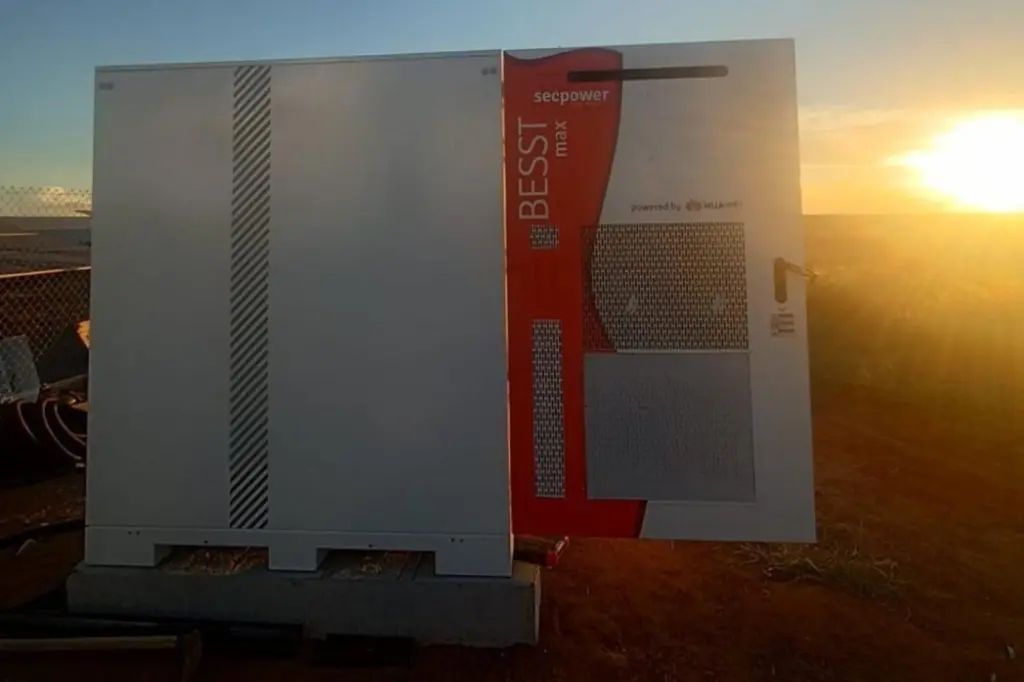
A storage project can be economically viable and still not get off the ground. It may present an attractive return prospect, but compete for capital with the client's priority investments.
You can assemble high-quality equipment and still not deliver the expected results if the integration doesn't consider the specific characteristics of the installation. It is in this gap between potential and execution that BESS's next challenge in Brazil lies.
In recent years, we have witnessed a shift in conversations with the commercial and industrial market, the so-called C&I (Consumer & Innovation). Previously, a significant portion of the work involved explaining what a battery energy storage system was and what benefits it could offer. Today, we find clients more familiar with the technology and applications where the economic implications already add up.
There are opportunities in tariff arbitrage, demand management, and hybridization with diesel generators, including in agribusiness. The attractiveness of each project naturally depends on the tariff, consumption profile, costs, and operating conditions.
The challenge is to transform these opportunities into implemented projects, proven results, and wider adoption. In my assessment, this progress depends on three dimensions that need to evolve together: technical maturity, financing, and commercial reach.
The commercial promise needs to fit within the project.
The versatility of BESS is one of its main attributes. Depending on the configuration, a system can contribute to reducing costs, managing demand, and providing backup power. But this diversity of applications requires rigor in defining what will be delivered.
We cannot transform technological possibilities into a generic promise that any system will meet all customer needs simultaneously.
In tariff arbitrage, the logic is to charge the battery during periods of lower cost and use that energy during more expensive times. Even so, the economic analysis needs to consider losses, usage conditions, and battery wear over time.
When the project also includes provisions for supplying power during a grid outage, other requirements arise. It is necessary to assess islanded operation capacity, local network setup, transfer time, loads to be served, and system behavior in the face of motor starts and other transients.
This distinction becomes especially relevant when we talk about sensitive processes. A BESS should not be automatically treated as a UPS (uninterruptible power supply).
Restoring supply after a failure and ensuring continuity without a noticeable interruption are different things. In certain industrial processes, milliseconds can determine the continuity of a production line.
Similarly, the ability to handle voltage dips, harmonics, and other disturbances needs to be specifically evaluated. It cannot be assumed simply because batteries are present in the installation.
It is also necessary to understand how uses compete for available resources. If some of the energy must remain reserved for a possible grid failure, that portion ceases to be available for arbitrage.
The effect of this decision needs to be reflected in the financial simulation. Adding benefits without considering operational constraints creates expectations that the project may not be able to sustain.
Therefore, sizing storage requires integrating batteries, power conversion systems, energy management, protections, and transfer devices with the characteristics of the installation.
This responsibility extends throughout the entire chain. Manufacturers, distributors, and integrators need to align specifications, operating conditions, maintenance, and warranties from the outset. A failed delivery affects the customer and also the trust in the technology.
The feasibility study needs to find funding.
Overcoming the technical challenge does not eliminate the competition for the client's capital. A company may recognize the savings provided by storage and prefer to invest in expanding production, in equipment related to its core business, or in preserving liquidity.
Economic viability and willingness to invest are distinct issues. To broaden adoption, we need to offer contracting models that are compatible with this reality.
Storage as a Service is one of the options. Depending on the contractual structure, the client can access the benefits of the system without needing to purchase the equipment, through monthly payments or by sharing the savings generated.
In this model, the discussion focuses on delivery: how much the customer saves, what availability they can expect, and under what conditions they will have backup power.
The investment, however, still exists. Someone will need to finance the acquisition, implementation, and operation of the asset, assuming the corresponding risks.
This requires financial partners, consistent analysis criteria, clear contracts, and measurement mechanisms that allow for performance verification. It also requires defining responsibilities for maintenance and the system's behavior throughout its lifespan.
Technical confidence, therefore, has a financial consequence. Well-structured projects offer better conditions for investors and financiers to assess their risks. Engineering and financing need to advance in a coordinated manner.
Scale depends on a prepared network.
The third challenge lies in the distribution of opportunities across Brazilian territory. Industries, commercial establishments, and rural producers have distinct load curves, tariffs, facilities, and needs.
No single manufacturer will develop a market with this level of diversity on their own. Distributors, integrators, and local partners are essential for identifying demands and building trusting relationships with customers.
But accrediting a sales network is only the beginning. It is necessary to empower it to diagnose needs, size solutions, and assess the feasibility of each application. This preparation must be accompanied by tools, engineering support, financing alternatives, and support during installation and after-sales.
The integrator occupies a crucial position: connecting the technology to the reality of those who will use it. The better they understand the system's limitations and possibilities, the greater their ability to build a consistent proposal.
This is where the three challenges converge. Storage as a service needs reliable projects to attract funding. Commercial expansion depends on partners prepared to develop these projects. And customer confidence depends on the operation confirming what was contracted.
I see a role for Brazilian industry that goes beyond manufacturing and supplying equipment. We can contribute to connecting engineering, capital, and commercial channels, creating conditions for viable applications to become accessible to more companies.
The price of batteries will continue to be relevant, but the next leap forward for BESS in Brazil will also depend on the ability to structure reliable, affordable solutions tailored to each client.
Scale will be built when we can repeat successful deliveries: projects that get off the ground, deliver on their promises, and sustain their results over time.
The opinions and information expressed are the sole responsibility of the author and do not necessarily represent the official position of the author. Canal Solar.

Comments
Comments are moderated before publication.Comments should be respectful and contribute to a healthy debate. Offensive comments may be removed. The opinions expressed here are those of the authors and do not necessarily reflect the views of the author. Canal Solar.